Nurse Anesthetist Resume Examples & Guide
Crafting a compelling Nurse Anesthetist resume can be daunting. You’re navigating Applicant Tracking Systems (ATS) while facing fierce competition. This guide provides Nurse Anesthetist resume examples for every experience level, arming you with the tools to showcase your expertise and land your dream job.
- Quantify Achievements: Use numbers to demonstrate the impact of your work.
- Highlight Relevant Skills: Showcase your expertise in areas like airway management, patient monitoring, and regional anesthesia.
- Tailor to Job Description: Customize your resume to match the specific requirements of each job.
- Optimize for ATS: Use keywords from the job description to ensure your resume passes the ATS scan.
- Use Action Verbs: Start your bullet points with strong action verbs to describe your accomplishments.
- Showcase Leadership: Highlight any leadership roles or initiatives you’ve taken on.
Let’s explore some Nurse Anesthetist resume examples for every career stage.
Explore editable Nurse Anesthetist resume examples by career stage. Each sample opens in the RockStarCV builder so you can study the structure and make your own version.
Entry-Level Nurse Anesthetist Resume (0-2 Years Experience)
Use these entry-level examples to compare the scope, evidence, and language expected for Nurse Anesthetist roles at this stage.
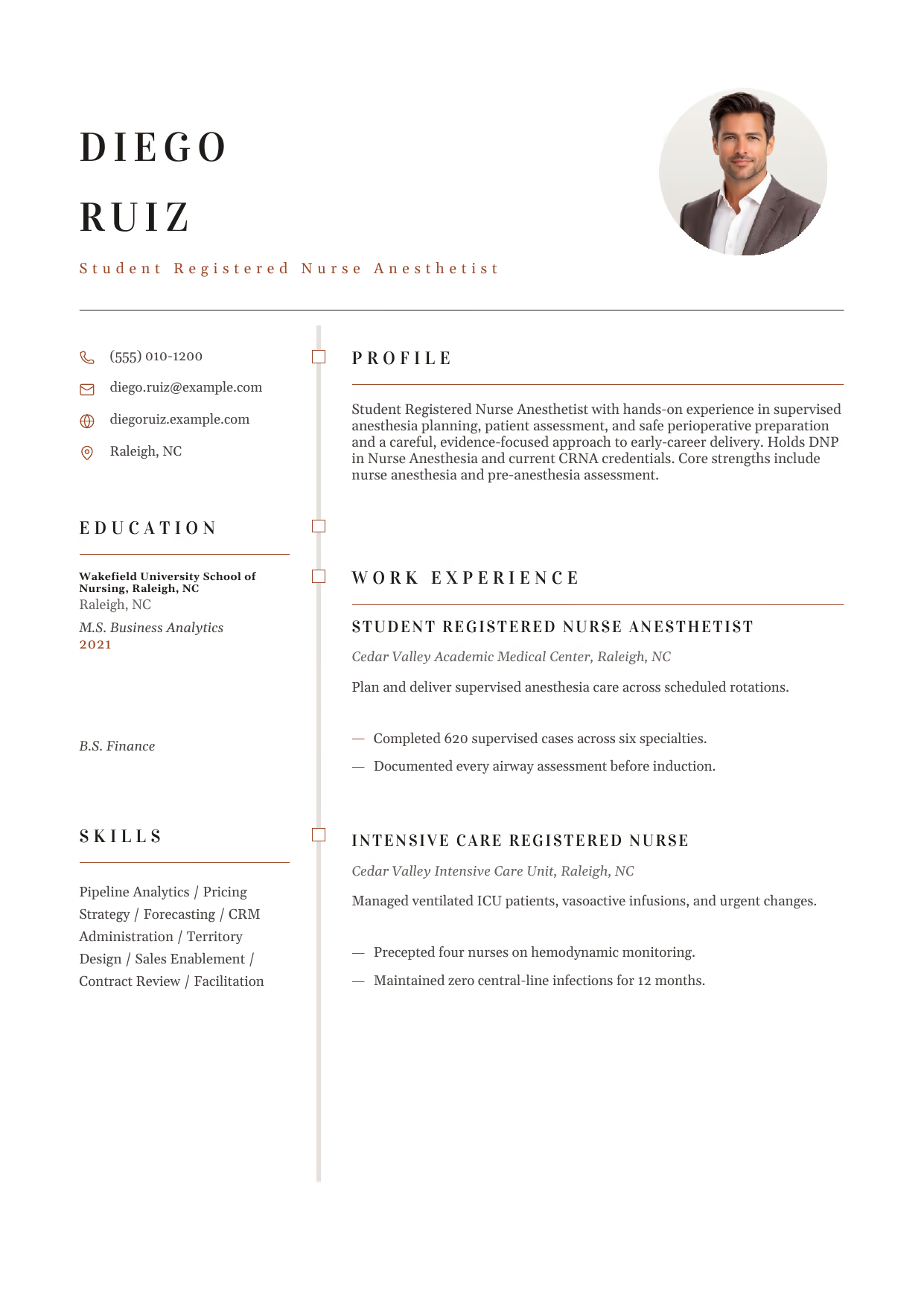
Student Registered Nurse Anesthetist
A builder-ready entry-level Nurse Anesthetist example in the Draco template, showing stage-appropriate evidence in a focused, editable resume format.
- Editable role positioning in the Draco layout
- Role-specific evidence and delivery context
- Review the Draco structure with a clean visual hierarchy
View this resume
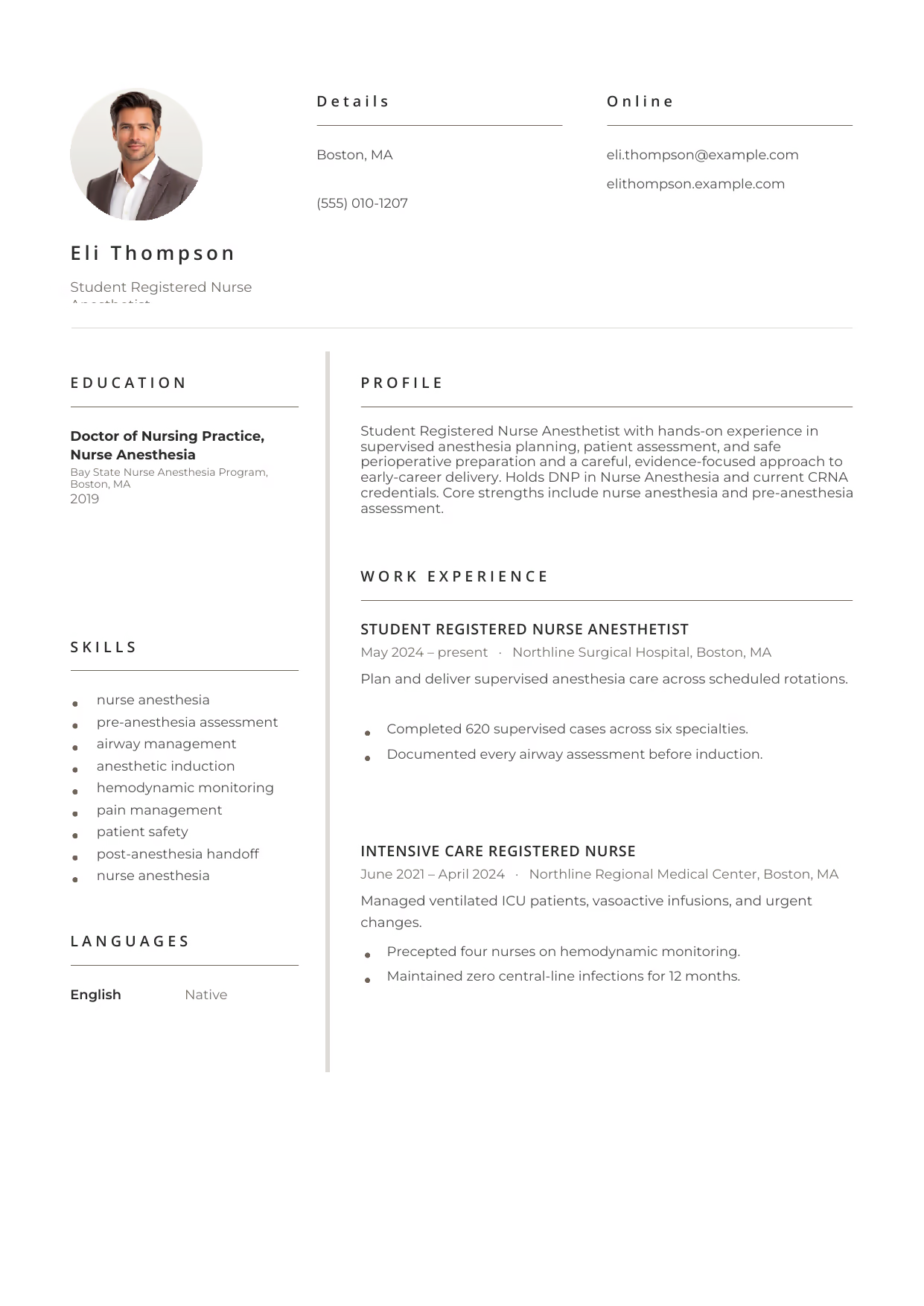
Student Registered Nurse Anesthetist
A builder-ready entry-level Nurse Anesthetist example in the Pictor template, showing stage-appropriate evidence in a focused, editable resume format.
- Editable role positioning in the Pictor layout
- Role-specific evidence and delivery context
- Review the Pictor structure with a clean visual hierarchy
View this resume
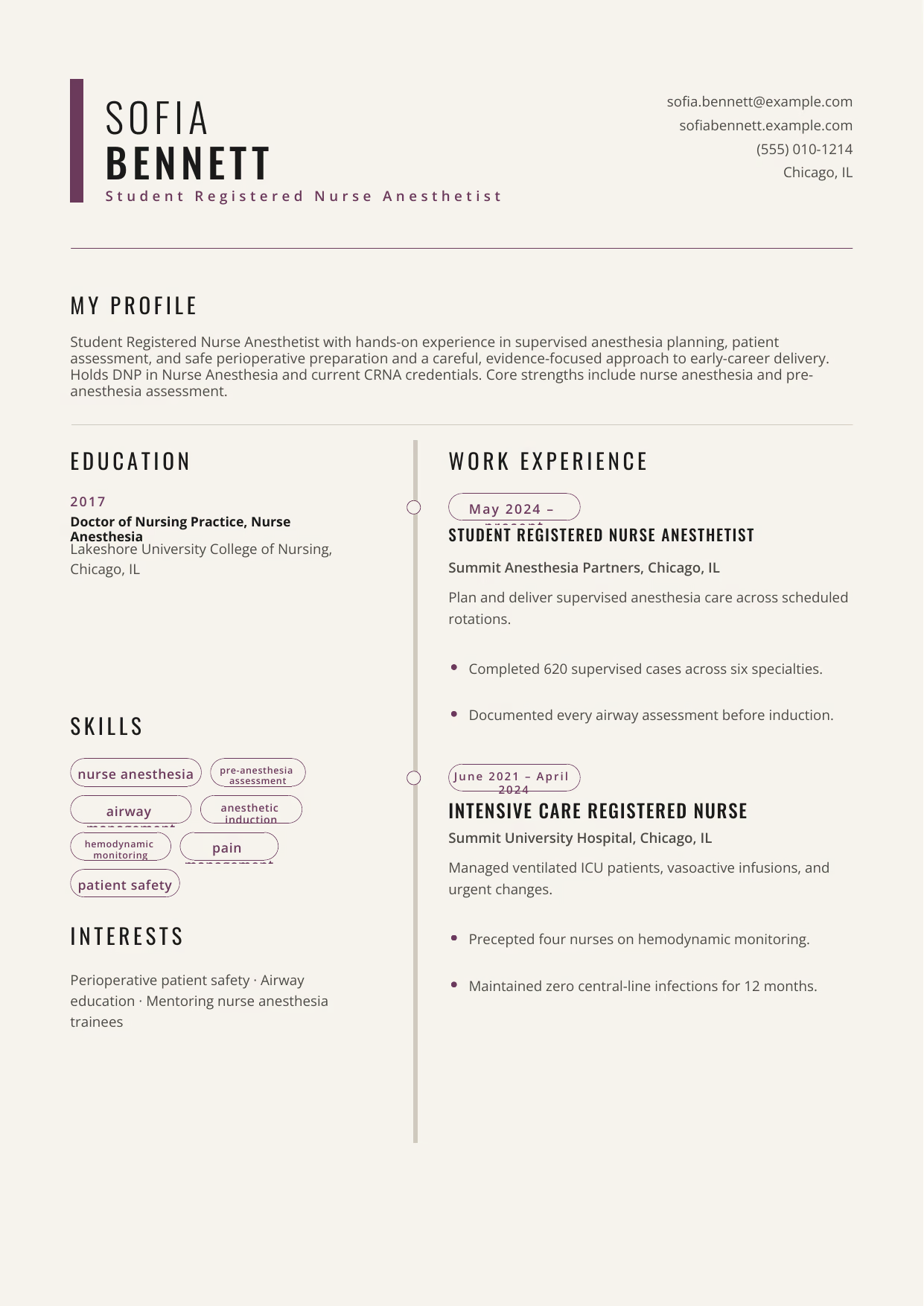
Student Registered Nurse Anesthetist
A builder-ready entry-level Nurse Anesthetist example in the Caelum template, showing stage-appropriate evidence in a focused, editable resume format.
- Editable role positioning in the Caelum layout
- Role-specific evidence and delivery context
- Review the Caelum structure with a clean visual hierarchy
View this resume
Mid-Level Nurse Anesthetist Resume (3-7 Years Experience)
Use these mid-level examples to compare the scope, evidence, and language expected for Nurse Anesthetist roles at this stage.
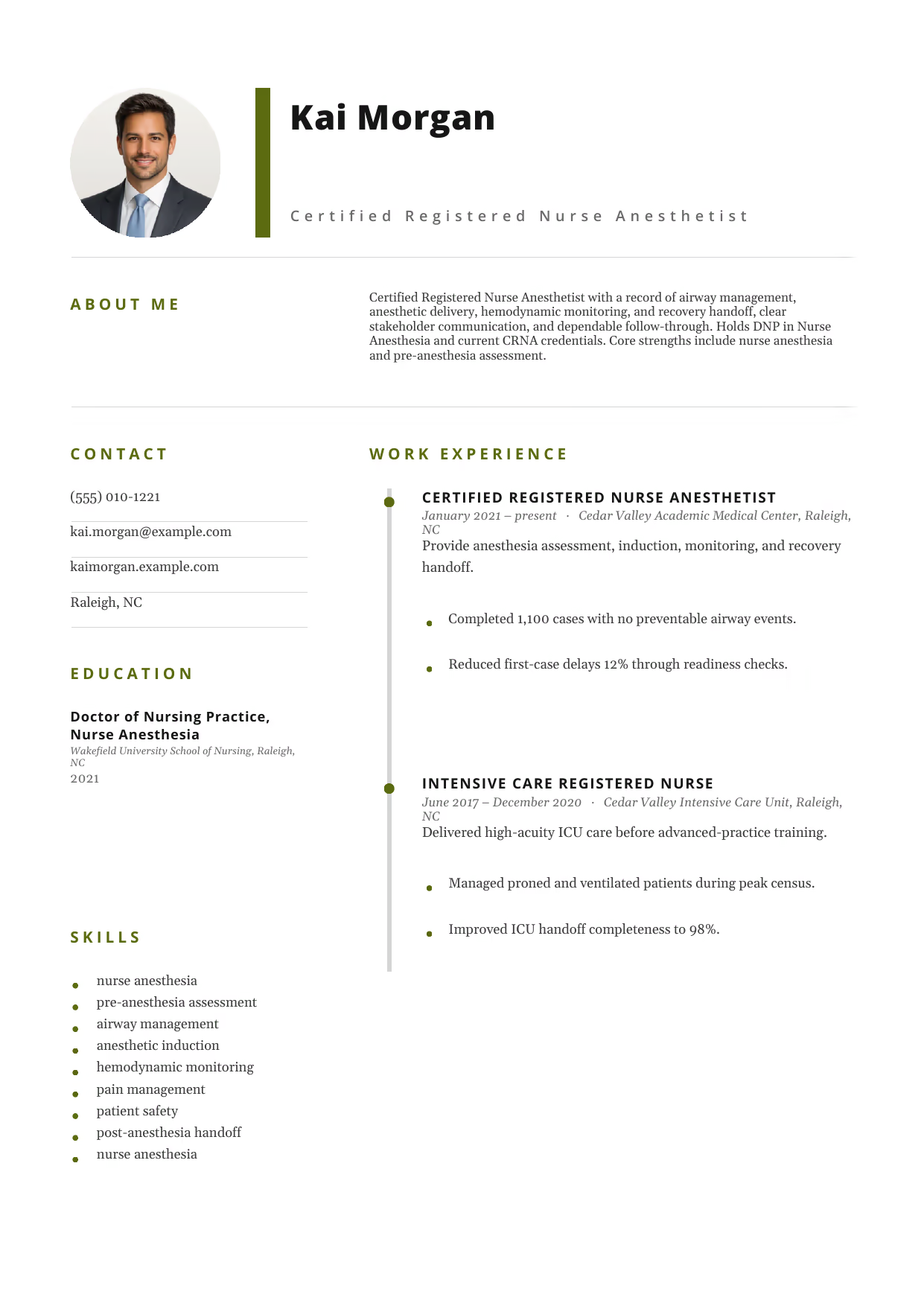
Certified Registered Nurse Anesthetist
A builder-ready mid-level Nurse Anesthetist example in the Pegasus template, showing stage-appropriate evidence in a focused, editable resume format.
- Editable role positioning in the Pegasus layout
- Role-specific evidence and delivery context
- Review the Pegasus structure with a clean visual hierarchy
View this resume
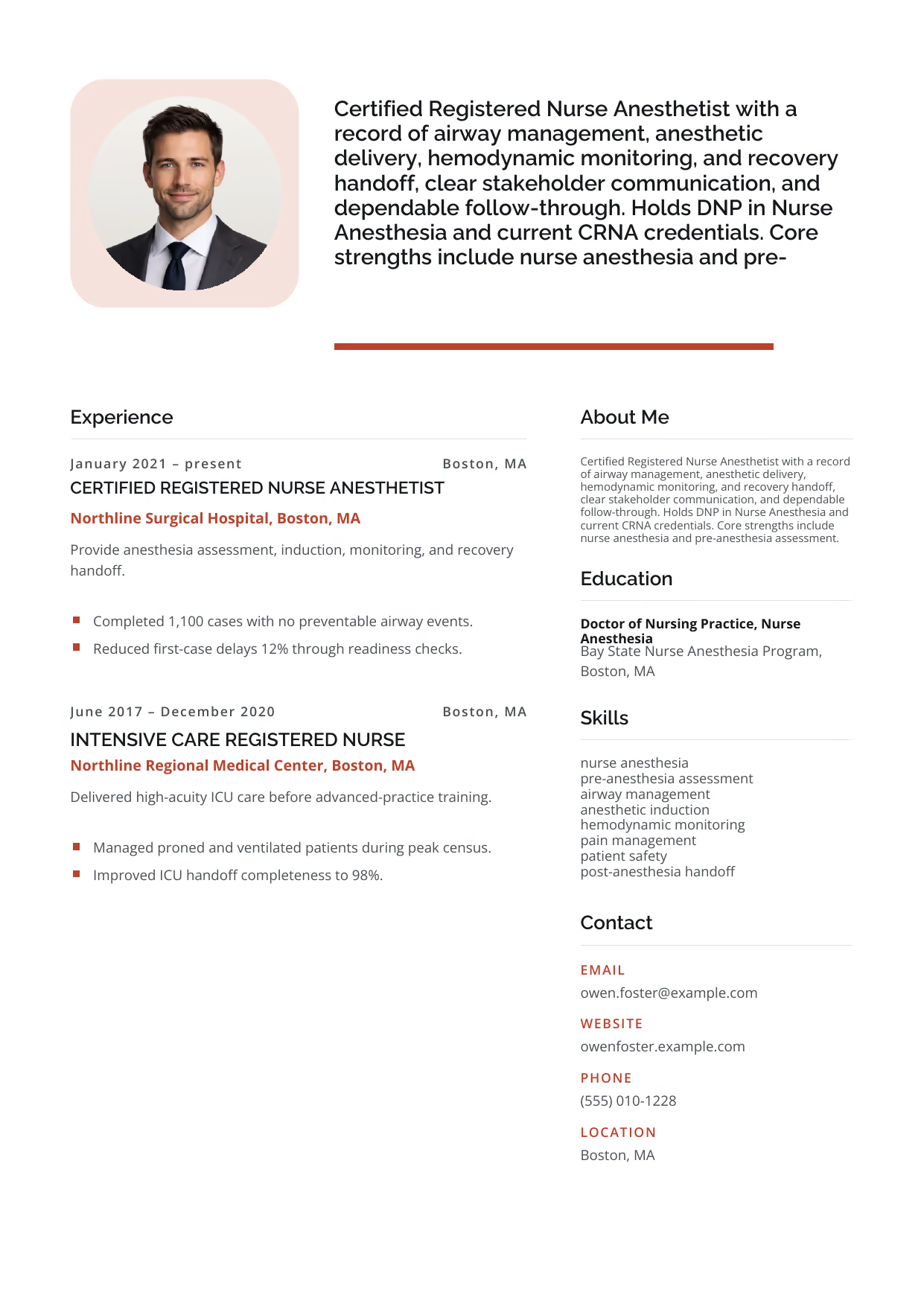
Certified Registered Nurse Anesthetist
A builder-ready mid-level Nurse Anesthetist example in the Andromeda template, showing stage-appropriate evidence in a focused, editable resume format.
- Editable role positioning in the Andromeda layout
- Role-specific evidence and delivery context
- Review the Andromeda structure with a clean visual hierarchy
View this resume

Certified Registered Nurse Anesthetist
A builder-ready mid-level Nurse Anesthetist example in the Bootes template, showing stage-appropriate evidence in a focused, editable resume format.
- Editable role positioning in the Bootes layout
- Role-specific evidence and delivery context
- Review the Bootes structure with a clean visual hierarchy
View this resume
Senior Nurse Anesthetist Resume (8+ Years / Management)
Use these advanced examples to compare the scope, evidence, and language expected for Nurse Anesthetist roles at this stage.

Lead Certified Registered Nurse Anesthetist
A builder-ready advanced Nurse Anesthetist example in the Puppis template, showing stage-appropriate evidence in a focused, editable resume format.
- Editable role positioning in the Puppis layout
- Role-specific evidence and delivery context
- Review the Puppis structure with a clean visual hierarchy
View this resume

Lead Certified Registered Nurse Anesthetist
A builder-ready advanced Nurse Anesthetist example in the Pavo template, showing stage-appropriate evidence in a focused, editable resume format.
- Editable role positioning in the Pavo layout
- Role-specific evidence and delivery context
- Review the Pavo structure with a clean visual hierarchy
View this resume
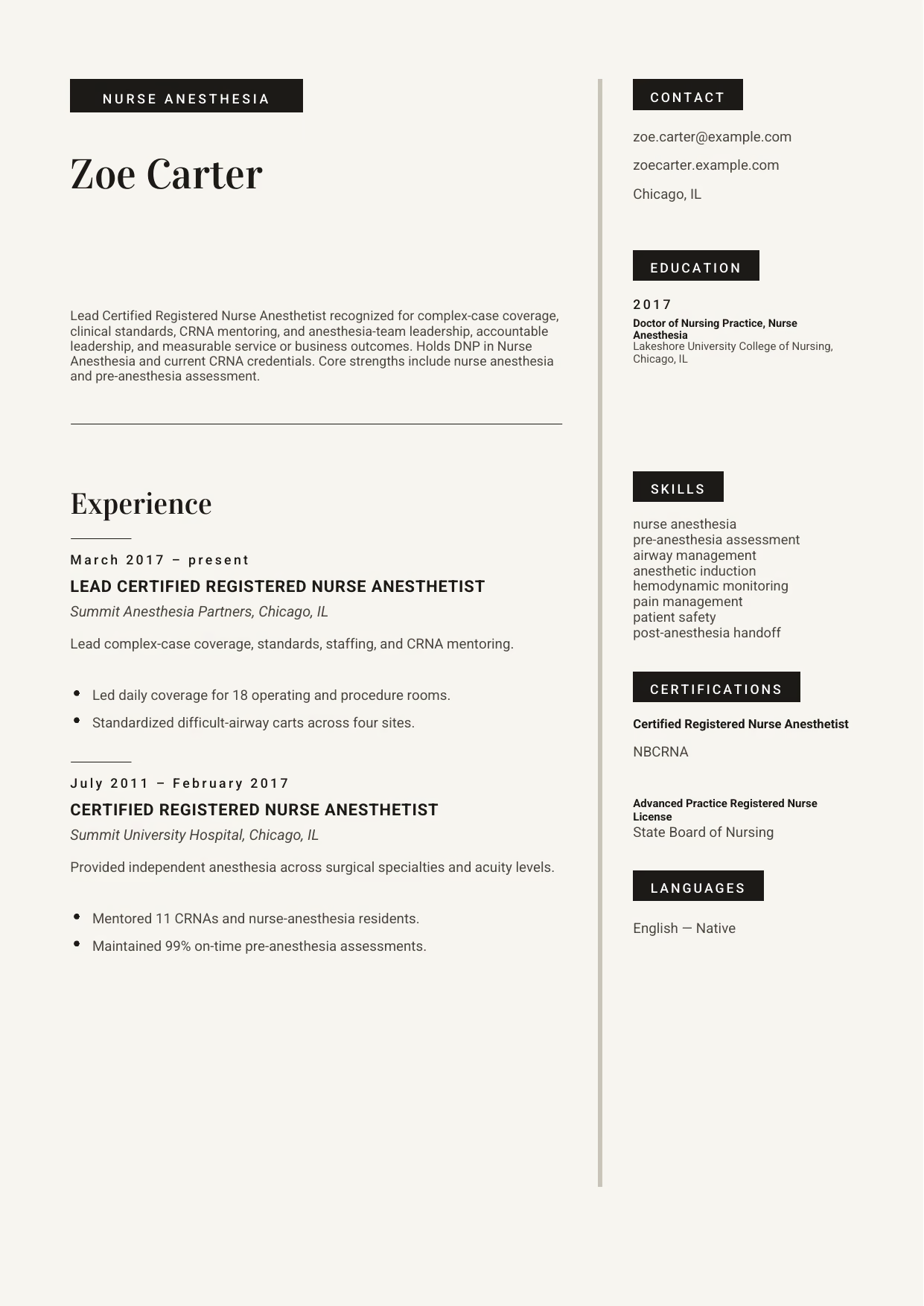
Lead Certified Registered Nurse Anesthetist
A builder-ready advanced Nurse Anesthetist example in the Aquila template, showing stage-appropriate evidence in a focused, editable resume format.
- Editable role positioning in the Aquila layout
- Role-specific evidence and delivery context
- Review the Aquila structure with a clean visual hierarchy
View this resume
How to Write a Nurse Anesthetist Resume
The Resume Summary
The resume summary is your chance to make a strong first impression. It should be a concise overview of your skills, experience, and career goals. Use this formula: Years of Experience + Area of Expertise + Key Achievement + Career Goal
Entry-Level Example: Compassionate Nurse Anesthetist graduate with a strong foundation in anesthesia principles and patient care, eager to apply clinical skills in a collaborative healthcare environment.
Mid-Level Example: Experienced Nurse Anesthetist with a proven track record of providing safe and effective anesthesia care, seeking to optimize patient outcomes and contribute to a leading medical center.
Senior-Level Example: Accomplished Nurse Anesthetist with over 15 years of experience in leading high-performing teams, driving strategic improvements in patient care and operational efficiency.
Work Experience & Action Verbs
Focus on achievements rather than just listing your duties. Achievements highlight the impact of your work and demonstrate your value to potential employers.
- Before: Responsible for administering anesthesia to patients. After: Administered anesthesia to over 500 patients, ensuring safe and effective pain management during surgical procedures.
- Before: Assisted in the pre-operative assessment of patients. After: Conducted comprehensive pre-operative assessments, identifying and addressing potential risks to ensure optimal patient safety.
- Before: Monitored patients during surgical procedures. After: Implemented advanced hemodynamic monitoring techniques, resulting in a 10% reduction in post-operative complications.
- Before: Documented patient care in electronic health records. After: Streamlined documentation processes in electronic health records, improving efficiency and accuracy of patient information.
- Before: Participated in team meetings. After: Collaborated with surgeons and anesthesiologists to develop individualized anesthesia plans, enhancing patient outcomes and satisfaction.
Top Skills for Nurse Anesthetists
Highlight both your hard and soft skills to showcase your comprehensive abilities.
Hard Skills
- Airway Management
- Regional Anesthesia
- General Anesthesia
- Pediatric Anesthesia
- Geriatric Anesthesia
- Hemodynamic Monitoring
- Ventilator Management
Soft Skills
- Critical Thinking
- Communication
- Teamwork
- Problem-Solving
- Decision-Making
- Adaptability
- Empathy
Tools/Software
- Electronic Health Records (EHR)
- Patient Monitoring Systems
- Anesthesia Machines
- Ultrasound Machines
- Ventilators
Education & Certifications
List your education and certifications in reverse chronological order. For experienced Nurse Anesthetists, focus on advanced degrees and certifications.
Required/Recommended Certifications:
- Certified Registered Nurse Anesthetist (CRNA)
- National Board of Certification and Recertification for Nurse Anesthetists (NBCRNA)
- Registered Nurse (RN) License
- Advanced Cardiac Life Support (ACLS)
- Basic Life Support (BLS)
- Pediatric Advanced Life Support (PALS)
10 Common Nurse Anesthetist Resume Mistakes
- Generic Objectives: Using a vague, cookie-cutter objective statement fails to capture attention. Instead, craft a compelling summary highlighting your specific skills and career goals tailored to the Nurse Anesthetist role you’re seeking. This will immediately demonstrate your value to the recruiter and show you’ve put in the effort.
- Listing Duties Instead of Impact: Recruiters know what a Nurse Anesthetist does; they want to know how well you did it. Replace passive phrases like ‘Responsible for anesthesia administration’ with quantified wins like ‘Improved patient satisfaction scores by 15% through optimized anesthesia protocols’.
- Ignoring Keywords: Failing to include relevant keywords from the job description means your resume might not even be seen. Applicant Tracking Systems (ATS) scan for specific terms, so research and integrate anesthesia-related keywords like ‘regional anesthesia,’ ‘airway management,’ and ‘patient safety’ to ensure your resume gets past the initial screening.
- Poor Formatting: A cluttered, hard-to-read resume can be an instant turn-off. Use clear headings, bullet points, and white space to make your resume visually appealing and easy to scan. A well-formatted resume demonstrates professionalism and attention to detail.
- Grammar Errors: Misspelling Core Industry Terminology: Typos in general are bad, but misspelling critical tools or certifications (like ‘CRNA’, ‘NBCRNA’, or ‘ASA Guidelines’) acts as an immediate red flag regarding your attention to detail. Proofread meticulously, or better yet, have someone else review your resume.
- Lack of Quantifiable Results: Vague statements like ‘Improved patient care’ don’t provide concrete evidence of your abilities. Quantify your achievements whenever possible, using metrics like ‘Reduced post-operative complications by 10%‘ or ‘Increased patient satisfaction scores by 15%‘.
- Irrelevant Information: Including irrelevant work experience or skills can distract from your qualifications. Focus on highlighting experiences and skills that are directly related to the Nurse Anesthetist role you’re applying for. This shows you understand the requirements and have the relevant expertise.
- Inconsistent Tense: Switching between past and present tense within the same bullet point or section creates confusion. Use past tense to describe previous experiences and present tense for current roles. Consistency demonstrates attention to detail and professionalism.
- Omitting Certifications: Forgetting to include essential certifications like ‘CRNA’, ‘ACLS’, or ‘PALS’ can be a costly mistake. These certifications are often required for Nurse Anesthetist positions, so ensure they are prominently displayed on your resume.
- Not Tailoring to the Job: Submitting a generic resume for every job application is a common mistake. Customize your resume to match the specific requirements and keywords of each job description. This shows you’ve taken the time to understand the role and are genuinely interested in the opportunity.
Frequently Asked Questions (Nurse Anesthetist)
- What should a Nurse Anesthetist resume emphasize first? Lead with the scope of supervised anesthesia planning, patient assessment, and safe perioperative preparation, then connect your contribution to a clear outcome, tool, or decision.
- Which skills deserve priority on a Nurse Anesthetist resume? Prioritize nurse anesthesia, pre-anesthesia assessment, and airway management when they match the role and can be supported by evidence.
- How can a Nurse Anesthetist show project scope and impact? Name the environment, scale, constraints, and result; airway management, anesthetic delivery, hemodynamic monitoring, and recovery handoff becomes more credible when the context is concrete.
- How should a Nurse Anesthetist describe tools and technical decisions? Describe why you selected a method, how you implemented it, and what changed afterward in the Nurse Anesthetist role.
- Which achievements matter most for a Nurse Anesthetist application? Use outcome-led bullets that show complex-case coverage, clinical standards, CRNA mentoring, and anesthesia-team leadership through delivery quality, measurable scope, or stakeholder value.
- How long should a Nurse Anesthetist resume be? Use the shortest length that proves fit; a focused page can work early-career, while broader Nurse Anesthetist scope may need more room.
- How can a Nurse Anesthetist explain progression between career stages? Group examples by increasing ownership, moving from supervised anesthesia planning, patient assessment, and safe perioperative preparation toward complex-case coverage, clinical standards, CRNA mentoring, and anesthesia-team leadership as responsibility grows.
- Which keywords should a Nurse Anesthetist include for screening systems? Mirror truthful language from the posting, especially anesthetic induction, without stuffing unrelated terms.
- How should a Nurse Anesthetist present reliability, quality, or safety work? Show how you protected outcomes through hemodynamic monitoring and explain the evidence a hiring team can verify.
- What format makes a Nurse Anesthetist resume easy for hiring teams to scan? Use clear headings, readable bullets, and consistent dates so a hiring manager can evaluate Nurse Anesthetist fit quickly.
Crafting a standout Nurse Anesthetist resume requires careful attention to detail and a strategic approach. By following the tips and examples in this guide, you can create a resume that showcases your skills, experience, and accomplishments.
To discover even more strategies and examples for landing your dream job, Search more Nurse Anesthetist resources on our site.
RockStarCV Editorial Team