Skip to interview
RockStarCV.com
Toggle Navigation

Sales Representative Mock Interview: The Developing Candidate

Watch a realistic Sales Representative interview where credible experience is weakened by demo-first discovery, optimistic forecasting, default discounting, and incomplete evidence.
Developing candidate pathInteractive simulation16 chapters
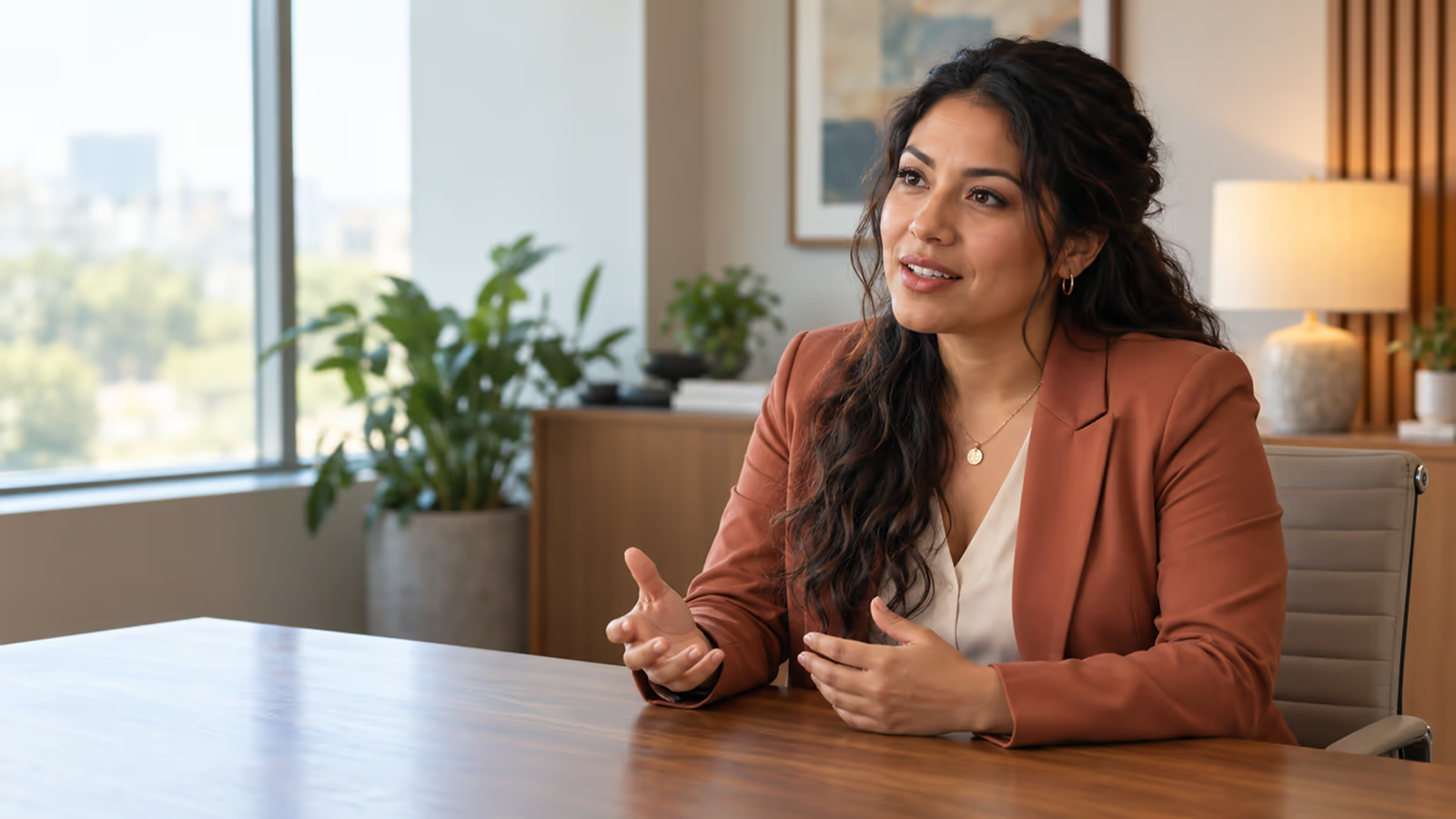
Elena Martinez, the fictional Sales Representative candidate, seated on the right and facing toward the article center
Elena MartinezSales Representative candidate

Watch and practise

Run the complete interview

Complete transcript

RockStarCV NarratorIntroduction

What does a Sales Representative interview sound like when relevant experience is not yet backed by enough evidence? Let's step inside the conversation and listen for the moments where stronger commercial judgment would change the hiring signal.

RockStarCV NarratorMeet Marcus and Elena

Marcus Lee is the Director of Sales. Elena Martinez is a mid-market sales representative showing the developing-candidate path. She is credible and coachable; the opportunity is to make her evidence, authority, and decision process easier to trust.

Marcus LeeThe room

Hi, Elena. Thanks for joining. How are you today?

Elena MartinezThe room

I'm well, thanks. A little nervous, if I'm honest, but excited to speak with you.

Marcus LeeThe room

That's understandable. We'll cover your background, discovery, pipeline management, negotiation, forecasting, and responsible selling. Then you'll have time for questions.

Elena MartinezThe room

Sounds good.

Marcus LeeCareer story

Walk me through your sales experience and the results that best represent your work.

Elena MartinezCareer story

I've been in sales for about five years. I started in an inbound role and then moved into mid-market sales. I've done prospecting, demos, proposals, negotiation, and account handoff. I'm comfortable building relationships and working toward a target.

Elena MartinezCareer story

Last year I finished over quota and won a team award. I've sold to operations and H R leaders, and I use Salesforce every day. I think my main strength is that customers trust me.

Marcus LeeCareer story

Can you put some scale around 'over quota' and the deals you handled?

Elena MartinezCareer story

My annual quota was around one point two million dollars, and I finished at one hundred eight percent. Deals were usually somewhere between thirty and seventy thousand dollars in annual recurring revenue. I don't remember the exact win rate, but it improved over the year.

Marcus LeeWhy this sales role

Why this Sales Representative role, and why Northline?

Elena MartinezWhy this sales role

Northline is growing, and the product seems strong. I like technology and think workforce software is an important area. I'm also ready for a new challenge and would like to work with larger clients.

Marcus LeeWhy this sales role

Which part of the work is the strongest match for you?

Elena MartinezWhy this sales role

Probably the full-cycle part. I like owning the relationship instead of handing it off after the first meeting. I've done that in my current role, so I could get started quickly.

Marcus LeeDiscovery and qualification

A prospect says scheduling mistakes and overtime are expensive and asks for a demo next week. How would you run discovery and decide whether to qualify the opportunity?

Elena MartinezDiscovery and qualification

I'd book the demo and ask questions at the beginning about their challenges, number of employees, current system, and budget. Then I'd show the features that relate to scheduling and overtime.

Marcus LeeDiscovery and qualification

They estimate overtime exposure at one hundred eighty thousand dollars a year. How would you use that number?

Elena MartinezDiscovery and qualification

I would probably include it in the business case because it shows a strong return. If our system can reduce the scheduling issues, the savings could be significant.

Marcus LeeDiscovery and qualification

Would you present the full amount as product savings?

Elena MartinezDiscovery and qualification

Not as a guarantee. I'd need to ask how they calculated it and what else contributes to overtime. I could describe it as the customer's estimate and say we would validate the baseline. I should have made that distinction first.

Marcus LeeDiscovery and qualification

What would make the opportunity qualified?

Elena MartinezDiscovery and qualification

A real problem, enough budget, a decision-maker, and a timeline. I'd also want another meeting scheduled. I tend to keep momentum, although I could be more disciplined about identifying everyone involved before I move the stage.

Marcus LeePipeline recovery

Tell me about a quarter when pipeline coverage was weak and what you did.

Elena MartinezPipeline recovery

I had a slow start to one quarter, so I increased activity. I blocked extra prospecting time, sent more emails, called older leads, and asked marketing for more lists. The team also ran a webinar, which helped.

Marcus LeePipeline recovery

How did you decide which prospects or open deals deserved your time?

Elena MartinezPipeline recovery

I focused on larger opportunities and people who had engaged recently. I also kept following up with a few deals that had gone quiet because I didn't want to give up too early.

Marcus LeePipeline recovery

Did you remove any deals or change the qualification criteria?

Elena MartinezPipeline recovery

I moved some close dates, but I didn't close many out. Looking back, that made my coverage look stronger than it was. I did finish close to target, but I couldn't clearly connect the activity increase to the deals that closed.

Marcus LeeNegotiation

A buyer likes the solution but asks for a twenty-percent discount and says a competitor is cheaper. What do you do?

Elena MartinezNegotiation

I would explain the value and try to meet them somewhere in the middle. Price matters, and I don't want to lose a good deal over a few points if there is flexibility.

Marcus LeeNegotiation

What would you need to learn before offering a discount?

Elena MartinezNegotiation

I'd ask what the competitor includes and whether the budget is actually fixed. I'd also want to know who has final approval. In the past I've sometimes gone to pricing too quickly because I wanted to keep the buyer positive.

Marcus LeeNegotiation

Suppose your approval limit on this fictional deal is ten percent.

Elena MartinezNegotiation

Then I would stay within ten percent or ask my manager. I could trade the discount for a longer term or a faster start date. I haven't always made those trades explicit, but I can see how that would protect value and make the agreement clearer.

Marcus LeeNegotiation

What if the buyer still insists on twenty percent?

Elena MartinezNegotiation

I'd take a business case to the director if there was one. If not, I would offer a different scope or accept that the deal might not work. I wouldn't promise an approval I didn't have.

Marcus LeeForecast judgment

Your champion is enthusiastic, but security review hasn't started and you haven't met the economic buyer. The quarter ends in three weeks. How do you forecast it?

Elena MartinezForecast judgment

I would probably put it in best case, maybe commit if the champion was very confident. Three weeks can be enough if everyone moves quickly.

Marcus LeeForecast judgment

What evidence would support commit?

Elena MartinezForecast judgment

I would want security started, an introduction to the budget owner, agreement on price, and clear next steps. Hearing that list, I don't think I should call it commit yet. I was weighting the champion's confidence more than the missing steps.

Marcus LeeForecast judgment

How do you keep your C R M current?

Elena MartinezForecast judgment

I update it before the Monday forecast call and after major meetings. I record the amount, close date, stage, and next step. My weaker habit is leaving 'follow up' without a date when I'm waiting for the buyer. A dated buyer action would be more useful.

Marcus LeeForecast judgment

Tell me about a forecast miss.

Elena MartinezForecast judgment

I had a deal slip because legal review took longer than expected. I had trusted the champion's timeline and didn't have a direct legal contact. I told my manager as soon as I knew, but it was late in the quarter. Now I ask for the review owner earlier.

Marcus LeeResponsible selling

Tell me about a time you had to reset a claim or timeline a buyer wanted to hear.

Elena MartinezResponsible selling

A buyer wanted a proposal to say the system would save twenty percent of labor cost within ninety days. I knew that was their goal, so at first I put it into the draft as a target.

Marcus LeeResponsible selling

How did you make sure it wasn't read as your company's promise?

Elena MartinezResponsible selling

My solutions consultant flagged the wording. We changed it to say the buyer had identified a twenty-percent goal, subject to baseline validation and adoption. Legal reviewed the final language. I should have separated their goal from our evidence before the first draft.

Marcus LeeResponsible selling

What did the buyer say?

Elena MartinezResponsible selling

They pushed back briefly, but accepted it when we added a measurement workshop. The deal still signed. It taught me that being precise doesn't necessarily reduce trust; sometimes it increases it.

Marcus LeeCandidate questions

Thanks, Elena. What questions do you have for me?

Elena MartinezCandidate questions

What is the culture like on the sales team?

Marcus LeeCandidate questions

Direct and collaborative. We inspect deals closely, but the goal is better decisions, not public blame.

Elena MartinezCandidate questions

That's good to hear. How long does it usually take someone to be promoted?

Marcus LeeCandidate questions

It varies. We look for repeatable performance, clean forecasting, and evidence that someone can help peers improve.

Elena MartinezCandidate questions

That makes sense. I might also have asked what evidence is required at each stage and how implementation handoffs are measured. Those would help me understand the day-to-day expectations better.

Marcus LeeClosing the interview

We have a panel review on Friday and should update you early next week. Anything else you'd like us to know?

Elena MartinezClosing the interview

Just that I'm very interested. Some of your questions showed me where I could be more precise, and I appreciate the conversation.

RockStarCV NarratorOutro 1 · Verdict

Elena is credible and employable. She has quota-carrying experience, can reflect in the moment, and does not become defensive. The gap is not talent; it is evidence and decision discipline.

RockStarCV NarratorOutro 2 · Evidence

Her first discovery answer rushed toward a demo and almost converted the buyer's one hundred eighty thousand dollar exposure estimate into a savings claim.

RockStarCV NarratorOutro 2 · Evidence

The repair is to label the source, test the baseline, map the buying group, and earn the next step.

RockStarCV NarratorOutro 2 · Evidence

Her first forecast instinct followed the champion's confidence.

RockStarCV NarratorOutro 3 · Framework

The stronger version begins with missing evidence: security, economic-buyer access, commercial agreement, owners, and dates. The stage changes after the evidence changes.

RockStarCV NarratorOutro 3 · Framework

Her negotiation answer treated discounting as the default bridge. The repair is to diagnose the constraint, compare like with like, trade terms explicitly, and stay inside real approval authority.

RockStarCV NarratorOutro 4 · Practice

Her claims example became credible when she admitted the first draft was weak, explained who challenged it, separated the buyer's goal from approved evidence, and carried that precision into the handoff.

RockStarCV NarratorOutro 4 · Practice

Practise each answer with five short prompts: customer problem, evidence, your decision, the trade-off, and the measured result. Keep the conversation natural, but do not make the interviewer excavate the proof.

Use Play to hear the conversation, move one slide at a time, or jump directly to a chapter. Captions follow the active speaker.

What to expect

How the interview is likely to unfold

A senior sales representative interview usually moves from your career story into evidence of judgment, then closes with your questions.

  1. Welcome and framing

    Expect brief rapport, a clear agenda, and an opening that establishes the sales motion and customer context.

  2. Your sales story

    Connect your progression to deal scope, quota period, ownership, and a bounded result.

  3. Discovery and qualification

    Separate the customer's estimate from product value, map the buying group, and earn a dated buyer action before advancing the deal.

  4. Pipeline and negotiation

    Show honest inspection, remove weak opportunities, diagnose price pressure, and make every trade explicit.

  5. Forecast and responsible selling

    Let buyer evidence control the category, keep claims within approved evidence, and protect the implementation handoff.

  6. Your questions and close

    Evaluate stage evidence, coaching, handoffs, decision rights, and the first ninety days before closing professionally.

Who might interview you

Different people are testing different things

Listen to the role behind the question. The same example may need a different emphasis for each interviewer.

Recruiter or talent partner

Their purpose
Confirm communication, motivation, level, and practical fit for the sales motion.
They look for
A coherent sales story, concise answers, credible motivation, and realistic expectations.

Sales leader or hiring manager

Their purpose
Decide whether you can diagnose customer problems, manage a defensible pipeline, and forecast honestly.
They look for
Customer evidence, commercial judgment, personal ownership, and clear decision boundaries.

Solutions or customer-success partner

Their purpose
Test whether your promises, discovery notes, and handoff protect delivery reality.
They look for
Accurate requirements, supported claims, visible risks, and a clean transfer of ownership.

Finance, legal, or operations partner

Their purpose
Understand how you negotiate, escalate approval, and keep the record aligned with approved terms.
They look for
Explicit give-get trades, authority awareness, documented terms, and no unsupported outcome promises.

What they are assessing

Make your judgment easy to see

What interviewers need to learn

  • Can you diagnose the customer problem and label the source of every important claim before proposing a solution?
  • Can you make the buying group, decision process, next buyer action, and stage evidence visible?
  • Can you trade terms without treating discount as the default bridge or exceeding your authority?
  • Can you forecast from evidence and hand off the deal without turning an aspiration into a delivery guarantee?

Accentuate

  • The customer problem, evidence source, buying group, decision process, and dated next action.
  • The pipeline definition, what you removed, what you changed, and the bounded result.
  • The constraint behind a negotiation, the explicit give-get, and your approval boundary.
  • The missing forecast evidence, the owners and dates, and what must change before the category changes.

Leave out

  • A quota or revenue number without a period, definition, ownership, or comparison context.
  • Customer enthusiasm treated as qualification or forecast evidence.
  • A discount presented as the only response to price pressure.
  • A buyer goal repeated as if it were a product promise or guaranteed outcome.

Difficult questions

Prepare the evidence, not a script

Use these prompts to choose a truthful example and reconstruct the decision. Your delivery should still sound like you.

A prospect asks for a demo next week and says the current problem is expensive. How do you qualify it?

Why they ask: They are testing whether you diagnose and label evidence before accepting the requested sales motion.

Prepare: The current workflow, consequence, claim source, buying group, decision process, target date, and calendar-based buyer action.

Tell me about a quarter when pipeline coverage was weak.

Why they ask: They need honest inspection and deliberate demand creation rather than cosmetic pipeline growth.

Prepare: The stage definition, coverage period, opportunities removed, outreach change, and bounded result.

A buyer asks for a twenty-percent discount. What do you do?

Why they ask: They are testing diagnosis, value protection, explicit trades, and real approval authority.

Prepare: The actual constraint, like-for-like comparison, alternatives, give-get terms, and escalation boundary.

Your champion is enthusiastic, but security has not started and you have not met the economic buyer. How do you forecast it?

Why they ask: They want evidence-led judgment rather than optimism or pressure from the quarter boundary.

Prepare: Missing dependencies, owners, dates, buyer actions, and the exact proof required to change the category.

Tell me about a claim or timeline you had to reset.

Why they ask: They are testing whether customer trust survives honest limits and supported language.

Prepare: The buyer goal, evidence available, wording changed, approval partners, customer response, and implementation handoff.

What questions do you have for us?

Why they ask: Your questions reveal whether you evaluate the operating system behind quota.

Prepare: Stage evidence, coaching, handoff quality, decision rights, territory conditions, and first-ninety-day expectations.
100 interview questions

Sales Representative Interview Questions: 100 Answers

Keep preparing with the complete question book created for Sales Representative interviews.

View the question book
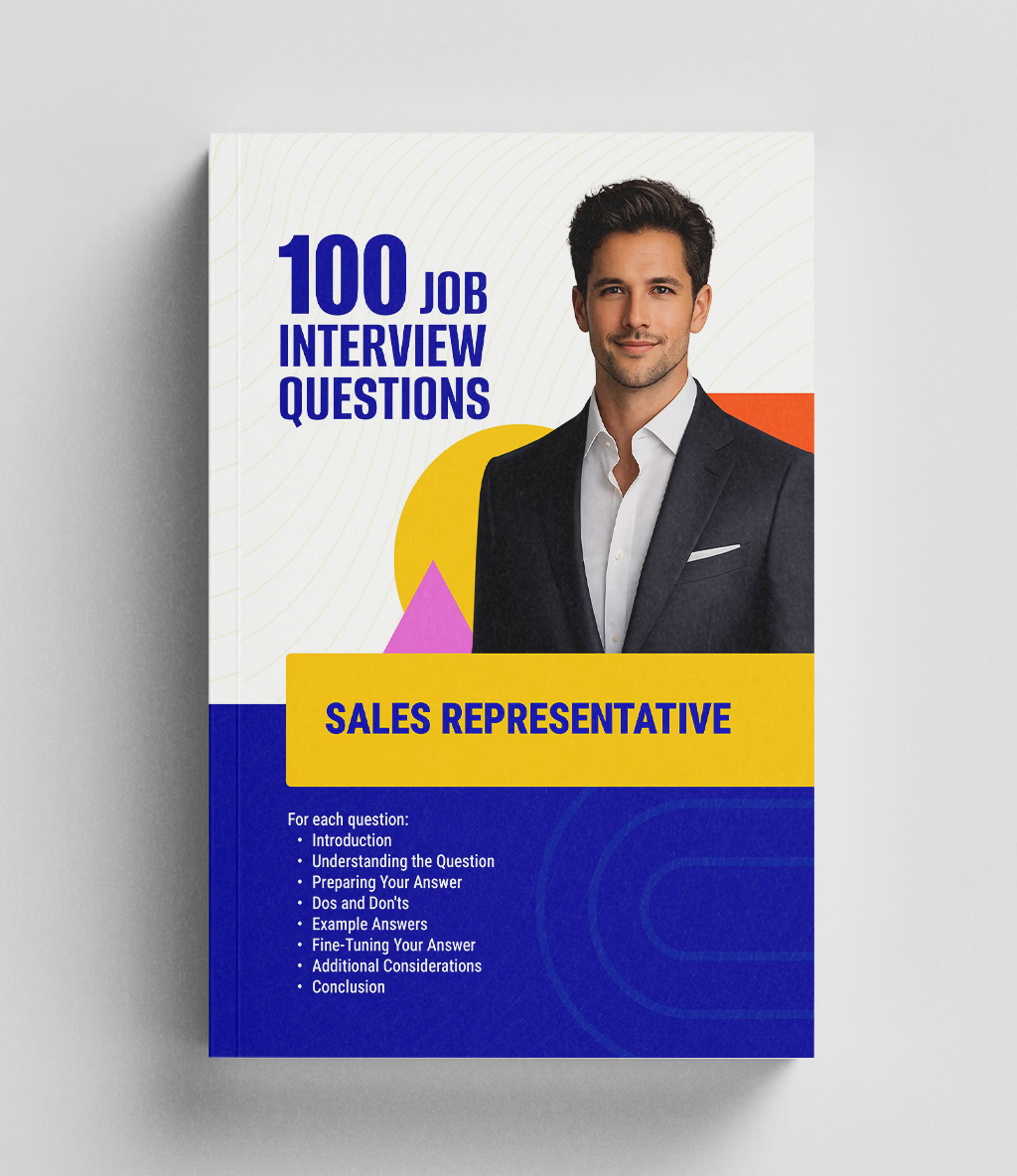
Front-facing 3D book mockup of Sales Representative 100 Job Interview Questions, an interview question book from RockStarCV.com.

How to use this simulation

Listen for decisions, not polished phrases

Pause after each question and form your own answer before Elena Martinez responds. Then compare the evidence provided: the constraint, the decision, the personal contribution, the trade-off, and the result.

Marcus Lee and Elena Martinez are fictional composite characters. Their employers, sales representative examples, figures, and outcomes were created for teaching purposes.

Take the interview with you

Your sales representative interview playbook

Use the printable framework to prepare examples, test your evidence, and rehearse stronger answers away from the screen.

  • Question prompts
  • Evidence checklist
  • Practice notes
Download the PDF playbook

What to notice

A practical viewing checklist

  1. 01

    Identify where Elena moves toward a demo before validating the problem, claim source, buying group, and next buyer action.

  2. 02

    Notice when pipeline and forecast labels follow confidence instead of explicit stage evidence.

  3. 03

    Listen for discount-first negotiation that needs diagnosis, like-for-like comparison, and a give-get trade.

  4. 04

    Pause after each answer and add the evidence source, authority boundary, decision, and bounded result.

Interviewer scorecard

The signals behind a credible answer

Qualification
Replace demo momentum with verified customer evidence and a dated buyer action.
Authority
State what you can approve, what must escalate, and what changes in return.
Decision trail
Let stage and forecast labels change only after the underlying evidence changes.

Research foundation

Sources behind the teaching principles

The sources support the interview guidance, not the fictional candidate’s invented employers, budgets, dates, or outcomes.

Similar interviews

Explore related mock interviews

More from RockStarCV

Build your complete career toolkit