Skip to interview
RockStarCV.com
Toggle Navigation

Sales Representative Mock Interview: The Strong Candidate

Watch a complete Sales Representative interview where Elena makes discovery, pipeline inspection, negotiation, forecasting, and responsible selling evidence visible.

Strong candidate pathInteractive simulation16 chapters
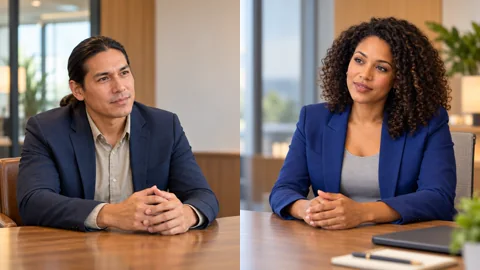
Elena Martinez, the fictional Sales Representative candidate, seated on the right and facing toward the article center
Elena MartinezSales Representative candidate

Watch and practise

Run the complete interview

Complete transcript

RockStarCV NarratorIntroduction

What does a strong Sales Representative interview sound like? Let's step inside the conversation and listen for the customer evidence, commercial judgment, and honest forecasting that make each answer credible.

RockStarCV NarratorMeet Marcus and Elena

Marcus Lee is the Director of Sales. Elena Martinez is a mid-market sales representative showing the strong-candidate path. Listen for how she makes discovery, negotiation, forecasting, and responsible selling visible.

Marcus LeeThe room

Hi, Elena. Thanks for making the time. How's your day going?

Elena MartinezThe room

It's going well, thanks. I had a customer call this morning, so I'm already in conversation mode. I'm glad to be here.

Marcus LeeThe room

Great. We have about thirty minutes. I'll ask about your background, discovery, pipeline management, negotiation, forecasting, and responsible selling. Then we'll leave time for your questions.

Elena MartinezThe room

Perfect. That gives me a good picture of where we're headed.

Marcus LeeCareer story

Walk me through your sales experience and the results that best represent your work.

Elena MartinezCareer story

I've spent five years selling business software and implementation services to United States operations and H R teams. I started in inbound small-business sales, then moved into a full-cycle mid-market role where I own discovery through signature and implementation handoff.

Elena MartinezCareer story

In the last completed calendar year, my new annual recurring revenue quota was one point two million dollars. I finished at one hundred eight percent. Across my won opportunities, average new annual recurring revenue was about forty-eight thousand dollars, the opportunity win rate was twenty-four percent, and the median sales cycle was seventy-eight days.

Marcus LeeCareer story

Those numbers help. What changed in how you sold as the deals became more complex?

Elena MartinezCareer story

I stopped treating a strong first meeting as a qualified deal. I learned to map the operational problem, who owned the budget, who would use the system, what security and legal needed, and what evidence had to exist before I advanced the opportunity. That made my pipeline smaller than it used to be, but much more defensible.

Marcus LeeWhy this sales role

Why this Sales Representative role, and why Northline?

Elena MartinezWhy this sales role

The attraction is the problem, not just the category. Workforce operations touches scheduling, overtime, manager time, and employee experience. I like selling into a situation where discovery has to be operationally specific and where the buyer needs a credible path from purchase to adoption.

Elena MartinezWhy this sales role

I'm also ready for a role where I can own larger buying groups while staying close to the sale. Northline's public materials describe a full-cycle mid-market motion, so the next step is greater complexity, not simply a bigger title.

Marcus LeeWhy this sales role

Understood. Let's put that into a scenario.

Marcus LeeDiscovery and qualification

A prospect says scheduling mistakes and overtime are expensive and asks for a demo next week. How would you run discovery and decide whether to qualify the opportunity?

Elena MartinezDiscovery and qualification

I'd acknowledge the request and earn the right to shape the demo. First I'd ask what is happening today: where schedules are built, how changes reach employees, where the errors appear, and who feels the impact.

Elena MartinezDiscovery and qualification

If the operations director says the company sees about one hundred eighty thousand dollars in annual overtime exposure, I would label that as the customer's estimate. I'd ask how they calculated it, what portion they believe scheduling contributes, and which baseline finance would accept. I would not repeat the full amount as promised savings.

Marcus LeeDiscovery and qualification

What else do you need before you call it qualified?

Elena MartinezDiscovery and qualification

I need the consequence of doing nothing, the decision process, likely budget source, target date, and the people who can validate use, security, finance, and legal. I also need a real next step. For example, a workflow session with an operations manager and payroll lead, scheduled on the calendar, not 'I'll follow up next month.'

Marcus LeeDiscovery and qualification

And if the buyer won't bring anyone else in?

Elena MartinezDiscovery and qualification

I wouldn't force it on call one, but I would treat single-threaded access as a risk, not ignore it. I'd explain that a tailored recommendation requires those perspectives, agree what I can prepare now, and keep the opportunity at an earlier stage until the evidence changes.

Marcus LeePipeline recovery

Tell me about a quarter when pipeline coverage was weak and what you did.

Elena MartinezPipeline recovery

At the start of one quarter, my qualified pipeline was one point nine times my quarterly new annual recurring revenue target. That figure was specific to our company's stage definitions; it wasn't enough for the conversion pattern in my own book of business.

Elena MartinezPipeline recovery

I reviewed every opportunity with three questions: is the problem confirmed, is there access to the decision process, and is there a dated buyer action? I closed out six stalled deals instead of carrying them. Then I built a focused prospecting list from existing customer profiles where shift complexity and payroll integration were relevant.

Marcus LeePipeline recovery

What did you personally change in the outreach?

Elena MartinezPipeline recovery

I replaced broad efficiency language with a specific observation about schedule changes and manager rework, and I asked for a fifteen-minute problem check rather than a demo. I also asked two customer-success colleagues for patterns they were seeing, but I wrote the messages, ran the calls, and updated every next step myself.

Marcus LeePipeline recovery

What was the result?

Elena MartinezPipeline recovery

By the middle of that fictional quarter, qualified coverage was three point one times the target using the same internal definition. I finished at one hundred one percent of the quarterly target. More important, the six removed deals stayed closed rather than reappearing to make the dashboard look healthier.

Marcus LeeNegotiation

A buyer likes the solution but asks for a twenty-percent discount and says a competitor is cheaper. What do you do?

Elena MartinezNegotiation

I start by slowing the conversation down. I'd ask what the lower price includes, which requirements the buyer is comparing, and whether price is the actual blocker or a way to reduce perceived risk. Then I'd return to the outcomes and constraints they validated with us.

Elena MartinezNegotiation

In one fictional deal, my employer allowed me to approve up to ten percent for that opportunity. That was an internal guardrail, not an industry rule. Instead of giving it away, I traded a seven-percent discount for a two-year term, a defined start date, and reference participation after a successful rollout.

Marcus LeeNegotiation

What if they still insist on twenty percent?

Elena MartinezNegotiation

I'd be transparent that I don't have that authority. I could take a documented business case to the sales director, but I wouldn't imply approval. I'd also offer scope or payment-timing options that preserve fit. If the only path is an unprofitable or misleading agreement, I'm comfortable walking away.

Marcus LeeNegotiation

How do you keep that from becoming adversarial?

Elena MartinezNegotiation

By treating the buyer's constraint as real and making each trade visible. The tone is, 'Let's build a workable agreement,' not, 'Let me win the discount argument.'

Marcus LeeForecast judgment

Your champion is enthusiastic, but security review hasn't started and you haven't met the economic buyer. The quarter ends in three weeks. How do you forecast it?

Elena MartinezForecast judgment

I would not call it commit. Enthusiasm is useful, but the stage evidence is incomplete. I'd record the security dependency, missing economic-buyer access, current amount, realistic close date, and the buyer's next action with a date.

Marcus LeeForecast judgment

What would move it into commit for you?

Elena MartinezForecast judgment

A completed security intake or an agreed owner and timeline, direct confirmation from the economic buyer, mutual agreement on commercial terms, and a close plan where the remaining actions have owners and dates. Our exact stage rules would control, but the principle is that the evidence changes before the label changes.

Marcus LeeForecast judgment

Tell me about your own forecast accuracy.

Elena MartinezForecast judgment

In my last completed quarter, I committed three hundred ten thousand dollars in new annual recurring revenue and closed two hundred ninety-six thousand dollars, about four and a half percent below the commit. I reviewed the miss by deal. One legal review took longer than the buyer had represented, and I had not created an independent legal contact soon enough.

Elena MartinezForecast judgment

The change was practical: legal and security milestones became explicit before commit, and I reviewed next-step dates every Friday. I wouldn't present one quarter as proof of permanent accuracy, but it shows how I responded to a specific miss.

Marcus LeeResponsible selling

Tell me about a time you had to reset a claim or timeline a buyer wanted to hear.

Elena MartinezResponsible selling

A prospect asked me to put 'twenty-percent labor savings in ninety days' into a proposal. They had mentioned that number internally, but we had not validated the baseline, and our approved evidence did not support that guarantee.

Elena MartinezResponsible selling

I said I could document their stated goal and build a measurement plan, but I couldn't present it as a promised product result. I brought in our solutions consultant to define what the product could measure and our legal partner to review the wording.

Marcus LeeResponsible selling

Did that put the deal at risk?

Elena MartinezResponsible selling

For a day or two, yes. The champion worried the proposal would feel less bold. But we replaced the unsupported promise with a baseline workshop, agreed adoption measures, and a phased start. The buyer accepted that because the plan was credible.

Marcus LeeResponsible selling

What happened after signature?

Elena MartinezResponsible selling

I held a handoff with implementation, customer success, the buyer's operations lead, and payroll. The order form, approved terms, open risks, success measures, and the customer's stated target were all separated in the record. That kept sales language from becoming an accidental implementation promise.

Marcus LeeCandidate questions

Thanks, Elena. What questions do you have for me?

Elena MartinezCandidate questions

I'd like to understand the evidence behind your stages. What has to be true for a mid-market opportunity to move from discovery to solution validation here?

Marcus LeeCandidate questions

We require a confirmed business problem, a documented buying group, a mutual next step, and a reason to act. Security may enter earlier depending on the account.

Elena MartinezCandidate questions

That's helpful. My second question is about the first ninety days. Which capability would you want a new representative to demonstrate before you expected full quota productivity?

Marcus LeeCandidate questions

Accurate discovery notes and clean handoffs. Product knowledge matters, but we can coach that more quickly than judgment about what is actually true in a deal.

Elena MartinezCandidate questions

That aligns with how I work. Thank you.

Marcus LeeClosing the interview

Great. We have a panel review on Friday and should update you early next week. Is there anything else you'd like us to know?

Elena MartinezClosing the interview

Only that I appreciated the specificity of the questions. The role sounds like a strong fit for how I like to sell. Thank you for the conversation.

RockStarCV NarratorOutro 1 · Verdict

This was a strong interview because Elena made the sale inspectable. She did not rely on confidence, charisma, or one large revenue number.

RockStarCV NarratorOutro 2 · Evidence

Her metrics had periods and denominators. The quota was annual. The commit was quarterly.

RockStarCV NarratorOutro 2 · Evidence

Pipeline coverage used her fictional employer's stage definition. None of those figures were presented as universal benchmarks.

RockStarCV NarratorOutro 2 · Evidence

In discovery, she separated the customer's one hundred eighty thousand dollar exposure estimate from product savings. She mapped the problem, buying group, decision process, timing, and a calendar-based next step.

RockStarCV NarratorOutro 3 · Framework

In forecasting, she let evidence determine the category. Enthusiasm without security progress or economic-buyer access stayed a risk, and the C R M record carried the next action and date.

RockStarCV NarratorOutro 3 · Framework

In negotiation, she protected value without pretending every discount is wrong. She used explicit trade-offs, stayed inside her authority, and offered alternatives instead of an automatic concession.

RockStarCV NarratorOutro 4 · Practice

Responsible selling appeared as ordinary commercial judgment: supported claims, approved language, documented terms, and a handoff that did not turn a sales aspiration into an implementation guarantee.

RockStarCV NarratorOutro 4 · Practice

Prepare one example for each signal: discovery, pipeline recovery, negotiation, forecast judgment, and a promise you were willing to reset. Then practise answering as a conversation, with the evidence close enough to explain.

Use Play to hear the conversation, move one slide at a time, or jump directly to a chapter. Captions follow the active speaker.

What to expect

How the interview is likely to unfold

A senior sales representative interview usually moves from your career story into evidence of judgment, then closes with your questions.

  1. Welcome and framing

    Expect brief rapport, a clear agenda, and an opening that establishes the sales motion and customer context.

  2. Your sales story

    Connect your progression to deal scope, quota period, ownership, and a bounded result.

  3. Discovery and qualification

    Separate the customer's estimate from product value, map the buying group, and earn a dated buyer action before advancing the deal.

  4. Pipeline and negotiation

    Show honest inspection, remove weak opportunities, diagnose price pressure, and make every trade explicit.

  5. Forecast and responsible selling

    Let buyer evidence control the category, keep claims within approved evidence, and protect the implementation handoff.

  6. Your questions and close

    Evaluate stage evidence, coaching, handoffs, decision rights, and the first ninety days before closing professionally.

Who might interview you

Different people are testing different things

Listen to the role behind the question. The same example may need a different emphasis for each interviewer.

Recruiter or talent partner

Their purpose
Confirm communication, motivation, level, and practical fit for the sales motion.
They look for
A coherent sales story, concise answers, credible motivation, and realistic expectations.

Sales leader or hiring manager

Their purpose
Decide whether you can diagnose customer problems, manage a defensible pipeline, and forecast honestly.
They look for
Customer evidence, commercial judgment, personal ownership, and clear decision boundaries.

Solutions or customer-success partner

Their purpose
Test whether your promises, discovery notes, and handoff protect delivery reality.
They look for
Accurate requirements, supported claims, visible risks, and a clean transfer of ownership.

Finance, legal, or operations partner

Their purpose
Understand how you negotiate, escalate approval, and keep the record aligned with approved terms.
They look for
Explicit give-get trades, authority awareness, documented terms, and no unsupported outcome promises.

What they are assessing

Make your judgment easy to see

What interviewers need to learn

  • Can you diagnose the customer problem and label the source of every important claim before proposing a solution?
  • Can you make the buying group, decision process, next buyer action, and stage evidence visible?
  • Can you trade terms without treating discount as the default bridge or exceeding your authority?
  • Can you forecast from evidence and hand off the deal without turning an aspiration into a delivery guarantee?

Accentuate

  • The customer problem, evidence source, buying group, decision process, and dated next action.
  • The pipeline definition, what you removed, what you changed, and the bounded result.
  • The constraint behind a negotiation, the explicit give-get, and your approval boundary.
  • The missing forecast evidence, the owners and dates, and what must change before the category changes.

Leave out

  • A quota or revenue number without a period, definition, ownership, or comparison context.
  • Customer enthusiasm treated as qualification or forecast evidence.
  • A discount presented as the only response to price pressure.
  • A buyer goal repeated as if it were a product promise or guaranteed outcome.

Difficult questions

Prepare the evidence, not a script

Use these prompts to choose a truthful example and reconstruct the decision. Your delivery should still sound like you.

A prospect asks for a demo next week and says the current problem is expensive. How do you qualify it?

Why they ask: They are testing whether you diagnose and label evidence before accepting the requested sales motion.

Prepare: The current workflow, consequence, claim source, buying group, decision process, target date, and calendar-based buyer action.

Tell me about a quarter when pipeline coverage was weak.

Why they ask: They need honest inspection and deliberate demand creation rather than cosmetic pipeline growth.

Prepare: The stage definition, coverage period, opportunities removed, outreach change, and bounded result.

A buyer asks for a twenty-percent discount. What do you do?

Why they ask: They are testing diagnosis, value protection, explicit trades, and real approval authority.

Prepare: The actual constraint, like-for-like comparison, alternatives, give-get terms, and escalation boundary.

Your champion is enthusiastic, but security has not started and you have not met the economic buyer. How do you forecast it?

Why they ask: They want evidence-led judgment rather than optimism or pressure from the quarter boundary.

Prepare: Missing dependencies, owners, dates, buyer actions, and the exact proof required to change the category.

Tell me about a claim or timeline you had to reset.

Why they ask: They are testing whether customer trust survives honest limits and supported language.

Prepare: The buyer goal, evidence available, wording changed, approval partners, customer response, and implementation handoff.

What questions do you have for us?

Why they ask: Your questions reveal whether you evaluate the operating system behind quota.

Prepare: Stage evidence, coaching, handoff quality, decision rights, territory conditions, and first-ninety-day expectations.

100 interview questions

Sales Representative Interview Questions: 100 Answers

Keep preparing with the complete question book created for Sales Representative interviews.

View the question book
Front-facing 3D book mockup of Sales Representative 100 Job Interview Questions, an interview question book from RockStarCV.com.

How to use this simulation

Listen for decisions, not polished phrases

Pause after each question and form your own answer before Elena Martinez responds. Then compare the evidence provided: the constraint, the decision, the personal contribution, the trade-off, and the result.

Marcus Lee and Elena Martinez are fictional composite characters. Their employers, sales representative examples, figures, and outcomes were created for teaching purposes.

Take the interview with you

Your sales representative interview playbook

Use the printable framework to prepare examples, test your evidence, and rehearse stronger answers away from the screen.

  • Question prompts
  • Evidence checklist
  • Practice notes
Download the PDF playbook

What to notice

A practical viewing checklist

  1. 01

    Notice how Elena labels the customer's estimate, tests the baseline, maps the buying group, and earns a dated next action.

  2. 02

    Track how weak opportunities are removed before new pipeline is created and how the coverage definition stays explicit.

  3. 03

    Listen for diagnosis before discount, visible give-get terms, and an honest approval boundary.

  4. 04

    Compare champion enthusiasm with the buyer evidence required for an accurate forecast and implementation handoff.

Interviewer scorecard

The signals behind a credible answer

Discovery
Elena separates the customer's claim from product evidence and qualifies the decision process.
Commercial judgment
Negotiation and pipeline choices make the constraint, trade, authority, and next action visible.
Forecast integrity
The category follows buyer evidence, while claims and handoffs remain bounded.

Research foundation

Sources behind the teaching principles

The sources support the interview guidance, not the fictional candidate’s invented employers, budgets, dates, or outcomes.

Similar interviews

Explore related mock interviews

More from RockStarCV

Build your complete career toolkit