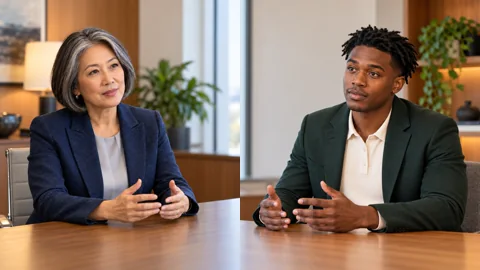
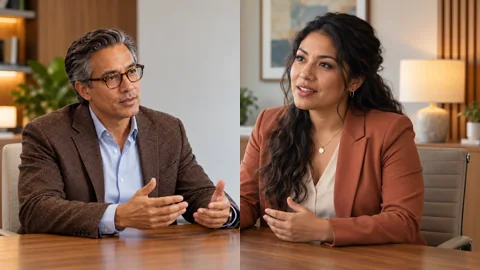
Sales Development Representative Mock Interview: The Developing Candidate
Watch a credible Sales Development Representative candidate whose answers need clearer decisions, ownership, and verification.

Watch and practise
Run the complete interview
Use Play to hear the conversation, move one slide at a time, or jump directly to a chapter. Captions follow the active speaker.
What to expect
How the interview is likely to unfold
A senior sales development representative interview usually moves from your career story into evidence of judgment, then closes with your questions.
Career story
Walk me through your experience as a Sales Development Representative.
Motivation
Why are you interested in this Sales Development Representative role?
Research
Tell me about a time you had to prepare outreach for a target account.
Prospecting
Tell me about a time you had to handle repeated no response.
Qualification
Tell me about a time you had to choose not to advance a weak-fit prospect.
Handoff
Tell me about a time you had to prepare a meeting for an account executive.
Measurement
Tell me about a time you had to evaluate outreach performance.
Who might interview you
Different people are testing different things
Listen to the role behind the question. The same example may need a different emphasis for each interviewer.
Sales Development Manager
- Their purpose
- Evaluate role judgment, ownership, boundaries, and evidence.
- They look for
- prepare outreach for a target account, handle repeated no response, protect customer and seller time despite activity incentives
Cross-functional partner
- Their purpose
- Understand collaboration and escalation.
- They look for
- A clear decision path and honest operating boundary.
Senior peer
- Their purpose
- Test realistic execution detail.
- They look for
- Specific examples and verification.
What they are assessing
Make your judgment easy to see
What interviewers need to learn
- Do you make prepare outreach for a target account visible?
- Do you make handle repeated no response visible?
- Do you make protect customer and seller time despite activity incentives visible?
- Do you make the receiving seller did not need to rediscover basic context visible?
- Do you make evaluate outreach performance visible?
Accentuate
- Context: Define the affected people, system, and consequence in Sales Development Representative work.
- Evidence: Use account research, approved sequences, call notes, CRM criteria, and handoff checklists to verify the condition before acting.
- Decision: Name the decision you personally owned and the trade-off you accepted.
- Boundary: State what required approval, licensed judgment, or accountable escalation.
- Verification: Close with the reviewed result, denominator, or completed handoff.
Leave out
- Unbounded team language with no personal decision.
- Activity presented as an outcome.
- A promise outside your authority.
- A number you cannot verify.
Difficult questions
Prepare the evidence, not a script
Use these prompts to choose a truthful example and reconstruct the decision. Your delivery should still sound like you.
Tell me about a time you had to prepare outreach for a target account.
Why they ask: They are testing research judgment.
Prepare: I used account research to verify the condition, documented the trade-off, and made the next owner explicit. I also use public role-relevant evidence without inventing a private problem, so the work moved without creating a promise or decision outside my authority.
Tell me about a time you had to handle repeated no response.
Why they ask: They are testing prospecting judgment.
Prepare: I used approved sequences to verify the condition, documented the trade-off, and made the next owner explicit. I also respect opt-out and cadence rules, so the work moved without creating a promise or decision outside my authority.
Tell me about a time you had to choose not to advance a weak-fit prospect.
Why they ask: They are testing qualification judgment.
Prepare: I used call notes to verify the condition, documented the trade-off, and made the next owner explicit. I also protect customer and seller time despite activity incentives, so the work moved without creating a promise or decision outside my authority.
Tell me about a time you had to prepare a meeting for an account executive.
Why they ask: They are testing handoff judgment.
Prepare: I used CRM criteria to verify the condition, documented the trade-off, and made the next owner explicit. I also verify need people timing and expectations, so the work moved without creating a promise or decision outside my authority.
Tell me about a time you had to evaluate outreach performance.
Why they ask: They are testing measurement judgment.
Prepare: I used handoff checklists to verify the condition, documented the trade-off, and made the next owner explicit. I also separate activity response acceptance and conversion denominators, so the work moved without creating a promise or decision outside my authority.
How to use this simulation
Listen for decisions, not polished phrases
Pause after each question and form your own answer before Samuel Okoye responds. Then compare the evidence provided: the constraint, the decision, the personal contribution, the trade-off, and the result.
Noah Whitecloud and Samuel Okoye are fictional composite characters. Their employers, sales development representative examples, figures, and outcomes were created for teaching purposes.
Take the interview with you
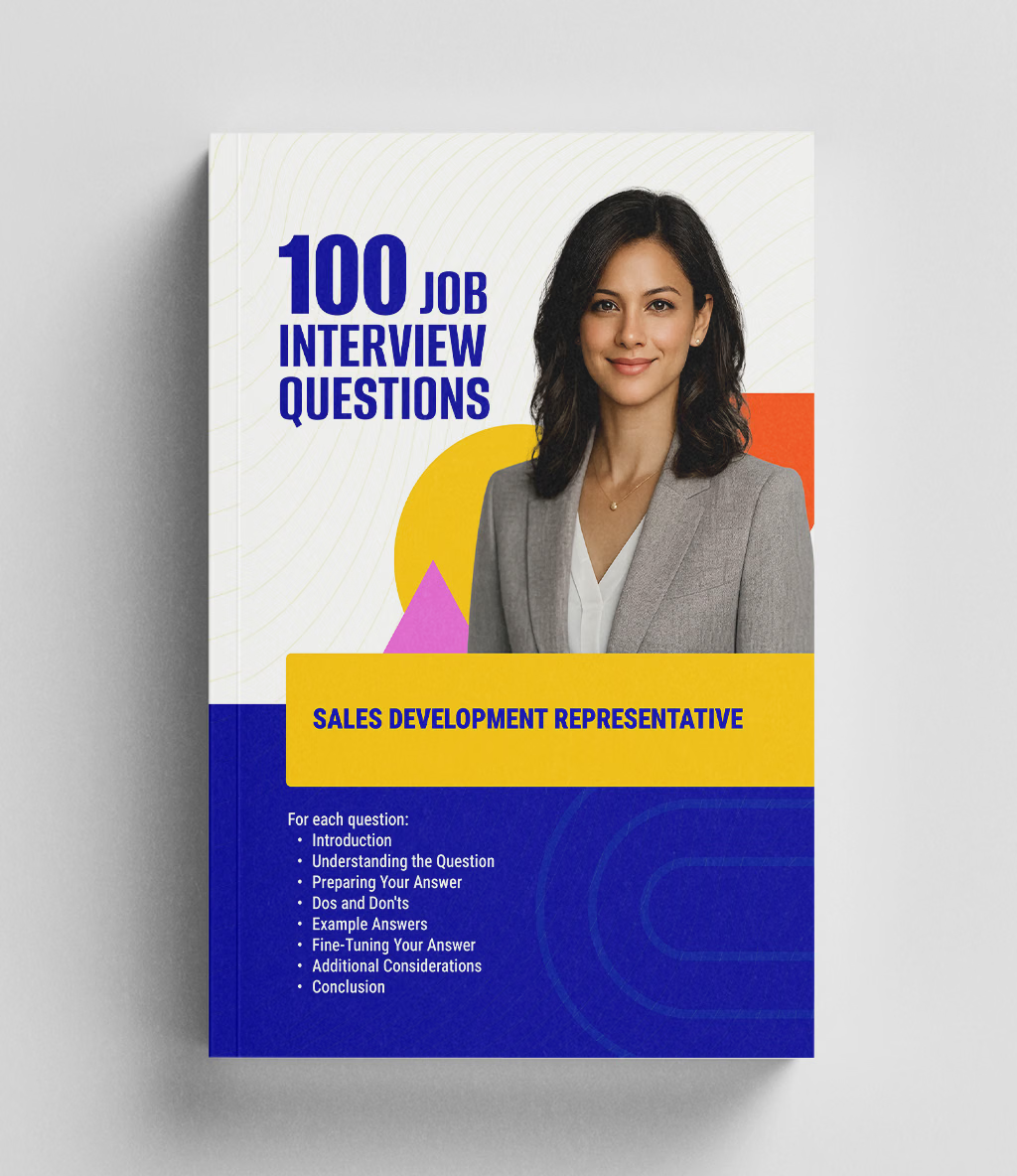
Your sales development representative interview playbook
Use the printable framework to prepare examples, test your evidence, and rehearse stronger answers away from the screen.
- Question prompts
- Evidence checklist
- Practice notes
What to notice
A practical viewing checklist
- 01
Notice where activity replaces evidence.
- 02
Add the decision rule and personal action.
- 03
State the boundary you respected.
- 04
Verify what changed.
Interviewer scorecard
The signals behind a credible answer
- Context
- Define the affected people, system, and consequence in Sales Development Representative work.
- Evidence
- Use account research, approved sequences, call notes, CRM criteria, and handoff checklists to verify the condition before acting.
- Decision
- Name the decision you personally owned and the trade-off you accepted.
Research foundation
Sources behind the teaching principles
The sources support the interview guidance, not the fictional candidate’s invented employers, budgets, dates, or outcomes.
- Sales Development Representative — Occupational Outlook HandbookU.S. Bureau of Labor Statistics
- Sales Development Representative — O*NET SummaryO*NET OnLine, U.S. Department of Labor sponsored
- Advertising and Marketing BasicsU.S. Federal Trade Commission
Similar interviews