Skip to interview
RockStarCV.com
Toggle Navigation

Data Scientist Mock Interview: The Developing Candidate

Watch the same Data Scientist interview with a capable modeler who chases accuracy over rigor and impact — validating on training data and burying the decision in jargon — with a debrief showing exactly how to raise each answer.

Developing candidate pathInteractive simulation16 chapters
Rebecca Stein, fictional Data Scientist candidate, seated on the left and facing toward the article center
Rebecca SteinData Scientist candidate

Watch and practise

Run the complete interview

Complete transcript

RockStarCV NarratorIntroduction

What does a credible Data Scientist interview sound like when the answers still have room to improve? Let us step inside the conversation and listen for what is present, and what is still missing.

RockStarCV NarratorMeet Marcus Lee and Rebecca Stein

Your interviewer is again Marcus Lee, a Director of Data Science. Your candidate is Rebecca Stein, a strong coder who jumps to modeling, trusts his accuracy numbers, and explains in jargon. This is a coachable performance. In the debrief we will show how to raise it.

Marcus LeeWelcome

Hi, Rebecca. Thanks for coming in. How are you today?

Rebecca SteinWelcome

Hi, Marcus. I am good, thanks. A little nervous, but glad to be here.

Marcus LeeWelcome

Completely normal. I will cover your background, how you approach a problem, how you validate a model, and how you communicate results, then leave time for your questions. Sound good?

Rebecca SteinWelcome

Sounds good.

Marcus LeeCareer story

Let us start with your background. Tell me about your experience as a data scientist.

Rebecca SteinCareer story

Sure. I have about five years in data science. I am strong technically, I work in Python, I know a lot of models, and I like building complex pipelines. I built a churn model that got ninety-six percent accuracy, which I was pretty proud of. I enjoy the modeling and the machine learning side the most.

Marcus LeeCareer story

Ninety-six percent sounds high. Did the business end up using that churn model, and did churn actually go down?

Rebecca SteinCareer story

Honestly, I am not sure it got used much. I handed it over and moved on to the next project. I focused on getting the accuracy up. Thinking about it, I do not actually know if it changed any decisions, which I guess is the real measure. The accuracy was the part I cared about.

Marcus LeeCareer story

If churn is rare, say five percent of customers, what accuracy would a model get just by predicting nobody churns?

Rebecca SteinCareer story

Ninety-five percent, by doing nothing. That is a fair point and a little humbling. My ninety-six percent might barely beat predicting no churn at all. I should have been looking at precision and recall on the churners, not overall accuracy. Accuracy flattered the model on an imbalanced problem.

Marcus LeeMotivation

Why are you interested in this role specifically?

Rebecca SteinMotivation

It is a great company with interesting data, and I would get to work on advanced models. The role looks like a strong fit for my technical skills.

Marcus LeeMotivation

What about the impact side, connecting models to decisions?

Rebecca SteinMotivation

Honestly, that is an area I want to grow in. I have been heads-down on modeling and less focused on whether the work changed anything. You framed the role around rigor and real decisions, and I know that is the maturity I need to build beyond just technique.

Marcus LeeProblem framing

When a stakeholder brings you a request, how do you start?

Rebecca SteinProblem framing

I usually get the data and start exploring and building models pretty quickly. I like to get into the modeling and see what I can predict. I figure out the details as I go.

Marcus LeeProblem framing

If you start modeling before clarifying the decision, what is the risk?

Rebecca SteinProblem framing

I could build something elegant that answers the wrong question. That has happened to me, honestly. The better approach is to ask what decision they are trying to make, what they would do differently based on the answer, and how we would know it worked, before I touch the data. Framing first would save me from weeks of work on the wrong problem.

Marcus LeeProblem framing

And if a simple dashboard would answer the question, would you still build a model?

Rebecca SteinProblem framing

My instinct is to build the model because it is more interesting. But I can see that reaching for the fanciest technique when a simple one works is ego, not science. If a cohort analysis or a dashboard answers it, I should just do that. Being trusted for solving the problem matters more than being impressive.

Marcus LeeValidation

How do you know a model is genuinely good and not just good on paper?

Rebecca SteinValidation

I look at the accuracy and the training metrics, and if they are high I feel good about it. If the model fits the data well, that is a strong sign to me.

Marcus LeeValidation

Fitting the data it trained on, though, can just be memorizing. How would you know it generalizes?

Rebecca SteinValidation

You are right, and that is a real gap. High training performance can be overfitting. I should be evaluating on held-out data or with cross-validation, and splitting by time when time matters, so I am testing on data the model has not seen. Judging a model on the data it was trained on is basically grading your own homework with the answer key.

Marcus LeeValidation

Have you run into data leakage, a feature that leaks the answer?

Rebecca SteinValidation

I have heard of it but I am not sure I have ever checked for it carefully. Now that you mention it, a couple of my models were suspiciously good. That might have been leakage, a feature that would not really be available at prediction time or that encoded the outcome. I should check for that, because a model that looks too good usually is.

Marcus LeeData quality

How do you think about data quality?

Rebecca SteinData quality

I do some cleaning, but honestly I want to get to the modeling, so I do not spend as long on the data as I probably should. I assume the data is mostly fine and fix things if they break.

Marcus LeeData quality

If the data reflects a biased past process, what will the model learn?

Rebecca SteinData quality

It will learn the bias and reproduce it, which I had not thought about enough. Garbage in, garbage out applies to fairness too. I should understand how the data was generated, check missingness and labels, and look for bias before modeling, rather than assuming it is fine. The data work is the foundation, not a chore to rush through.

Marcus LeeCommunication

How do you present a modeling result to a non-technical executive?

Rebecca SteinCommunication

I usually walk them through what I did, the model I used, the features, and the metrics. I want them to see the work and how sophisticated it was. I give them the accuracy number so they know it is good.

Marcus LeeCommunication

Does an executive need the algorithm, or the decision and how much to trust it?

Rebecca SteinCommunication

The decision, really. I tend to over-explain the technical side to show my work, but they need the recommendation and how confident they can be, with the algorithm in the appendix. And I should give a range and be honest about what the model does not know, instead of just a single confident number. Overstating confidence is how I would lose their trust the first time it is wrong.

Marcus LeeResponsible ML

Your model performs well overall but is less accurate for one group, or the business wants to deploy something you cannot really explain. What do you do?

Rebecca SteinResponsible ML

My instinct is that if the overall accuracy is good, it is probably fine to ship. But as I say that, I can hear the problem. If it is systematically worse for one group, the average hides real harm.

Marcus LeeResponsible ML

So what would the more responsible move be?

Rebecca SteinResponsible ML

To stop and examine it rather than ship on the average. Measure the disparity, understand where it comes from, and either fix it or escalate. And for a decision that materially affects someone, use a model I can explain, even at some cost in accuracy. Frameworks like the NIST one basically say a model has to be valid, explainable, and fair, not just accurate. I need to treat that as part of the job, not an afterthought.

Marcus LeeResponsible ML

How do you know whether you have been successful in this role?

Rebecca SteinResponsible ML

When I build strong models with good metrics and get to use interesting techniques. If the models are accurate and technically solid, I feel I have done well.

Marcus LeeResponsible ML

Is an accurate model that no one uses a success?

Rebecca SteinResponsible ML

No, and that reframes it for me. A model that no one uses changed nothing, however accurate. Real success is that my work changed a decision and the outcome moved, that my validation was honest so I am not quietly wrong, and that stakeholders trust and act on it. Impact and rigor, not just accuracy. That is the bar I want to hold myself to.

Marcus LeeCandidate questions

Thank you. What questions do you have for me?

Rebecca SteinCandidate questions

What does success look like in the first year, and how do models get into production and monitored here?

Marcus LeeCandidate questions

By a year in I would want a couple of models genuinely in use and trusted, stronger validation, and stakeholders bringing real decisions early. Our path to production is improving and strengthening it would be part of the role.

Rebecca SteinCandidate questions

Thank you. The impact-and-rigor focus is exactly what I want to build, and I take the point that honest validation matters more than the headline accuracy.

Marcus LeeClose

We are finishing first conversations this week and will be in touch about next steps. Thank you for coming in, Rebecca.

Rebecca SteinClose

Thank you, Marcus. Honestly, these questions have shown me where to grow beyond the modeling. I appreciate it. Goodbye.

RockStarCV NarratorOutro 1 · Verdict

The verdict here is encouraging. Rebecca is a capable modeler and honest about his gaps, reaching a stronger answer almost every time Marcus pushed. The problem was not coding ability. He chased accuracy without framing the decision, validated on the training data, and had not thought about leakage or bias.

RockStarCV NarratorOutro 2 · Evidence

Listen to the gaps. He jumped to modeling without framing the decision. He judged the model on training accuracy, which on an imbalanced problem barely beat doing nothing. And he did not know whether the model changed anything.

RockStarCV NarratorOutro 2 · Evidence

Notice how often Rebecca corrected himself under probing. He reached the stronger answer about framing, held-out validation, leakage, and bias. In an interview you rarely get that second chance, so the better version has to come out first.

RockStarCV NarratorOutro 2 · Evidence

Four fixes would transform this interview. Frame the decision before modeling. Validate on held-out data and hunt for leakage. Lead with the recommendation and the uncertainty, not the algorithm. And check for disparate impact, not just the overall number.

RockStarCV NarratorOutro 3 · Framework

The framework is the same for every candidate. Decision, data, validation, communication, responsibility. Rebecca had the technical skill for all five. He simply chased accuracy instead of rigor and impact.

RockStarCV NarratorOutro 3 · Framework

Take one line and rewrite it. Instead of, I built a churn model with ninety-six percent accuracy, say, the model helped the retention team prioritize outreach, validated on held-out data, with precision and recall at the threshold they act on. Same skill, far more credible.

RockStarCV NarratorOutro 4 · Practice

Here is your practice prompt. Find one model you would cite by its accuracy, and replace it with the decision it changed and how you validated it honestly. That shift is the difference you just heard.

RockStarCV NarratorOutro 4 · Practice

Prepare with evidence. Interview with confidence. Continue your preparation at Rock Star C V dot com.

Use Play to hear the conversation, move one slide at a time, or jump directly to a chapter. Captions follow the active speaker.

What to expect

How the interview is likely to unfold

A senior data scientist interview usually moves from your career story into evidence of judgment, then closes with your questions.

  1. Welcome and framing

    Expect brief rapport, introductions, and an outline of the conversation.

  2. Your career story

    Connect your experience to decisions changed, not just models built.

  3. Problem framing

    Show how you start from the decision and match the method to it.

  4. Validation and data quality

    Demonstrate honest validation, leakage-hunting, and respect for the data.

  5. Communication and responsibility

    Convey uncertainty plainly and handle bias and explainability.

  6. Your questions and close

    Clarify the path to production and monitoring, then confirm next steps.

Who might interview you

Different people are testing different things

Listen to the role behind the question. The same example may need a different emphasis for each interviewer.

Recruiter or talent partner

Their purpose
Confirm motivation, level, and communication before a deeper assessment.
They look for
A clear story, credible interest, and concise answers.

Director of data science or hiring manager

Their purpose
Decide whether you connect rigor to real decisions.
They look for
Decision framing, honest validation, clear communication, and responsibility.

Senior data scientist or ML engineer

Their purpose
Test your technical rigor and production thinking.
They look for
Held-out validation, leakage awareness, metric choice, and monitoring.

Business or product stakeholder

Their purpose
Understand how you translate models into decisions.
They look for
Plain communication of uncertainty and models people can act on.

What they are assessing

Make your judgment easy to see

What interviewers need to learn

  • Do you start from the decision, not the model?
  • Do you validate on data the model has not seen?
  • Can you communicate uncertainty plainly?
  • Do you manage bias and explainability responsibly?

Accentuate

  • The decision the work served.
  • How you checked data quality and leakage.
  • How you validated the model honestly.
  • How you handled fairness and explainability.

Leave out

  • A high accuracy number with no decision behind it.
  • Validation on the training data.
  • Jargon-heavy explanations that bury the recommendation.
  • Shipping on the average without checking the groups.

Difficult questions

Prepare the evidence, not a script

Use these prompts to choose a truthful example and reconstruct the decision. Your delivery should still sound like you.

Tell me about a model that failed in production.

Why they ask: They test honesty and whether you learn from failure.

Prepare: What drifted or leaked, how you caught it, and the monitoring you added.

Your accuracy is 95% on an imbalanced problem. Is that good?

Why they ask: They are testing whether you understand base rates and metrics.

Prepare: Why that may barely beat predicting the majority class, and which metrics fit the decision.

The business wants to ship a model you can't fully explain.

Why they ask: This is a responsibility and risk boundary.

Prepare: How you match explainability to the stakes and when you prefer an interpretable model.

Your model is less accurate for one group.

Why they ask: They test fairness and whether you ship on the average.

Prepare: How you measure disparity, find its source, and fix or escalate it.

A stakeholder asks for a model; a dashboard would do.

Why they ask: They distinguish rigor from complexity for its own sake.

Prepare: How you propose the simplest thing that answers the decision.

How do you make sure your model is actually used?

Why they ask: They are testing impact, not just accuracy.

Prepare: How you involve stakeholders, make the output actionable, and are honest about limits.
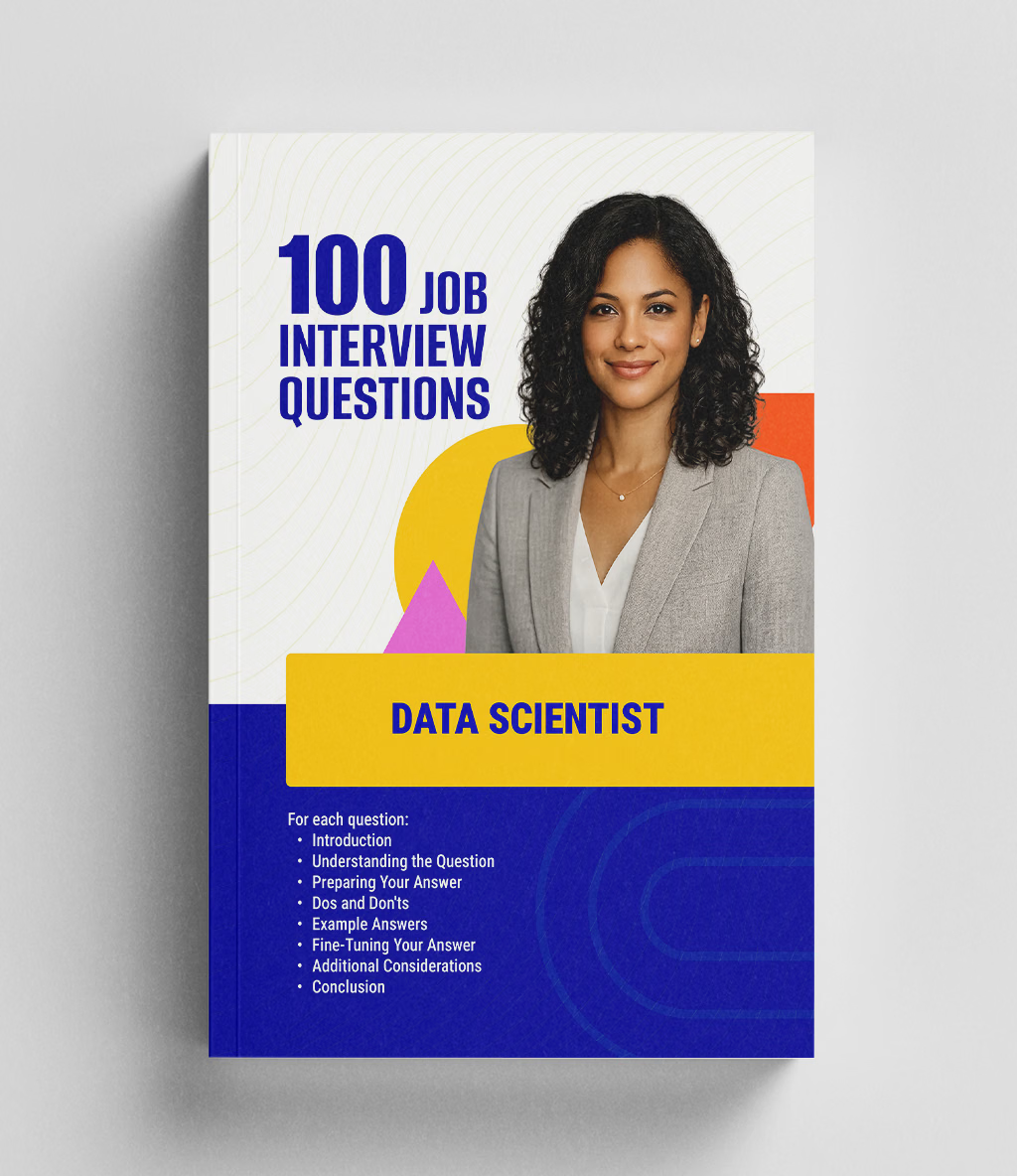
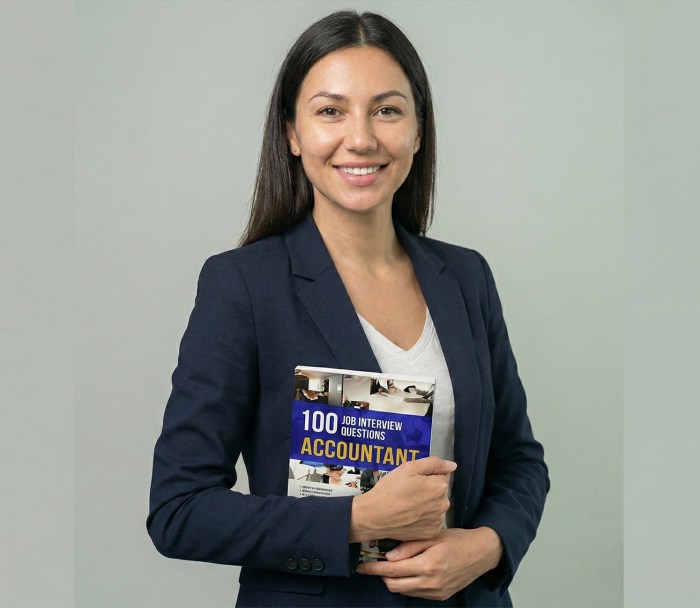
100 interview questions

Data Scientist Interview Questions: 100 Answers

Keep preparing with the complete question book created for Data Scientist interviews.

View the question book
Front-facing 3D book mockup of Data Scientist 100 Job Interview Questions, an interview question book from RockStarCV.com.

How to use this simulation

Listen for decisions, not polished phrases

Pause after each question and form your own answer before Rebecca Stein responds. Then compare the evidence provided: the constraint, the decision, the personal contribution, the trade-off, and the result.

Marcus Lee and Rebecca Stein are fictional composite characters. Their employers, data scientist examples, figures, and outcomes were created for teaching purposes.

Take the interview with you

Your data scientist interview playbook

Use the printable framework to prepare examples, test your evidence, and rehearse stronger answers away from the screen.

  • Question prompts
  • Evidence checklist
  • Practice notes
Download the PDF playbook

What to notice

A practical viewing checklist

  1. 01

    Catch a model judged by training accuracy instead of held-out data.

  2. 02

    Hear a high accuracy number with no decision behind it.

  3. 03

    Notice jargon that buries the recommendation.

  4. 04

    Pause after each answer and add the framing, the validation, or the fairness check.

Interviewer scorecard

The signals behind a credible answer

Framing
Start from the decision and how you would know it worked, before modeling.
Validation
Evaluate on held-out data and hunt for leakage, not training accuracy.
Responsibility
Check disparate impact across groups, not just the overall number.

Research foundation

Sources behind the teaching principles

The sources support the interview guidance, not the fictional candidate’s invented employers, budgets, dates, or outcomes.

Similar interviews

Explore related mock interviews

More from RockStarCV

Build your complete career toolkit