Chapter 01
Introduction
The interviewer wants direction compatible with this role, not a precise forecast.
Five years is enough time for growth, but not a reliable title forecast. Five-year plans should describe capabilities you can plausibly develop here. Choose the professional starting point that makes this answer useful now. Name the work, responsibility, or transition before adding background, so the interviewer can understand why the detail belongs in your response.
Five years is far enough away that a precise title can sound artificial. A strong answer names the capability, scope, and kind of contribution you hope to build, while showing why this role is a credible step. Test the evidence against the vacancy. Keep the facts you can explain in a follow-up, remove biography that does not help the decision, and make the final sentence point toward the role in front of you.
- 01Set the direction
The interviewer wants direction compatible with this role, not a precise forecast.
- 02Choose the proof
Five years is enough time for growth, but not a reliable title forecast.
- 03Connect it to the role
Five-year plans should describe capabilities you can plausibly develop here.
Chapter 02
Understanding the Question
They are testing whether your direction can develop through this job.
The interviewer may ask why this role, rather than a different job, advances that direction. Read the question as an assessment, not only a request for information. Decide which judgment, risk, working habit, or motivation the interviewer needs to see, then make that purpose visible through one concrete detail.
The interviewer is testing direction and retention fit, not asking for a binding career contract. They may look for whether your ambitions align with the work and whether you understand the growth path available. Prepare for the next question as well as this one. If you mention a result, transition, conflict, or constraint, keep the context and your exact contribution ready so the interviewer can test the claim without weakening it.
- 01What they are testing
They are testing whether your direction can develop through this job.
- 02Prepare the follow-up
The interviewer may ask why this role, rather than a different job, advances that direction.
- 03Keep the evidence ready
Read the question as an assessment, not only a request for information.
Chapter 03
Preparing Your Answer
Think about capabilities and contribution rather than a promised title.
Choose capabilities you want to deepen and a contribution you hope to make. Name one area of depth and one broader contribution you hope to make over time. Build a small evidence bank before rehearsing. Write the setting, the decision you owned, the action you took, and the observable result. That gives you facts to select instead of forcing you to invent polished language under pressure.
Consider the skills you want to deepen and the problems you want to solve at larger scale. Research the role's likely progression, then state a plausible direction and what you would need to learn first. Avoid promising a job title the employer may not use. Arrange the answer so the listener never has to guess why a detail matters. Put the strongest evidence near the claim it supports, keep your role precise, and finish with the lesson or relevance to this position.
- 01Build your evidence
Think about capabilities and contribution rather than a promised title.
- 02Shape the sequence
Choose capabilities you want to deepen and a contribution you hope to make.
- 03Keep the evidence ready
Name one area of depth and one broader contribution you hope to make over time.
Chapter 04
Dos and Don’ts
What to do: Show a plausible path that begins with doing this job well.
Do
- Show a plausible path that begins with doing this job well.
- Do let the first year of this job remain important in the plan.
Don’t
- Do not claim you will hold a specific internal position you know little about.
- Do not promise a particular internal title before knowing the organization.
- Tie the aspiration to the work in front of you.
- Do not imply you plan to leave as soon as you acquire a credential, or pretend you have no ambitions because you think that sounds loyal.
Chapter 05
Example Answers
A useful answer can distinguish expertise from management.
If you hope to lead people, explain why; if you prefer deeper specialist work, make that a positive choice rather than a fallback. Compare the examples by structure rather than memorizing their wording. Notice where each candidate sets the context, states personal ownership, and closes with a result, lesson, or reason the experience matters to the employer.
“I would like to be trusted with more complex process improvements and to help newer colleagues learn the work. The first step is to master this role and understand the customers and systems well enough to make sound changes.”
Why it works: Treat this first example as a model for sequence. Replace its workplace, task, people, and result with truthful details of your own while keeping the connection between the claim and the supporting evidence.
“In five years I hope to be a stronger business partner: someone who can explain uncertainty, challenge assumptions, and help teams act on analysis. This position offers the mix of reporting and stakeholder work I need to develop that.”
Why it works: Use the second example to explore a different route to the same competency. Your version can come from paid work, study, volunteering, or a project, provided you state the context and do not overstate your responsibility.
“I do not have a fixed title in mind. I want to deepen my technical expertise while staying close to practical delivery. I would judge progress by the quality of problems I can solve and the people I can support.”
Why it works: Use the third example to test whether your answer sounds recognisably yours. Keep the useful structure, then change every borrowed fact.
Chapter 06
Fine-Tuning Your Answer
A truthful, flexible answer is better than artificial certainty.
Avoid promising a promotion path the organization has not described. Fine-tuning is mainly subtraction and precision. Move the strongest fact earlier, replace labels with actions, and check that the ending answers the question rather than drifting into a second example or an unrelated career summary.
A flexible path can still show ambition when the next learning step is specific. Career paths can change as you learn. It is reasonable to name a direction and the evidence you would use to refine it over time. Record one practice version and listen for the first useful fact. If it arrives late, shorten the setup. Then check every result, number, and claim so the final wording remains accurate when the interviewer asks for detail.
- 01Make it sharper
A truthful, flexible answer is better than artificial certainty.
- 02Test the wording
Avoid promising a promotion path the organization has not described.
- 03Keep the evidence ready
Fine-tuning is mainly subtraction and precision.
Chapter 07
Additional Considerations
A flexible destination can still have a disciplined next step.
The answer can change as you discover strengths and opportunities. Adapt the structure to your circumstances without hiding them. Career changes, gaps, early-career evidence, senior scope, confidentiality, and reasonable boundaries may change the example, but they do not remove the need for relevance and honest ownership.
If the position itself has limited promotion opportunities, emphasize increased impact and mastery rather than inventing a ladder you have not confirmed. Protect credibility where context is sensitive. Use the level of detail you can share, separate team results from your contribution, and explain constraints without disclosing private information or blaming people who are not present.
- 01Adapt the answer
A flexible destination can still have a disciplined next step.
- 02Keep it credible
The answer can change as you discover strengths and opportunities.
- 03Keep the evidence ready
Adapt the structure to your circumstances without hiding them.
Chapter 08
Conclusion
Anchor the future in doing this role well first.
Future plans should grow out of credible work you can begin here. Bring the answer back to one clear message. The interviewer should be able to repeat your main claim, the evidence supporting it, and why it matters to the role without reconstructing the meaning from several disconnected points.
Conclude with the near-term commitment: deliver well in this job, learn from the team, and grow toward a contribution that benefits both you and the organization. End deliberately. Stop when the question has been answered, the evidence is credible, and the relevance is clear. A concise landing invites a useful follow-up and leaves the listener with the professional judgment you intended to show.
A concise landing invites a useful follow-up and leaves the listener with the professional judgment you intended to show.
Source & adaptation
Built from the RockStarCV interview-question library
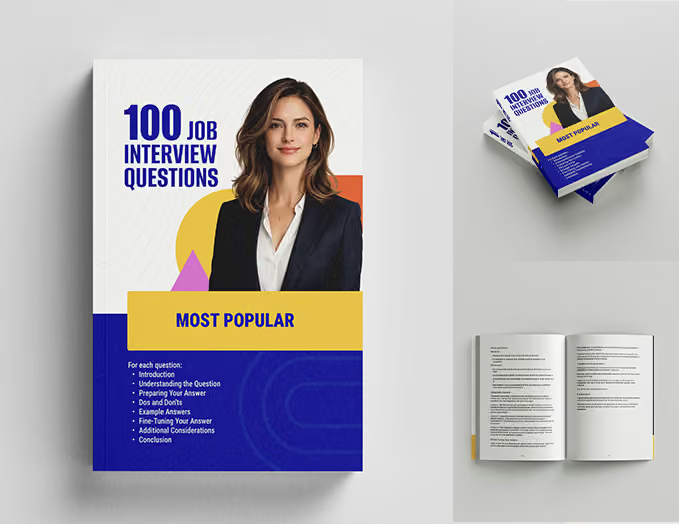
Adapted from the RockStarCV guide 100 Most Popular Job Interview Questions and its long-form narration. The structure and examples have been edited for a practical web reading experience.
Book reference: Question 91