Chapter 01
Introduction
The question asks for influence grounded in the other person's priorities.
Persuasion begins with the other person's reason for resisting. Persuasion should start with the concern the other person is trying to protect. Choose the professional starting point that makes this answer useful now. Name the work, responsibility, or transition before adding background, so the interviewer can understand why the detail belongs in your response.
Persuasion is strongest when the other person's choice remains their own. A good story identifies the audience's original concern, the evidence you used, and the change they made because the proposal met a need they actually had. Test the evidence against the vacancy. Keep the facts you can explain in a follow-up, remove biography that does not help the decision, and make the final sentence point toward the role in front of you.
- 01Set the direction
The question asks for influence grounded in the other person's priorities.
- 02Choose the proof
Persuasion begins with the other person's reason for resisting.
- 03Connect it to the role
Persuasion should start with the concern the other person is trying to protect.
Chapter 02
Understanding the Question
They want to see influence through understanding, evidence, or a manageable trial.
Expect the interviewer to ask whether you changed your proposal after hearing objections. Read the question as an assessment, not only a request for information. Decide which judgment, risk, working habit, or motivation the interviewer needs to see, then make that purpose visible through one concrete detail.
This question tests whether you adapt an argument rather than repeat it louder. The interviewer may also want to know how you handle objections, protect relationships, and distinguish genuine agreement from reluctant compliance. Prepare for the next question as well as this one. If you mention a result, transition, conflict, or constraint, keep the context and your exact contribution ready so the interviewer can test the claim without weakening it.
- 01What they are testing
They want to see influence through understanding, evidence, or a manageable trial.
- 02Prepare the follow-up
Expect the interviewer to ask whether you changed your proposal after hearing objections.
- 03Keep the evidence ready
Read the question as an assessment, not only a request for information.
Chapter 03
Preparing Your Answer
Choose a change that the other person initially resisted for a good reason.
Recall the objection that changed how you presented the proposal. Record the initial objection, the evidence or trial you offered, and the revised plan. Build a small evidence bank before rehearsing. Write the setting, the decision you owned, the action you took, and the observable result. That gives you facts to select instead of forcing you to invent polished language under pressure.
Choose an occasion with a visible before and after: a proposal adopted, a process changed, or a decision delayed pending evidence. Reconstruct the stakeholder's criteria, your first attempt, the objection, and the revision that made the option credible. Arrange the answer so the listener never has to guess why a detail matters. Put the strongest evidence near the claim it supports, keep your role precise, and finish with the lesson or relevance to this position.
- 01Build your evidence
Choose a change that the other person initially resisted for a good reason.
- 02Shape the sequence
Recall the objection that changed how you presented the proposal.
- 03Keep the evidence ready
Record the initial objection, the evidence or trial you offered, and the revised plan.
Chapter 04
Dos and Don’ts
What to do: Explain what evidence or trial changed the discussion.
Do
- Explain what evidence or trial changed the discussion.
- Do make the other person's reason for resistance sound reasonable.
Don’t
- Do not describe pressure or authority as persuasion.
- Do not describe repeated pressure as influence.
- Start with their goal before describing your pitch.
- Do not present pressure, seniority, or an end-run around the decision maker as influence.
Chapter 05
Example Answers
Effective examples often involve narrowing a request.
A pilot, a reversible decision, or a clearer risk control can make an idea easier to evaluate without weakening its purpose. Compare the examples by structure rather than memorizing their wording. Notice where each candidate sets the context, states personal ownership, and closes with a result, lesson, or reason the experience matters to the employer.
“A supervisor was wary of changing an established checklist because it had passed audits. I showed where staff were duplicating entries and proposed a limited trial with the same controls. The trial saved time without weakening the record, so the team adopted it.”
Why it works: Treat this first example as a model for sequence. Replace its workplace, task, people, and result with truthful details of your own while keeping the connection between the claim and the supporting evidence.
“A client wanted every metric on the front page. I asked which decisions the page needed to support, then mocked up a short view with the rest in an appendix. They chose the shorter version after using both in a review.”
Why it works: Use the second example to explore a different route to the same competency. Your version can come from paid work, study, volunteering, or a project, provided you state the context and do not overstate your responsibility.
“A colleague resisted an earlier handoff because mornings were busy. I adjusted the proposal to a five-minute update at the end of the previous shift and tested it with them. It solved the missing-information problem without adding a morning meeting.”
Why it works: Use the third example to test whether your answer sounds recognisably yours. Keep the useful structure, then change every borrowed fact.
Chapter 06
Fine-Tuning Your Answer
Influence may mean changing your proposal after hearing a valid objection.
Do not mistake repetition or senior sponsorship for persuasion. If your trial imposed work on them, explain how you reduced that cost. Fine-tuning is mainly subtraction and precision. Move the strongest fact earlier, replace labels with actions, and check that the ending answers the question rather than drifting into a second example or an unrelated career summary.
For a skeptical technical audience, use method and limits; for an executive audience, lead with consequence and decision. If you changed the recommendation after hearing objections, say so rather than pretending your first proposal was perfect. Record one practice version and listen for the first useful fact. If it arrives late, shorten the setup. Then check every result, number, and claim so the final wording remains accurate when the interviewer asks for detail.
- 01Make it sharper
Influence may mean changing your proposal after hearing a valid objection.
- 02Test the wording
Do not mistake repetition or senior sponsorship for persuasion.
- 03Keep the evidence ready
If your trial imposed work on them, explain how you reduced that cost.
Chapter 07
Additional Considerations
Sometimes being persuasive means revising your own idea.
Changing your own proposal can be the strongest evidence that you listened. Adapt the structure to your circumstances without hiding them. Career changes, gaps, early-career evidence, senior scope, confidentiality, and reasonable boundaries may change the example, but they do not remove the need for relevance and honest ownership.
Consent matters when the change affects another team's capacity. If the proposal created new work for others, explain how you negotiated ownership and avoided calling a one-sided handoff a win. Protect credibility where context is sensitive. Use the level of detail you can share, separate team results from your contribution, and explain constraints without disclosing private information or blaming people who are not present.
- 01Adapt the answer
Sometimes being persuasive means revising your own idea.
- 02Keep it credible
Changing your own proposal can be the strongest evidence that you listened.
- 03Keep the evidence ready
Adapt the structure to your circumstances without hiding them.
Chapter 08
Conclusion
Tell the listener what the other person came to see differently.
The other person's concern belongs in the explanation of how you influenced them. Bring the answer back to one clear message. The interviewer should be able to repeat your main claim, the evidence supporting it, and why it matters to the role without reconstructing the meaning from several disconnected points.
Conclude with what was adopted and what happened afterward. Persuasion is demonstrated by a durable decision, not merely by someone saying yes in a meeting. End deliberately. Stop when the question has been answered, the evidence is credible, and the relevance is clear. A concise landing invites a useful follow-up and leaves the listener with the professional judgment you intended to show.
A concise landing invites a useful follow-up and leaves the listener with the professional judgment you intended to show.
Source & adaptation
Built from the RockStarCV interview-question library
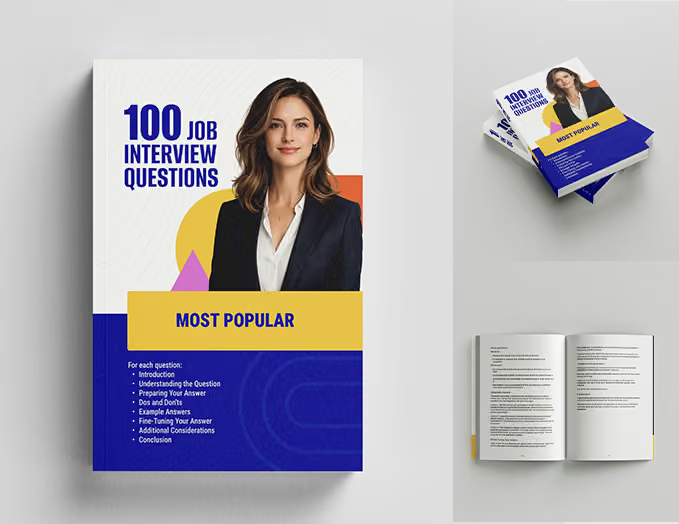
Adapted from the RockStarCV guide 100 Most Popular Job Interview Questions and its long-form narration. The structure and examples have been edited for a practical web reading experience.
Book reference: Question 54