Chapter 01
Introduction
This asks how you move work across boundaries without relying on rank.
Influence without authority is a design problem: make cooperation worthwhile. Choose the professional starting point that makes this answer useful now. Name the work, responsibility, or transition before adding background, so the interviewer can understand why the detail belongs in your response.
Influence without rank depends on understanding the other side's workload and risk. Influencing without authority calls for a proposal that people can evaluate on their own terms. Use a case where another team controlled the resources or decision, and show why their cooperation made sense. Test the evidence against the vacancy. Keep the facts you can explain in a follow-up, remove biography that does not help the decision, and make the final sentence point toward the role in front of you.
- 01Set the direction
This asks how you move work across boundaries without relying on rank.
- 02Choose the proof
Influence without authority is a design problem: make cooperation worthwhile.
- 03Connect it to the role
Choose the professional starting point that makes this answer useful now.
Chapter 02
Understanding the Question
They want to know whether you understood another team's incentives and constraints.
Expect to be asked what you changed after the partner team objected. Read the question as an assessment, not only a request for information. Decide which judgment, risk, working habit, or motivation the interviewer needs to see, then make that purpose visible through one concrete detail.
The interviewer is probing whether you can understand incentives and build agreement across boundaries. They may be wary of answers that rely on personal charm while omitting the cost imposed on the people you persuaded. Prepare for the next question as well as this one. If you mention a result, transition, conflict, or constraint, keep the context and your exact contribution ready so the interviewer can test the claim without weakening it.
- 01What they are testing
They want to know whether you understood another team's incentives and constraints.
- 02Prepare the follow-up
Expect to be asked what you changed after the partner team objected.
- 03Keep the evidence ready
Read the question as an assessment, not only a request for information.
Chapter 03
Preparing Your Answer
Select a case where the other team had its own priorities.
Identify what the partner team could reasonably object to and the smaller request they could accept. Build a small evidence bank before rehearsing. Write the setting, the decision you owned, the action you took, and the observable result. That gives you facts to select instead of forcing you to invent polished language under pressure.
Write their constraint, the smallest useful request, and the evidence you offered in return. Reconstruct the shared problem, the other team's constraints, and the first ask you made. Explain what evidence or pilot reduced uncertainty, how ownership was negotiated, and what happened after the decision. Arrange the answer so the listener never has to guess why a detail matters. Put the strongest evidence near the claim it supports, keep your role precise, and finish with the lesson or relevance to this position.
- 01Build your evidence
Select a case where the other team had its own priorities.
- 02Shape the sequence
Identify what the partner team could reasonably object to and the smaller request they could accept.
- 03Keep the evidence ready
Build a small evidence bank before rehearsing.
Chapter 04
Dos and Don’ts
What to do: Understand their constraint and offer a trial or shared benefit.
Do
- Understand their constraint and offer a trial or shared benefit.
- Do make cooperation easier than maintaining the current problem.
Don’t
- Do not describe escalation to a senior person as your only influence move.
- Do not describe an escalation to a senior sponsor as your only tactic.
- Present the benefit and the cost honestly.
- Do not bypass someone's manager to win an argument or imply that persistence alone created alignment.
Chapter 05
Example Answers
Many strong examples contain a revised request: a smaller trial, a changed handoff, or a shared success measure.
That revision demonstrates listening rather than a polished pitch. Compare the examples by structure rather than memorizing their wording. Notice where each candidate sets the context, states personal ownership, and closes with a result, lesson, or reason the experience matters to the employer.
“Engineering did not have capacity for the full reporting feature we wanted. I showed how a smaller export would solve the immediate decision, and we agreed to test that first. It delivered value without derailing their roadmap.”
Why it works: Treat this first example as a model for sequence. Replace its workplace, task, people, and result with truthful details of your own while keeping the connection between the claim and the supporting evidence.
“I needed store managers to use a new handover field, but I did not manage them. I asked which information was already repeated, removed that duplication, and piloted the revised form with one store. Other stores adopted it after seeing the time saved.”
Why it works: Use the second example to explore a different route to the same competency. Your version can come from paid work, study, volunteering, or a project, provided you state the context and do not overstate your responsibility.
“A partner team was reluctant to attend another meeting. I sent three decisions with short evidence notes and asked for written objections. We resolved most issues asynchronously and used a short call for the real disagreement.”
Why it works: Use the third example to test whether your answer sounds recognisably yours. Keep the useful structure, then change every borrowed fact.
Chapter 06
Fine-Tuning Your Answer
Influence often starts by reducing someone else's cost of helping.
Do not portray escalation as your only route to agreement. Fine-tuning is mainly subtraction and precision. Move the strongest fact earlier, replace labels with actions, and check that the ending answers the question rather than drifting into a second example or an unrelated career summary.
If you gained agreement through a pilot, report what the pilot actually showed. When several teams are involved, specify who could approve and who would actually do the work. A senior sponsor's agreement does not by itself secure execution capacity. Record one practice version and listen for the first useful fact. If it arrives late, shorten the setup. Then check every result, number, and claim so the final wording remains accurate when the interviewer asks for detail.
- 01Make it sharper
Influence often starts by reducing someone else's cost of helping.
- 02Test the wording
Do not portray escalation as your only route to agreement.
- 03Keep the evidence ready
Fine-tuning is mainly subtraction and precision.
Chapter 07
Additional Considerations
A written decision note can be more influential than another meeting.
Influence can be a carefully framed decision note, not just a meeting performance. Adapt the structure to your circumstances without hiding them. Career changes, gaps, early-career evidence, senior scope, confidentiality, and reasonable boundaries may change the example, but they do not remove the need for relevance and honest ownership.
If the initiative was rejected, you can still show influence through the clarity of the decision or a later change. Do not report agreement that did not translate into action. Protect credibility where context is sensitive. Use the level of detail you can share, separate team results from your contribution, and explain constraints without disclosing private information or blaming people who are not present.
- 01Adapt the answer
A written decision note can be more influential than another meeting.
- 02Keep it credible
Influence can be a carefully framed decision note, not just a meeting performance.
- 03Keep the evidence ready
Adapt the structure to your circumstances without hiding them.
Chapter 08
Conclusion
Show how you reduced the cost or risk of saying yes.
A smaller acceptable request can create a path to the larger goal. Bring the answer back to one clear message. The interviewer should be able to repeat your main claim, the evidence supporting it, and why it matters to the role without reconstructing the meaning from several disconnected points.
Close with the decision and the relationship left behind. Influence without authority is strongest when people choose a workable plan they are willing to maintain. End deliberately. Stop when the question has been answered, the evidence is credible, and the relevance is clear. A concise landing invites a useful follow-up and leaves the listener with the professional judgment you intended to show.
A concise landing invites a useful follow-up and leaves the listener with the professional judgment you intended to show.
Source & adaptation
Built from the RockStarCV interview-question library
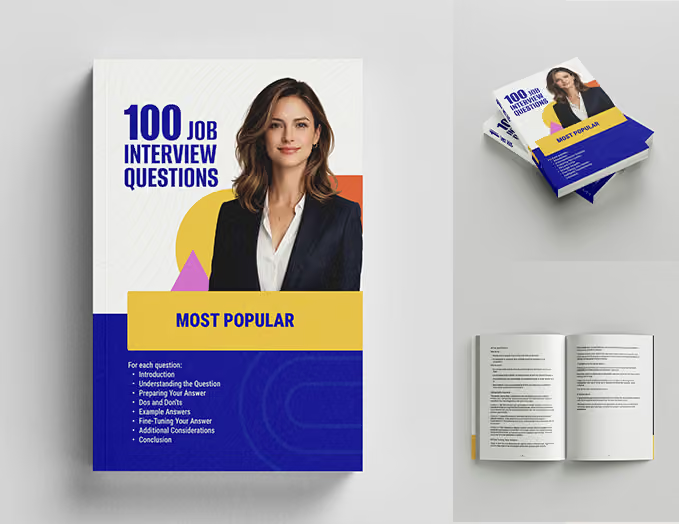
Adapted from the RockStarCV guide 100 Most Popular Job Interview Questions and its long-form narration. The structure and examples have been edited for a practical web reading experience.
Book reference: Question 64