Chapter 01
Introduction
The interviewer wants practical support rather than a speech about morale.
Motivation often improves when blockers are removed rather than speeches added. Motivation is more durable when people can see progress and raise obstacles safely. Choose the professional starting point that makes this answer useful now. Name the work, responsibility, or transition before adding background, so the interviewer can understand why the detail belongs in your response.
Motivating a team is less about delivering speeches than removing reasons good work is hard to do. Anchor the answer in a period of low energy, uncertainty, or heavy demand, and explain the specific barrier you addressed. Test the evidence against the vacancy. Keep the facts you can explain in a follow-up, remove biography that does not help the decision, and make the final sentence point toward the role in front of you.
- 01Set the direction
The interviewer wants practical support rather than a speech about morale.
- 02Choose the proof
Motivation often improves when blockers are removed rather than speeches added.
- 03Connect it to the role
Motivation is more durable when people can see progress and raise obstacles safely.
Chapter 02
Understanding the Question
They are asking how you notice what the team needs during a demanding period.
The interviewer may ask how you learned what a particular teammate needed. Read the question as an assessment, not only a request for information. Decide which judgment, risk, working habit, or motivation the interviewer needs to see, then make that purpose visible through one concrete detail.
The interviewer wants to know how you adapt to individuals while keeping a shared standard. They may look for clarity, autonomy, recognition, workload, and whether you notice signs that a motivation problem is actually a process problem. Prepare for the next question as well as this one. If you mention a result, transition, conflict, or constraint, keep the context and your exact contribution ready so the interviewer can test the claim without weakening it.
- 01What they are testing
They are asking how you notice what the team needs during a demanding period.
- 02Prepare the follow-up
The interviewer may ask how you learned what a particular teammate needed.
- 03Keep the evidence ready
Read the question as an assessment, not only a request for information.
Chapter 03
Preparing Your Answer
Recall a period when priorities or progress were hard to see.
Recall a concrete obstacle you could remove or a priority you could clarify. Build a small evidence bank before rehearsing. Write the setting, the decision you owned, the action you took, and the observable result. That gives you facts to select instead of forcing you to invent polished language under pressure.
Choose a period when you changed the conditions of work, not only the tone of your messages. Prepare a moment when the team's output or engagement was slipping. What did people say was difficult? What did you change in priorities, feedback, resources, or recognition? Describe how you knew the intervention helped. Arrange the answer so the listener never has to guess why a detail matters. Put the strongest evidence near the claim it supports, keep your role precise, and finish with the lesson or relevance to this position.
- 01Build your evidence
Recall a period when priorities or progress were hard to see.
- 02Shape the sequence
Recall a concrete obstacle you could remove or a priority you could clarify.
- 03Keep the evidence ready
Build a small evidence bank before rehearsing.
Chapter 04
Dos and Don’ts
What to do: Remove an obstacle and recognize useful work specifically.
Do
- Remove an obstacle and recognize useful work specifically.
- Do recognize specific contributions rather than distribute generic praise.
Don’t
- Do not assume everyone is motivated by public praise.
- Do not treat morale as a substitute for reducing impossible workload.
- Ask before prescribing a morale fix.
- Do not assume that a social event compensates for unsustainable workload, and do not praise the team while leaving an impossible plan untouched.
Chapter 05
Example Answers
A persuasive answer can show two different needs: one colleague needed a clearer decision, another needed room to own a solution.
The common goal stayed the same while the support differed. Compare the examples by structure rather than memorizing their wording. Notice where each candidate sets the context, states personal ownership, and closes with a result, lesson, or reason the experience matters to the employer.
“During a long cleanup project, the team could not see progress because new exceptions kept arriving. I separated the inherited backlog from new cases and celebrated each category we closed. The work felt finite again.”
Why it works: Treat this first example as a model for sequence. Replace its workplace, task, people, and result with truthful details of your own while keeping the connection between the claim and the supporting evidence.
“When a team was covering absence, I asked what could safely stop for two weeks, then negotiated those priorities with our manager. Protecting focus did more for morale than asking everyone to work faster.”
Why it works: Use the second example to explore a different route to the same competency. Your version can come from paid work, study, volunteering, or a project, provided you state the context and do not overstate your responsibility.
“On a launch, I gave each contributor visibility into how their part affected the customer experience. I also made it safe to flag blocked work early. People stayed engaged because problems were solved rather than hidden.”
Why it works: Use the third example to test whether your answer sounds recognisably yours. Keep the useful structure, then change every borrowed fact.
Chapter 06
Fine-Tuning Your Answer
Motivation differs by person; ask before prescribing rewards.
Avoid prescribing one reward for people with different motivations. Fine-tuning is mainly subtraction and precision. Move the strongest fact earlier, replace labels with actions, and check that the ending answers the question rather than drifting into a second example or an unrelated career summary.
Explain which blocker you could remove and which required management support. If performance remained below expectations, explain the accountability conversation as well as the support offered. Motivation is not a substitute for clear responsibilities and timely feedback. Record one practice version and listen for the first useful fact. If it arrives late, shorten the setup. Then check every result, number, and claim so the final wording remains accurate when the interviewer asks for detail.
- 01Make it sharper
Motivation differs by person; ask before prescribing rewards.
- 02Test the wording
Avoid prescribing one reward for people with different motivations.
- 03Keep the evidence ready
Fine-tuning is mainly subtraction and precision.
Chapter 07
Additional Considerations
If workload is structurally impossible, morale cannot replace a capacity decision.
Different teammates may need different kinds of autonomy or feedback. Adapt the structure to your circumstances without hiding them. Career changes, gaps, early-career evidence, senior scope, confidentiality, and reasonable boundaries may change the example, but they do not remove the need for relevance and honest ownership.
External constraints may limit what you can promise. Be candid about what you could control and how you advocated for changes beyond your authority. Protect credibility where context is sensitive. Use the level of detail you can share, separate team results from your contribution, and explain constraints without disclosing private information or blaming people who are not present.
- 01Adapt the answer
If workload is structurally impossible, morale cannot replace a capacity decision.
- 02Keep it credible
Different teammates may need different kinds of autonomy or feedback.
- 03Keep the evidence ready
Adapt the structure to your circumstances without hiding them.
Chapter 08
Conclusion
Describe the condition you changed and how the team responded.
Removing an obstacle often helps more than urging greater effort. Bring the answer back to one clear message. The interviewer should be able to repeat your main claim, the evidence supporting it, and why it matters to the role without reconstructing the meaning from several disconnected points.
Finish with the team behavior or result that changed. The lesson should be about making progress possible, not claiming you can generate enthusiasm on command. End deliberately. Stop when the question has been answered, the evidence is credible, and the relevance is clear. A concise landing invites a useful follow-up and leaves the listener with the professional judgment you intended to show.
A concise landing invites a useful follow-up and leaves the listener with the professional judgment you intended to show.
Source & adaptation
Built from the RockStarCV interview-question library
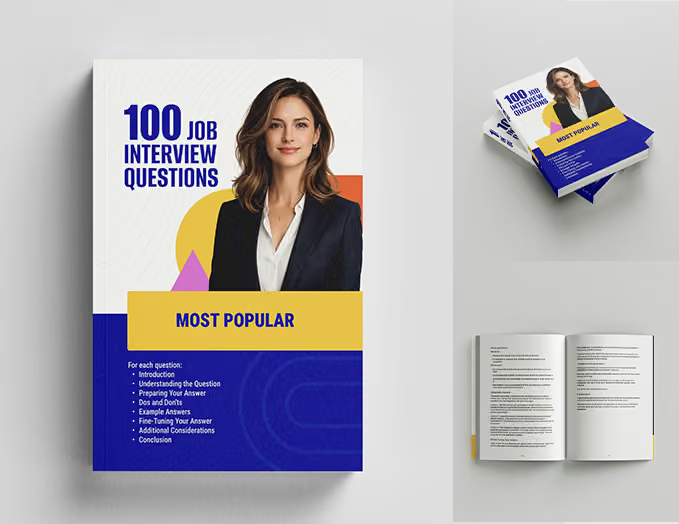
Adapted from the RockStarCV guide 100 Most Popular Job Interview Questions and its long-form narration. The structure and examples have been edited for a practical web reading experience.
Book reference: Question 65