Chapter 01
Introduction
This question tests self-awareness against the evidence other people would recognize.
This is a self-awareness question disguised as a request for praise. Choose the professional starting point that makes this answer useful now. Name the work, responsibility, or transition before adding background, so the interviewer can understand why the detail belongs in your response.
Reported feedback becomes convincing when the listener can picture the behaviour behind it. This answer reveals the distance between self-image and lived experience. Choose feedback that colleagues could plausibly repeat, preferably from work where the habit mattered to a deadline, customer, or handover. Test the evidence against the vacancy. Keep the facts you can explain in a follow-up, remove biography that does not help the decision, and make the final sentence point toward the role in front of you.
- 01Set the direction
This question tests self-awareness against the evidence other people would recognize.
- 02Choose the proof
This is a self-awareness question disguised as a request for praise.
- 03Connect it to the role
Choose the professional starting point that makes this answer useful now.
Chapter 02
Understanding the Question
They are comparing your description with how you behave in the interview.
A credible answer sounds like feedback someone actually gave. They may ask whether the same colleagues would mention a limitation. Read the question as an assessment, not only a request for information. Decide which judgment, risk, working habit, or motivation the interviewer needs to see, then make that purpose visible through one concrete detail.
Have an honest, proportionate answer. If asked for a different colleague's view, do not force everyone into one adjective. People may value different aspects of your work; the common pattern is more informative than a perfectly unified testimonial. Prepare for the next question as well as this one. If you mention a result, transition, conflict, or constraint, keep the context and your exact contribution ready so the interviewer can test the claim without weakening it.
- 01What they are testing
They are comparing your description with how you behave in the interview.
- 02Prepare the follow-up
A credible answer sounds like feedback someone actually gave.
- 03Keep the evidence ready
They may ask whether the same colleagues would mention a limitation.
Chapter 03
Preparing Your Answer
Recall specific feedback and the behaviour that earned it.
Choose a comment you heard more than once and recall a moment that earned it. Build a small evidence bank before rehearsing. Write the setting, the decision you owned, the action you took, and the observable result. That gives you facts to select instead of forcing you to invent polished language under pressure.
Write down the exact words you remember from a review or message, then find a concrete incident that supports them. Look through a review, message, or remembered conversation for a specific phrase. Pair it with a situation where the behaviour was visible and with a result that did not depend on your intention alone. Arrange the answer so the listener never has to guess why a detail matters. Put the strongest evidence near the claim it supports, keep your role precise, and finish with the lesson or relevance to this position.
- 01Build your evidence
Recall specific feedback and the behaviour that earned it.
- 02Shape the sequence
Choose a comment you heard more than once and recall a moment that earned it.
- 03Keep the evidence ready
Build a small evidence bank before rehearsing.
Chapter 04
Dos and Don’ts
What to do: Use a real phrase from feedback, then explain it with an example.
Do
- Use a real phrase from feedback, then explain it with an example.
- Do make clear which feedback came from colleagues and which is your interpretation.
Don’t
- Do not stack attractive adjectives without proof.
- Do not gather compliments into a list with no situation attached.
- An answer such as 'reliable and hardworking' offers little until you describe what others could count on you to do.
- Be particularly careful not to claim praise no one actually gave.
Chapter 05
Example Answers
The samples show calm planning under a delayed release, useful questioning before a report, and strong handover habits.
Their strength is that another person could have observed each action. Compare the examples by structure rather than memorizing their wording. Notice where each candidate sets the context, states personal ownership, and closes with a result, lesson, or reason the experience matters to the employer.
“A colleague recently described me as calm when a deadline moves. During a release delay, I put the new dependencies in one shared note and checked what each owner needed. We still missed the original date, but nobody was surprised by the revised plan.”
Why it works: Treat this first example as a model for sequence. Replace its workplace, task, people, and result with truthful details of your own while keeping the connection between the claim and the supporting evidence.
“My manager would probably say I ask useful questions before I start. When a report request arrived with a vague definition of active users, I clarified the business decision first. That prevented us from building a technically correct report that answered the wrong question.”
Why it works: Use the second example to explore a different route to the same competency. Your version can come from paid work, study, volunteering, or a project, provided you state the context and do not overstate your responsibility.
“People often say I make handovers easy. I document decisions while a project is live, not the night before I leave. On the last project, that meant a new teammate could take over supplier follow-ups without starting the conversation again.”
Why it works: Use the third example to test whether your answer sounds recognisably yours. Keep the useful structure, then change every borrowed fact.
Chapter 06
Fine-Tuning Your Answer
A modest weakness alongside the strength can make the answer more credible if it is relevant.
Avoid a chain of adjectives. One observed habit carries more weight. Fine-tuning is mainly subtraction and precision. Move the strongest fact earlier, replace labels with actions, and check that the ending answers the question rather than drifting into a second example or an unrelated career summary.
Choose a comment that reflects the role, even if another compliment feels more flattering. If you use a quotation from feedback, keep it short and explain its context. A polished invented sentence is less credible than a modest remark you can connect to real work. Record one practice version and listen for the first useful fact. If it arrives late, shorten the setup. Then check every result, number, and claim so the final wording remains accurate when the interviewer asks for detail.
- 01Make it sharper
A modest weakness alongside the strength can make the answer more credible if it is relevant.
- 02Test the wording
One observed habit carries more weight.
- 03Keep the evidence ready
Fine-tuning is mainly subtraction and precision.
Chapter 07
Additional Considerations
If a colleague might describe a limitation alongside the strength, you can acknowledge the tradeoff briefly.
If feedback differs across teams, explain the working conditions that brought out each description. Adapt the structure to your circumstances without hiding them. Career changes, gaps, early-career evidence, senior scope, confidentiality, and reasonable boundaries may change the example, but they do not remove the need for relevance and honest ownership.
A strength can have a boundary: the person who asks careful questions may need to watch speed, for instance. Mention such a tradeoff only if it adds honest self-awareness, not to manufacture a weakness. Protect credibility where context is sensitive. Use the level of detail you can share, separate team results from your contribution, and explain constraints without disclosing private information or blaming people who are not present.
- 01Adapt the answer
If a colleague might describe a limitation alongside the strength, you can acknowledge the tradeoff briefly.
- 02Keep it credible
If feedback differs across teams, explain the working conditions that brought out each description.
- 03Keep the evidence ready
Adapt the structure to your circumstances without hiding them.
Chapter 08
Conclusion
Let the cited behaviour, rather than your own verdict, do most of the work.
Choose feedback you could recognize in your daily behaviour. Bring the answer back to one clear message. The interviewer should be able to repeat your main claim, the evidence supporting it, and why it matters to the role without reconstructing the meaning from several disconnected points.
A good answer sounds like evidence from a colleague, not a recommendation letter written by you. Leave room for the interviewer to test it with further examples. End deliberately. Stop when the question has been answered, the evidence is credible, and the relevance is clear. A concise landing invites a useful follow-up and leaves the listener with the professional judgment you intended to show.
A concise landing invites a useful follow-up and leaves the listener with the professional judgment you intended to show.
Source & adaptation
Built from the RockStarCV interview-question library
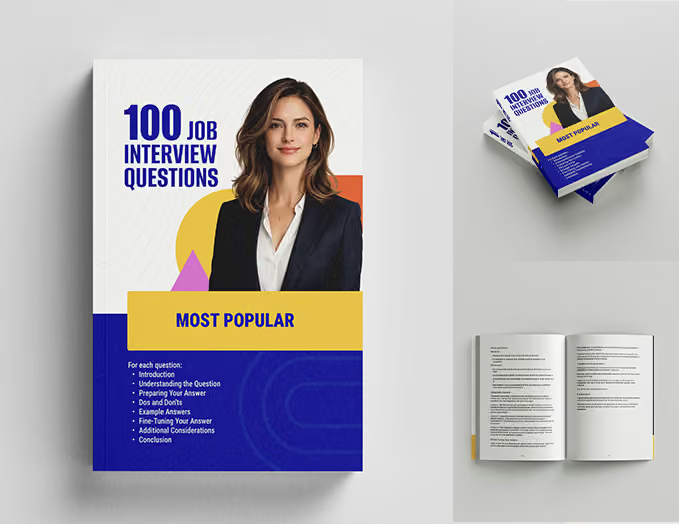
Adapted from the RockStarCV guide 100 Most Popular Job Interview Questions and its long-form narration. The structure and examples have been edited for a practical web reading experience.
Book reference: Question 4