Chapter 01
Introduction
Treat this as a question about self-awareness and a working improvement method.
A sound weakness answer has four parts: a real limitation, the situation that triggers it, the practical safeguard you use, and evidence of progress. This demonstrates self-awareness without turning the answer into a warning label.
The interviewer does not expect perfection. They want to know whether you can identify a pattern early, take responsibility for it, and protect the quality of your work while you improve.
- 01Real limitation
Choose a genuine, bounded pattern that affects how you work.
- 02Known trigger
Explain the situation in which the limitation tends to appear.
- 03Working safeguard
Describe the routine or check you already use.
- 04Visible progress
Give recent evidence that the safeguard is helping.
Chapter 02
Understanding the Question
The interviewer is assessing whether you notice risk early enough to change your practice.
They may be listening for three things: can you spot a recurring problem before it affects colleagues or customers, can you accept feedback without becoming defensive, and can you change your process when the same issue repeats?
The limitation matters, but your response to it carries more weight. Explain the behavior in neutral language, then spend most of the answer on what you now do differently.
- 01Risk awareness
Show that you recognize the pattern before it becomes a larger problem.
- 02Ownership
Describe your response without blaming a manager, team, or workload.
- 03Process change
Explain the practical adjustment you use when the trigger appears.
Chapter 03
Preparing Your Answer
Choose a genuine limitation that is manageable in this role.
Review recent feedback, recurring friction, and tasks that require extra checks. Exclude anything that would make you unable to perform a core requirement without support you do not have.
For the remaining options, write the trigger, impact, safeguard, and one recent result. Choose the example you can discuss calmly and specifically. Preparation should make the answer clearer, not theatrical.
- 01Feedback
Look for a pattern other people have noticed, not an invented interview weakness.
- 02Recurring friction
Identify where the pattern costs time, clarity, quality, or collaboration.
- 03Extra checks
Describe what you now do to reduce the impact.
- 04Recent evidence
Choose a moment when the safeguard changed the outcome.
Chapter 04
Dos and Don’ts
Own the pattern, show the safeguard, and keep the improvement credible.
Do
- Choose something real, bounded, and relevant to how you work.
- Explain the trigger and the routine that reduces its impact.
- Use recent evidence that the routine helps.
- Acknowledge that improvement is ongoing.
Don’t
- Disguise a strength as a weakness.
- Claim the weakness has disappeared completely.
- Choose a critical gap you intend to conceal.
- Spend most of the answer blaming circumstances or explaining why the weakness is understandable.
Chapter 05
Example Answers
Each example names a behavior, a change in practice, and an observable benefit.
“I used to hold a draft too long before asking for feedback. On a recent policy guide, I shared an outline with the reviewer first and caught a scope issue before doing the detailed work. I now set that check-in earlier.”
Why it works: A specific limitation, a new checkpoint, and recent proof that it reduced rework.
“I can over-explain technical detail when someone wants a decision. I have started opening with the recommendation and keeping the analysis available for questions. It has made review meetings more productive.”
Why it works: The candidate names the audience impact and the communication safeguard now in use.
“Delegating work I know well took practice. I now agree the outcome and checkpoint with a colleague instead of prescribing every step. It gives them ownership while still protecting the deadline.”
Why it works: The safeguard protects both autonomy and delivery rather than pretending the habit is solved.
Chapter 06
Fine-Tuning Your Answer
Use two sentences on the limitation and most of your time on the safeguard.
The limitation and trigger should be clear within the first two sentences. The safeguard and evidence should take most of the remaining time. Remove any language that makes the weakness sound secretly admirable.
Test the answer against a difficult week. Does the safeguard still operate when the pace increases? If it sometimes fails, explain the backup check or the signal that tells you to ask for help.
- 01Two sentences
State the limitation and trigger without a long preamble.
- 02Safeguard first
Describe what protects the work now, before discussing future aspirations.
- 03Difficult-week test
Make sure the routine still sounds credible under pressure.
Chapter 07
Additional Considerations
Role context determines whether a weakness is manageable or central.
A weakness that is manageable in one role may be a core requirement in another. If it touches essential work, be direct about the controls, support, or training you currently need.
For a promotion, explain how you are adapting the habit to greater scope. For a career change, distinguish a skills gap you are actively closing from a behavioral pattern you manage. If you need a reasonable adjustment, focus on the conditions that allow you to perform.
- 01Role context
Check the weakness against the actual essential requirements.
- 02Skills gap
Do not confuse something you have not learned yet with a recurring work pattern.
- 03Support
Name reasonable controls or training honestly when they are necessary.
Chapter 08
Conclusion
Notice the pattern. Use the safeguard. Show progress. Keep improving.
The final answer should leave the interviewer with evidence of judgment. You notice the pattern, use a safeguard, and can point to progress while admitting the work continues.
Keep the tone matter-of-fact. Do not over-apologize and do not celebrate the weakness. When the example is truthful and observable, it shows the kind of self-awareness that helps a team trust you.
A credible weakness answer is imperfect, improving, and protected by a routine other people could observe.
Source & adaptation
Built from the RockStarCV interview-question library
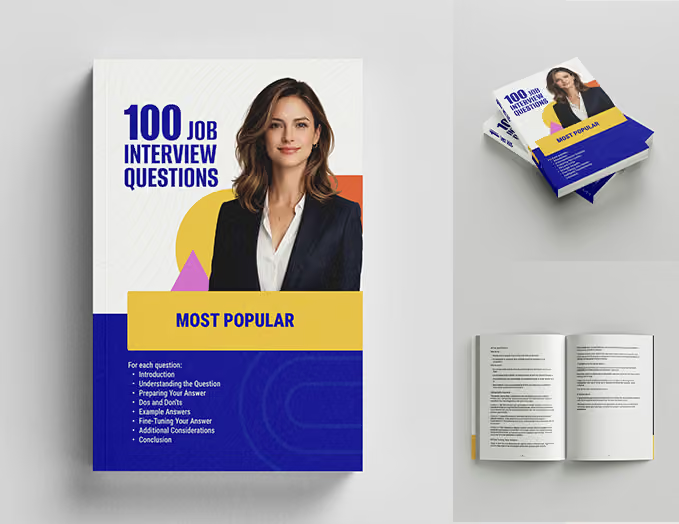
Adapted from the RockStarCV guide 100 Most Popular Job Interview Questions. The structure and examples have been edited for a practical web reading experience.
Book reference: Question 22, pages 69–71