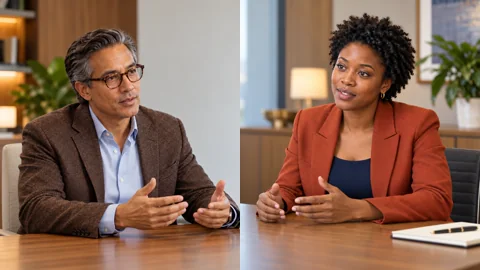
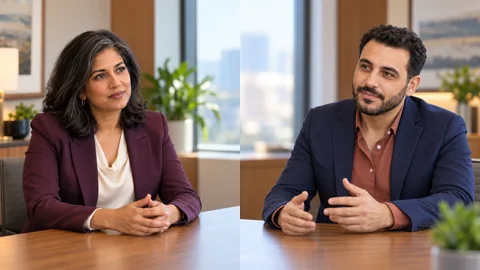
Sales Manager Mock Interview: The Developing Candidate
Watch the same Sales Manager interview with a strong seller who still manages like a rep — closing deals himself, coaching the number, and trusting optimistic forecasts — with a debrief showing exactly how to make the shift from selling to leading.

Watch and practise
Run the complete interview
Use Play to hear the conversation, move one slide at a time, or jump directly to a chapter. Captions follow the active speaker.
What to expect
How the interview is likely to unfold
A senior sales manager interview usually moves from your career story into evidence of judgment, then closes with your questions.
Welcome and framing
Expect brief rapport, introductions, and an outline of the conversation.
Your career story
Connect your move from rep to manager and what you built beyond your own selling.
Coaching
Show how you coach the behavior behind the number, not just the number.
Pipeline and forecast
Demonstrate how you inspect deals and build a forecast leadership can trust.
Plans and integrity
Design fair quotas and territories, and hold the line against bad-fit deals.
Your questions and close
Clarify how quota and territory are set, and confirm next steps.
Who might interview you
Different people are testing different things
Listen to the role behind the question. The same example may need a different emphasis for each interviewer.
Recruiter or talent partner
- Their purpose
- Confirm motivation, level, and communication before a deeper assessment.
- They look for
- A clear story, credible interest, and concise answers.
VP of sales or the hiring leader
- Their purpose
- Decide whether you build a team or just carry the number.
- They look for
- Coaching behaviors, honest forecasting, fair plans, and integrity under pressure.
Sales operations or finance partner
- Their purpose
- Test whether your forecast and plans are sound.
- They look for
- Deal inspection, realistic commits, and incentive design that drives the right behavior.
Peer manager or senior rep
- Their purpose
- Understand how you develop people day to day.
- They look for
- Coaching that builds skill, fair treatment, and a culture that makes bad news safe.
What they are assessing
Make your judgment easy to see
What interviewers need to learn
- Do you coach the behavior, or just the number?
- Do you inspect deals or collect rep optimism?
- Do you design fair plans and fix them when gamed?
- Will you hold the ethical line under quarter-end pressure?
Accentuate
- What you built beyond your own selling.
- The behavior you coached and how you measured the change.
- How you inspected the forecast for evidence.
- Where you held the line on a bad-fit deal.
Leave out
- Leading from the front by closing every important deal yourself.
- Coaching by pushing the number instead of the behavior.
- Forecasting on rep confidence rather than evidence.
- Blaming reps for responding to an unfair plan.
Difficult questions
Prepare the evidence, not a script
Use these prompts to choose a truthful example and reconstruct the decision. Your delivery should still sound like you.
A top rep you promoted is now a struggling manager. What do you do?
Why they ask: They test whether you coach leadership skills, not just selling.
Prepare: How you diagnose the gap between selling and leading and coach the specific behaviors.
Your forecast has missed two quarters. Why?
Why they ask: They are testing forecast discipline and honesty.
Prepare: How you move from rep optimism to deal inspection and call risk early.
Several reps are gaming the comp plan.
Why they ask: They want to see you fix the plan, not just the people.
Prepare: Why incentives drive behavior and how you redesign for the behavior you want.
Quarter end, you're short, and there's a bad-fit deal available.
Why they ask: This is an integrity line that also shapes team culture.
Prepare: Why you refuse deception, what overselling costs, and how you create honest urgency instead.
How do you handle a rep who keeps missing after coaching?
Why they ask: They test fairness, documentation, and decisiveness together.
Prepare: Clear expectations, a realistic timeline, documentation, and a formal plan with HR, consistently.
What makes you more than a great closer?
Why they ask: They are distinguishing a leader from a super-rep.
Prepare: An example where coaching built reps who could win without you.
How to use this simulation
Listen for decisions, not polished phrases
Pause after each question and form your own answer before Claire Bennett responds. Then compare the evidence provided: the constraint, the decision, the personal contribution, the trade-off, and the result.
Julian Brooks and Claire Bennett are fictional composite characters. Their employers, sales manager examples, figures, and outcomes were created for teaching purposes.
Take the interview with you
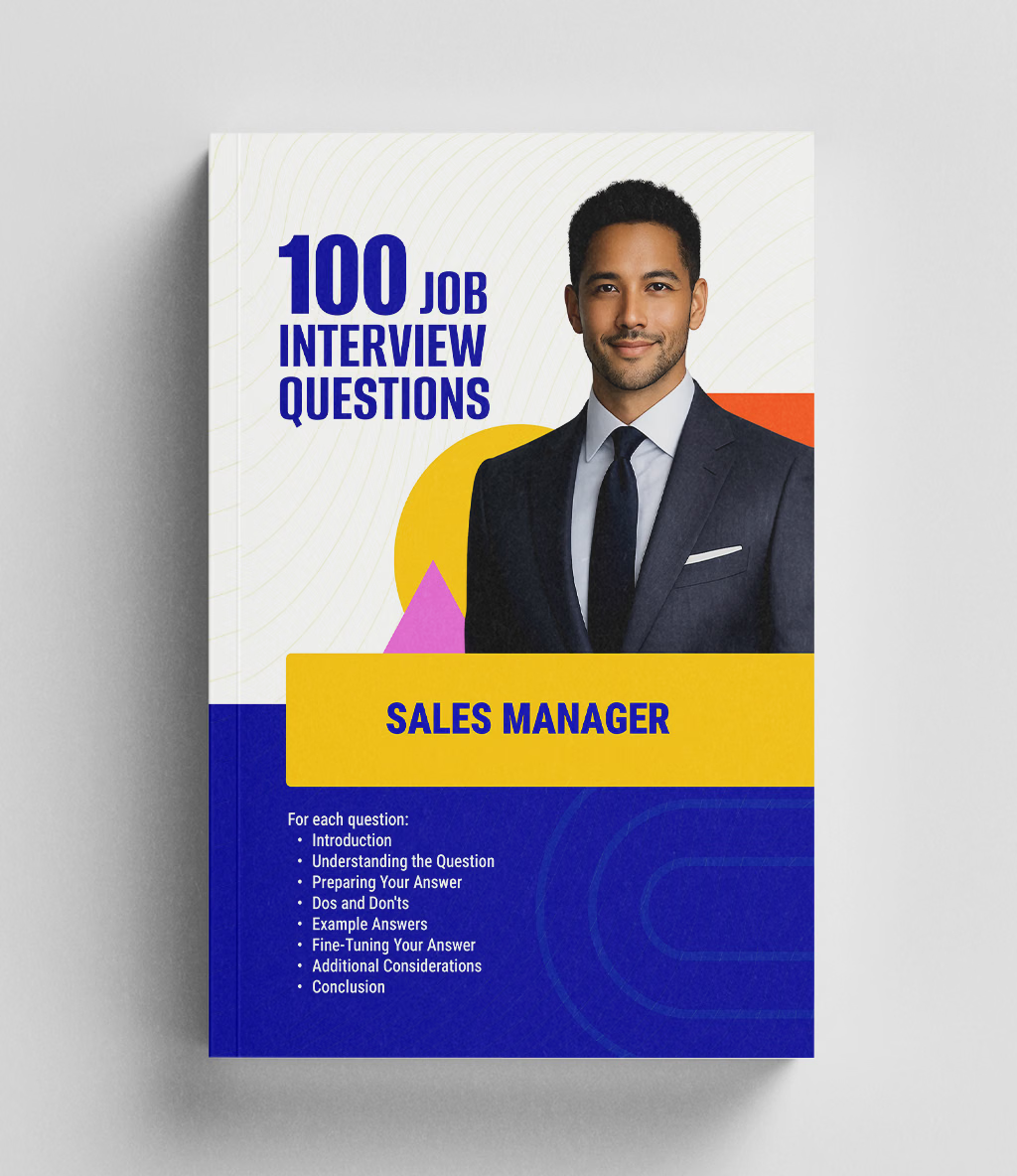
Your sales manager interview playbook
Use the printable framework to prepare examples, test your evidence, and rehearse stronger answers away from the screen.
- Question prompts
- Evidence checklist
- Practice notes
What to notice
A practical viewing checklist
- 01
Catch a manager who closes deals instead of coaching reps to close.
- 02
Hear coaching aimed at the number instead of the behavior.
- 03
Notice a forecast built on rep confidence rather than evidence.
- 04
Pause after each answer and add the coaching, the inspection, or the plan fix.
Interviewer scorecard
The signals behind a credible answer
- Scaling
- Join deals to coach, not to take over; build reps who can win without you.
- Coaching
- Diagnose the activity and coach the behavior behind the number.
- Forecast
- Inspect deals for a real next step instead of rolling up rep optimism.
Research foundation
Sources behind the teaching principles
The sources support the interview guidance, not the fictional candidate’s invented employers, budgets, dates, or outcomes.
- Sales Managers — Occupational Outlook HandbookU.S. Bureau of Labor Statistics
- Sales Managers (11-2022.00) — Summary ReportO*NET OnLine (U.S. Department of Labor)
- Dismantling the Sales MachineHarvard Business Review
Similar interviews