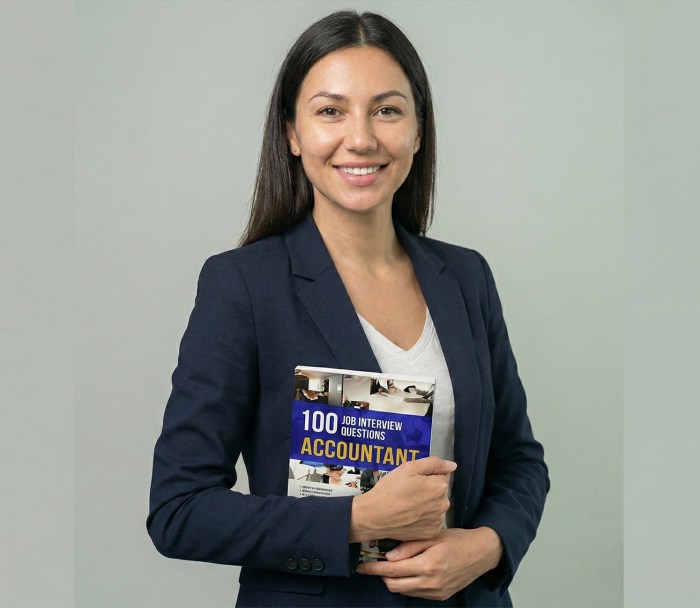
Accountant Mock Interview: The Strong Candidate
Watch a complete Accountant interview where Elena makes close ownership, controls, source evidence, technical judgment, variance communication, and process improvement inspectable.

Watch and practise
Run the complete interview
Use Play to hear the conversation, move one slide at a time, or jump directly to a chapter. Captions follow the active speaker.
What to expect
How the interview is likely to unfold
A senior accountant interview usually moves from your career story into evidence of judgment, then closes with your questions.
Welcome and framing
Expect concise rapport, a clear agenda, and an opening that establishes the accounting environment and close responsibilities.
Your accounting scope
Connect your progression to entities, accounts, systems, review points, and decisions you personally owned.
Close and control judgment
Show how you preserve source-to-ledger ties, visible exceptions, review, and segregation while working under deadline pressure.
Discrepancy and technical judgment
Trace anomalies to source evidence, document the conclusion, apply authoritative guidance, and respect the approval boundary.
Variance and process improvement
Explain operating drivers, limitations, decision implications, safeguards, and a bounded comparison window.
Candidate questions and close
Ask about close ownership, review standards, systems, decision rights, and team expectations, then close professionally.
Who might interview you
Different people are testing different things
Listen to the role behind the question. The same example may need a different emphasis for each interviewer.
Recruiter or talent partner
- Their purpose
- Confirm communication, motivation, credentials, availability, and practical fit.
- They look for
- A coherent accounting story, verified requirements, and clear communication without inflated ownership.
Controller
- Their purpose
- Decide whether you protect controls, trace evidence, document judgment, and close reliably.
- They look for
- Bounded scope, source evidence, explicit conclusions, review points, and measurable follow-through.
Accounting manager
- Their purpose
- Understand how you prioritize, reconcile, escalate, and work through exceptions during close.
- They look for
- A clear account-risk-evidence-conclusion-review-result trail.
Finance or operations partner
- Their purpose
- Test whether you translate variances into operating drivers and decision-ready implications.
- They look for
- Clear numbers, evidence, limitations, owners, and actions without overstating certainty.
What they are assessing
Make your judgment easy to see
What interviewers need to learn
- Can you name the account, risk, source evidence, conclusion, reviewer, and bounded result?
- Can you protect controls and review points when a deadline or operating pressure increases?
- Can you separate the analysis you owned from a manager's approval or posting authority?
- Can you explain a variance or process change with a denominator, time window, source, and limitation?
Accentuate
- The entity, account, reconciliation, close responsibility, and review point you personally owned.
- The source evidence, exception, conclusion, correction, approval boundary, and recurrence control.
- The authoritative guidance consulted, documented facts, assumptions, reviewer, and final decision owner.
- The baseline, denominator, comparison window, source, and limitation behind any fictional result.
Leave out
- A list of accounting systems or tasks without the account risk and decision they supported.
- A close story that treats speed as more important than reconciliation, evidence, or review.
- A discrepancy story that ends with handing it to a manager but never states your analysis or recommendation.
- A process-improvement claim without the safeguard, reconciliation test, comparison window, or measurable result.
Difficult questions
Prepare the evidence, not a script
Use these prompts to choose a truthful example and reconstruct the decision. Your delivery should still sound like you.
Tell me about a close under pressure.
Why they ask: They are testing deadline judgment, account risk, review discipline, and whether controls remain visible.
Prepare: Dependency, exposure, work resequenced, evidence preserved, reviewer informed, and final outcome.
Describe a discrepancy you found.
Why they ask: They need to hear a traceable path from anomaly to source evidence, conclusion, correction, and prevention.
Prepare: Amount, account, source records, test performed, conclusion, correcting entry, reviewer, and recurrence check.
Tell me about a technical accounting judgment.
Why they ask: They are testing research discipline and whether you know where your authority ends.
Prepare: Question, authoritative source, relevant facts, documented conclusion, assumption, and review boundary.
How do you explain a variance?
Why they ask: They want a number connected to operating drivers, confidence limits, and a decision.
Prepare: Variance, driver, evidence, limitation, implication, owner, and action.
What process have you improved?
Why they ask: They are testing whether efficiency gains preserve data integrity and controls.
Prepare: Failure mode, baseline, change, test, reconciliation, safeguard, and comparison window.
What questions do you have for us?
Why they ask: Your questions reveal how seriously you evaluate ownership, review, systems, and team expectations.
Prepare: Close calendar, account ownership, review standards, exception handling, systems, and success after six months.
How to use this simulation
Listen for decisions, not polished phrases
Pause after each question and form your own answer before Elena Ruiz responds. Then compare the evidence provided: the constraint, the decision, the personal contribution, the trade-off, and the result.
Marcus Chen and Elena Ruiz are fictional composite characters. Their employers, accountant examples, figures, and outcomes were created for teaching purposes.
Take the interview with you
Your accountant interview playbook
Use the printable framework to prepare examples, test your evidence, and rehearse stronger answers away from the screen.
- Question prompts
- Evidence checklist
- Practice notes
What to notice
A practical viewing checklist
- 01
Notice how Elena names the account, risk, source evidence, conclusion, review point, and result.
- 02
Track how deadline pressure changes sequence without weakening reconciliation or approval controls.
- 03
Listen for technical answers that use authoritative guidance and make the approval boundary explicit.
- 04
Compare improvement claims by whether safeguards and a defined comparison window remain visible.
Interviewer scorecard
The signals behind a credible answer
- Evidence
- Elena traces conclusions to source records and reconciliations.
- Controls
- Review, segregation, approvals, and visible exceptions stay intact.
- Results
- Outcomes use a source, denominator, comparison window, and limitation.
Research foundation
Sources behind the teaching principles
The sources support the interview guidance, not the fictional candidate’s invented employers, budgets, dates, or outcomes.
- Accountants and Auditors - Occupational Outlook HandbookU.S. Bureau of Labor Statistics
- 13-2011.00 - Accountants and AuditorsO*NET OnLine, U.S. Department of Labor sponsored
- Employer-Based In-Demand Software Skills - Accountants and AuditorsO*NET OnLine
- Standards and the FASB Accounting Standards CodificationFinancial Accounting Standards Board
- Conceptual Framework for Financial ReportingFinancial Accounting Standards Board
- Management's Report on Internal Control Over Financial ReportingU.S. Securities and Exchange Commission
- Publication 583 - Starting a Business and Keeping RecordsInternal Revenue Service
- Professional ResponsibilitiesAICPA and CIMA