Entry Level Accountant Resume Examples & Guide
Breaking into the accounting field can be tough. Applicant Tracking Systems (ATS) and fierce competition make it challenging to stand out. This guide provides entry-level accountant resume examples for every experience level, from students to industry veterans, helping you craft a resume that gets noticed.
- Quantify Achievements: Use numbers to showcase the impact of your work.
- Highlight Relevant Skills: Emphasize accounting software proficiency, analytical abilities, and attention to detail.
- Tailor to Job Description: Customize your resume to match the specific requirements of each job.
- Optimize for ATS: Use keywords from the job description and a simple, scannable format.
- Use Action Verbs: Start each bullet point with a strong action verb to describe your accomplishments.
Ready to see some examples?
Explore editable Entry Level Accountant resume examples by career stage. Each sample opens in the RockStarCV builder so you can study the structure and make your own version.
Entry-Level Entry Level Accountant Resume (0-2 Years Experience)
Use these entry-level examples to compare the scope, evidence, and language expected for Entry Level Accountant roles at this stage.
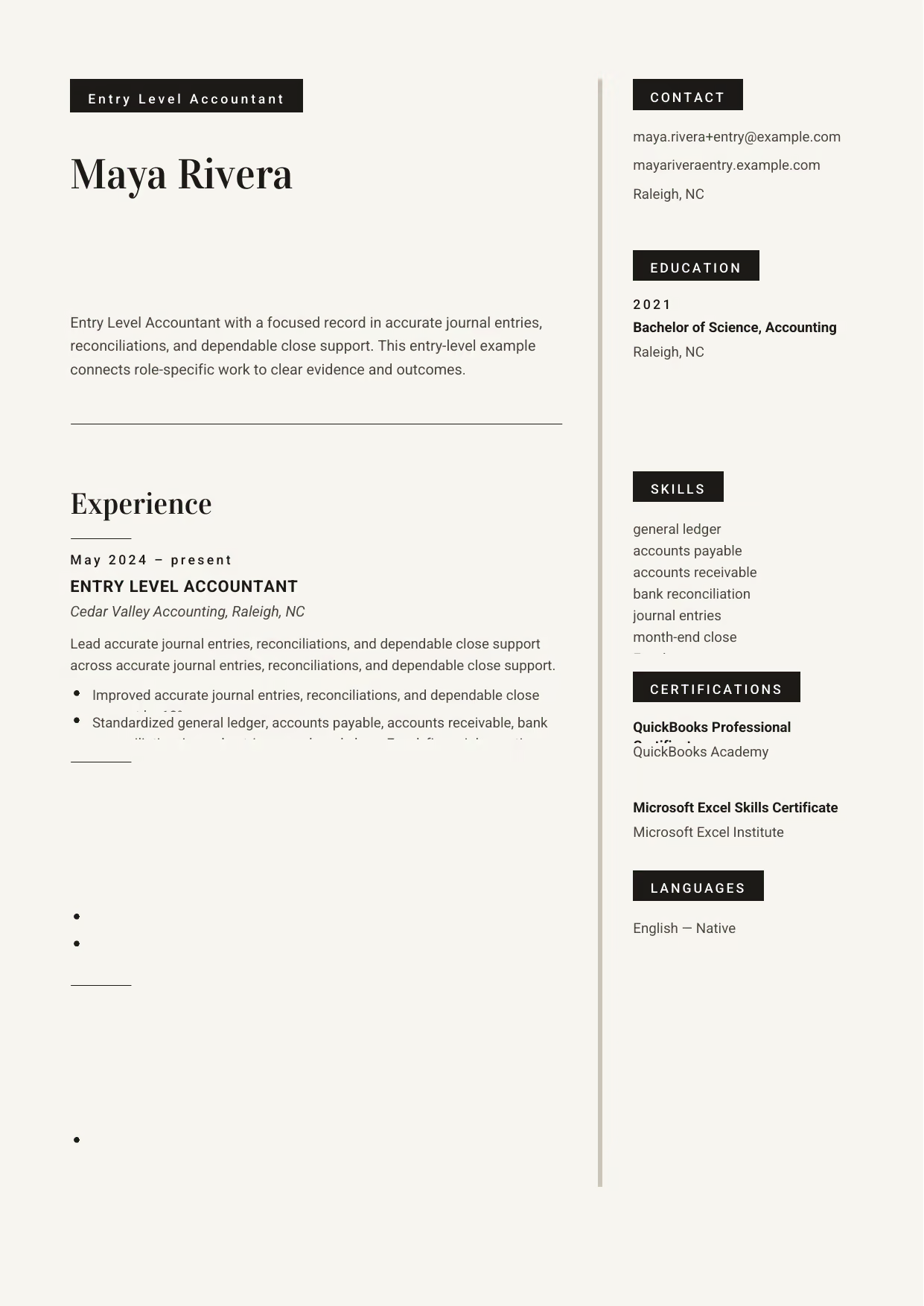
Entry Level Accountant
A builder-ready entry-level Entry Level Accountant example in the Aquila template, showing stage-appropriate evidence in a focused, editable resume format.
- Editable role positioning in the Aquila layout
- Role-specific evidence and delivery context
- Review the Aquila structure with a clean visual hierarchy
View this resume

Entry Level Accountant
A builder-ready entry-level Entry Level Accountant example in the Eridanus template, showing stage-appropriate evidence in a focused, editable resume format.
- Editable role positioning in the Eridanus layout
- Role-specific evidence and delivery context
- Review the Eridanus structure with a clean visual hierarchy
View this resume

Entry Level Accountant
A builder-ready entry-level Entry Level Accountant example in the Andromeda template, showing stage-appropriate evidence in a focused, editable resume format.
- Editable role positioning in the Andromeda layout
- Role-specific evidence and delivery context
- Review the Andromeda structure with a clean visual hierarchy
View this resume
Mid-Level Entry Level Accountant Resume (3-7 Years Experience)
Use these mid-level examples to compare the scope, evidence, and language expected for Entry Level Accountant roles at this stage.

Staff Accountant
A builder-ready mid-level Entry Level Accountant example in the Puppis template, showing stage-appropriate evidence in a focused, editable resume format.
- Editable role positioning in the Puppis layout
- Role-specific evidence and delivery context
- Review the Puppis structure with a clean visual hierarchy
View this resume

Staff Accountant
A builder-ready mid-level Entry Level Accountant example in the Bootes template, showing stage-appropriate evidence in a focused, editable resume format.
- Editable role positioning in the Bootes layout
- Role-specific evidence and delivery context
- Review the Bootes structure with a clean visual hierarchy
View this resume
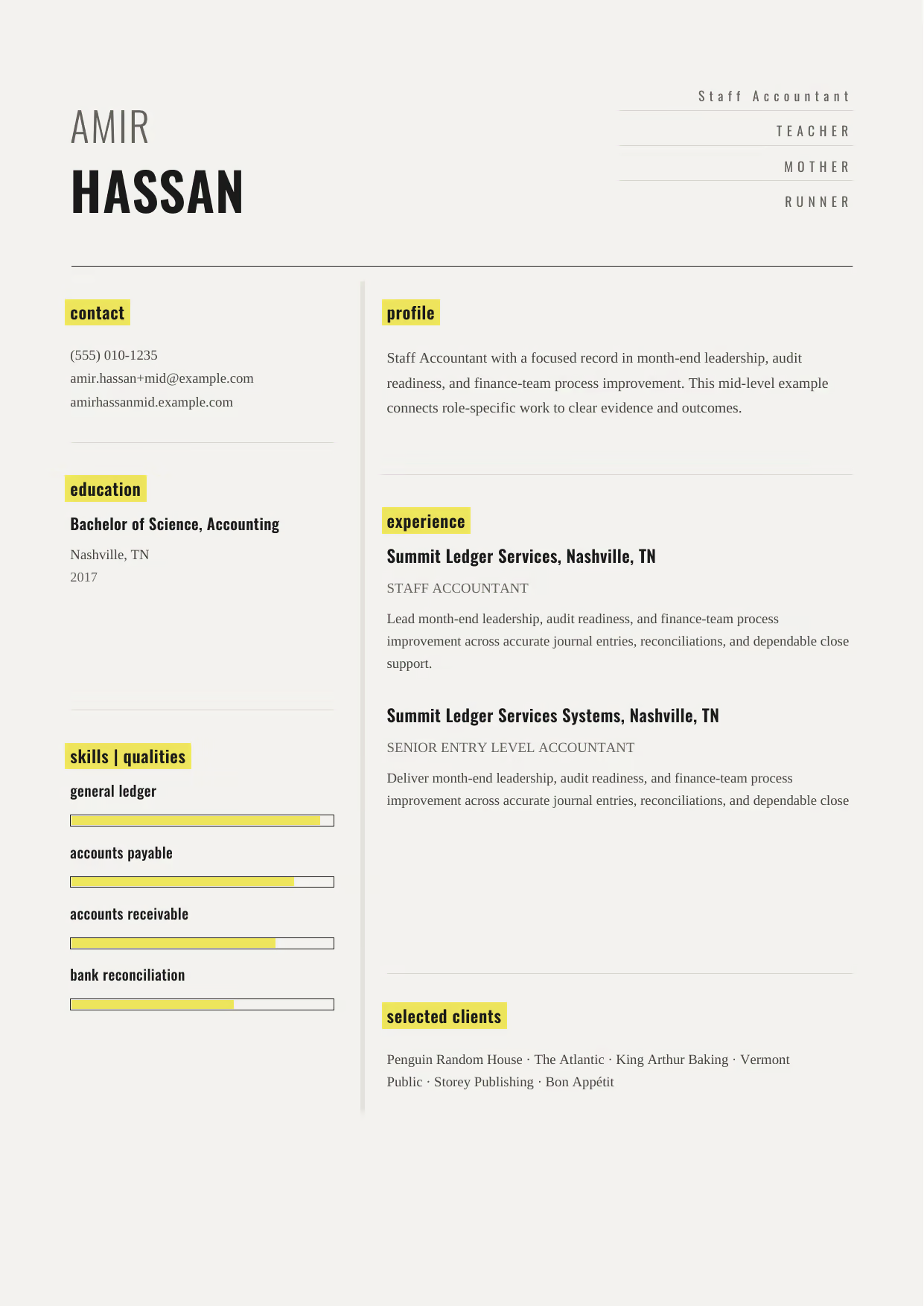
Staff Accountant
A builder-ready mid-level Entry Level Accountant example in the Dorado template, showing stage-appropriate evidence in a focused, editable resume format.
- Editable role positioning in the Dorado layout
- Role-specific evidence and delivery context
- Review the Dorado structure with a clean visual hierarchy
View this resume
Senior Entry Level Accountant Resume (8+ Years / Management)
Use these advanced examples to compare the scope, evidence, and language expected for Entry Level Accountant roles at this stage.

Senior Accountant
A builder-ready advanced Entry Level Accountant example in the Delphinus template, showing stage-appropriate evidence in a focused, editable resume format.
- Editable role positioning in the Delphinus layout
- Role-specific evidence and delivery context
- Review the Delphinus structure with a clean visual hierarchy
View this resume

Senior Accountant
A builder-ready advanced Entry Level Accountant example in the Cetus template, showing stage-appropriate evidence in a focused, editable resume format.
- Editable role positioning in the Cetus layout
- Role-specific evidence and delivery context
- Review the Cetus structure with a clean visual hierarchy
View this resume

Senior Accountant
A builder-ready advanced Entry Level Accountant example in the Equuleus template, showing stage-appropriate evidence in a focused, editable resume format.
- Editable role positioning in the Equuleus layout
- Role-specific evidence and delivery context
- Review the Equuleus structure with a clean visual hierarchy
View this resume
How to Write a Entry Level Accountant Resume
The Resume Summary
The resume summary is your first chance to make a strong impression. It should be a concise overview of your skills, experience, and career goals. Use this formula: [Years of Experience] + [Area of Expertise] + [Key Accomplishment] + [Career Goal].
Entry-Level Example: “Enthusiastic accounting graduate with strong analytical skills seeking an entry-level position to contribute to a company’s financial success.”
Mid-Level Example: “Results-oriented accountant with 5+ years of experience in financial analysis and budgeting, seeking a challenging role to leverage my skills and expertise.”
Senior Example: “Strategic accounting leader with 10+ years of experience in managing financial operations, seeking a senior leadership role to drive strategic growth.”
Work Experience & Action Verbs
Focus on achievements rather than just listing duties. Quantify your accomplishments whenever possible to demonstrate the impact of your work.
- Before: Responsible for accounts payable. After: Processed over 200 invoices per week with 99% accuracy, ensuring timely payments.
- Before: Assisted with financial reporting. After: Assisted in the preparation of monthly financial reports, reducing reporting time by 10%.
- Before: Performed bank reconciliations. After: Performed monthly bank reconciliations, identifying and resolving discrepancies, ensuring accurate financial records.
- Before: Managed the budget. After: Managed a budget of $500,000, identifying cost-saving opportunities that resulted in a 5% reduction in expenses.
- Before: Ensured compliance with GAAP. After: Ensured compliance with GAAP and other regulatory requirements, resulting in a clean audit report.
Top Skills for Entry Level Accountants
Hard Skills
- Financial Analysis
- Budgeting
- Financial Reporting
- GAAP Compliance
- Auditing
- Tax Preparation
- Internal Controls
Soft Skills
- Analytical Skills
- Problem-Solving
- Attention to Detail
- Communication
- Teamwork
- Time Management
Tools/Software
- QuickBooks
- Xero
- SAP
- Microsoft Excel
- NetSuite
Education & Certifications
List your education in reverse chronological order. For entry-level candidates, highlight relevant coursework and GPA. For experienced professionals, focus on certifications and advanced degrees.
Recommended certifications include:
- Certified Public Accountant (CPA)
- Certified Management Accountant (CMA)
- Enrolled Agent (EA)
10 Common Entry Level Accountant Resume Mistakes
- Generic Resume: Sending the same resume for every job application. Impact: Fails to highlight relevant skills and experience. Quick Fix: Tailor your resume to each job description, emphasizing the skills and experience that match the specific requirements.
- Lack of Quantification: Failing to quantify achievements. Impact: Makes it difficult for recruiters to assess your impact. Quick Fix: Use numbers to showcase your accomplishments, such as “Improved month-end closing process by 15%”.
- Poor Formatting: Using a cluttered or unprofessional format. Impact: Makes your resume difficult to read and scan. Quick Fix: Use a clean and professional format with clear headings and bullet points.
- Grammar Errors: Typos and grammatical errors. Impact: Creates a negative impression and suggests a lack of attention to detail. Quick Fix: Proofread your resume carefully and use a grammar checker.
- Irrelevant Information: Including irrelevant information that doesn’t relate to the job. Impact: Clutters your resume and distracts from your qualifications. Quick Fix: Focus on the skills and experience that are most relevant to the job description.
- Missing Keywords: Failing to include relevant keywords. Impact: Makes it difficult for your resume to pass through Applicant Tracking Systems (ATS). Quick Fix: Use keywords from the job description throughout your resume.
- Listing Duties Instead of Impact: Recruiters know what a Entry Level Accountant does; they want to know how well you did it. Replace passive phrases with quantified wins. Impact: Fails to highlight your achievements. Quick Fix: Focus on your accomplishments and quantify them whenever possible.
- Inconsistent Tense: Mixing past and present tense. Impact: Makes your resume appear unprofessional. Quick Fix: Use past tense to describe previous jobs and present tense to describe your current job.
- Weak Summary Statement: A vague or generic summary statement. Impact: Fails to grab the reader’s attention. Quick Fix: Write a concise and compelling summary statement that highlights your key skills and experience.
- Ignoring the Cover Letter: Thinking a resume is enough. Impact: Misses opportunity to showcase personality. Quick Fix: Always include a cover letter that highlights your interest in the company and the specific role.
Frequently Asked Questions (Entry Level Accountant)
- What should a Entry Level Accountant resume emphasize first? Lead with the scope of accurate journal entries, reconciliations, and dependable close support, then connect your contribution to a clear outcome, tool, or decision.
- Which skills deserve priority on a Entry Level Accountant resume? Prioritize general ledger, accounts payable, and accounts receivable when they match the role and can be supported by evidence.
- How can a Entry Level Accountant show project scope and impact? Name the environment, scale, constraints, and result; general-ledger ownership, payables and receivables, and clean reporting becomes more credible when the context is concrete.
- How should a Entry Level Accountant describe tools and technical decisions? Describe why you selected a method, how you implemented it, and what changed afterward in the Entry Level Accountant role.
- Which achievements matter most for a Entry Level Accountant application? Use outcome-led bullets that show month-end leadership, audit readiness, and finance-team process improvement through delivery quality, measurable scope, or stakeholder value.
- How long should a Entry Level Accountant resume be? Use the shortest length that proves fit; a focused page can work early-career, while broader Entry Level Accountant scope may need more room.
- How can a Entry Level Accountant explain progression between career stages? Group examples by increasing ownership, moving from accurate journal entries, reconciliations, and dependable close support toward month-end leadership, audit readiness, and finance-team process improvement as responsibility grows.
- Which keywords should a Entry Level Accountant include for screening systems? Mirror truthful language from the posting, especially bank reconciliation, without stuffing unrelated terms.
- How should a Entry Level Accountant present reliability, quality, or safety work? Show how you protected outcomes through journal entries and explain the evidence a hiring team can verify.
- What format makes a Entry Level Accountant resume easy for hiring teams to scan? Use clear headings, readable bullets, and consistent dates so a hiring manager can evaluate Entry Level Accountant fit quickly.
Crafting a compelling entry-level accountant resume requires a strategic approach, focusing on your strengths and tailoring your application to each specific job. By following the tips and examples in this guide, you can create a resume that stands out and lands you more interviews.
Search more Entry Level Accountant resources on our site to further enhance your job search strategy and increase your chances of success! Search more Entry Level Accountant resources
Editorial review: RockStarCV Editorial Team reviewed this Entry Level Accountant guide for source fidelity, role-specific usefulness, accessibility, builder examples, and question completeness.