Software Test Engineer Resume Examples & Guide
Landing a Software Test Engineer role can be challenging. Applicant Tracking Systems (ATS) filter countless resumes, and you face fierce competition from other skilled candidates. This guide provides Software Test Engineer resume examples for every experience level, equipping you with the tools to stand out.
- Quantify Achievements: Use numbers and metrics to demonstrate the impact of your testing efforts.
- Highlight Relevant Skills: Showcase your expertise in testing methodologies, tools, and programming languages.
- Tailor to Job Description: Customize your resume to match the specific requirements of each job application.
- Optimize for ATS: Use keywords from the job description and format your resume for optimal ATS readability.
- Use Action Verbs: Start your bullet points with strong action verbs to describe your accomplishments.
- Showcase Problem-Solving Skills: Highlight instances where you identified and resolved critical software defects.
Let’s explore some Software Test Engineer resume examples to inspire your own!
Explore editable Software Test Engineer resume examples by career stage. Each sample opens in the RockStarCV builder so you can study the structure and make your own version.
Entry-Level Software Test Engineer Resume (0-2 Years Experience)
Use these entry-level examples to compare the scope, evidence, and language expected for Software Test Engineer roles at this stage.
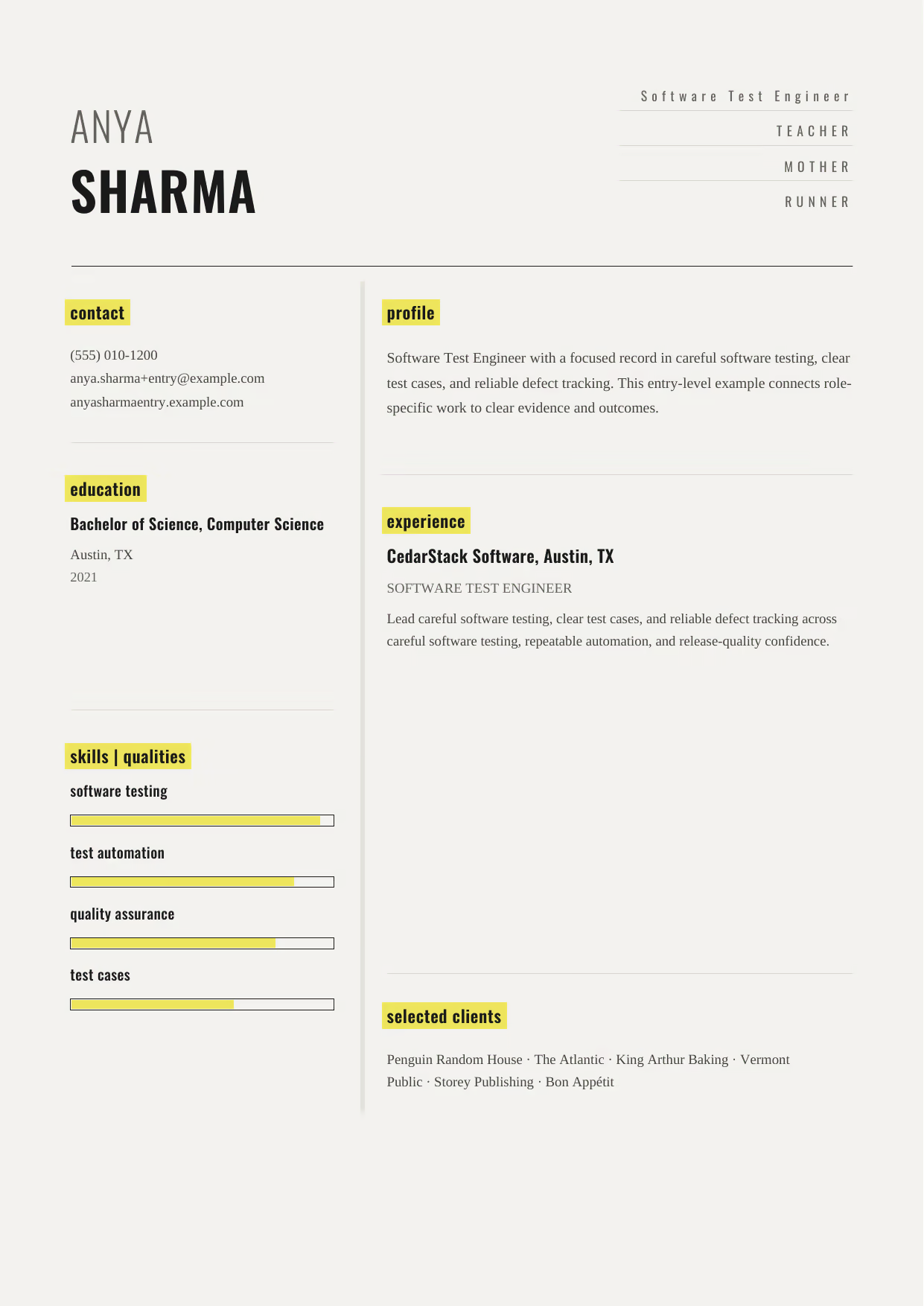
Software Test Engineer
A builder-ready entry-level Software Test Engineer example in the Dorado template, showing stage-appropriate evidence in a focused, editable resume format.
- Editable role positioning in the Dorado layout
- Role-specific evidence and delivery context
- Review the Dorado structure with a clean visual hierarchy
View this resume
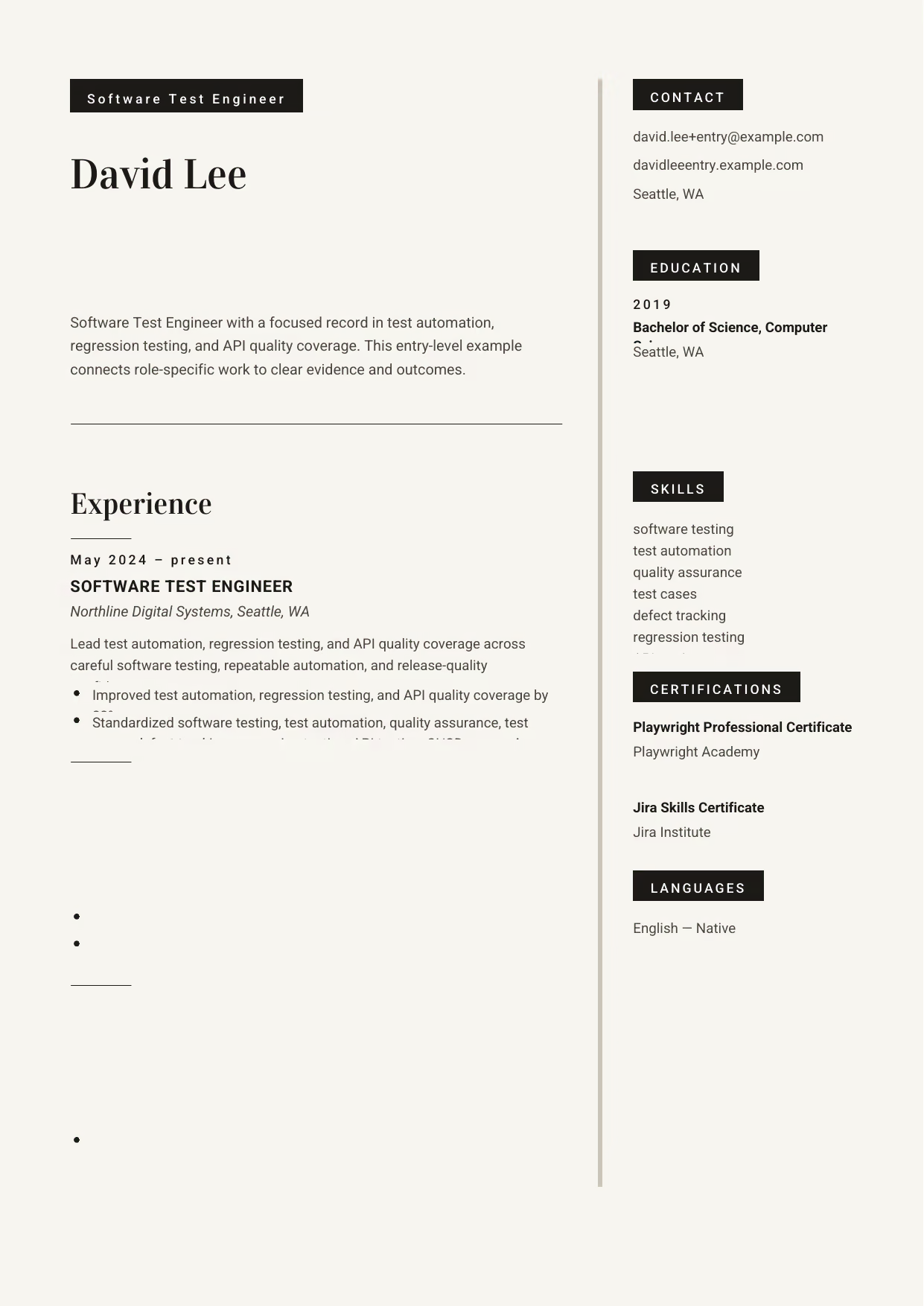
Software Test Engineer
A builder-ready entry-level Software Test Engineer example in the Aquila template, showing stage-appropriate evidence in a focused, editable resume format.
- Editable role positioning in the Aquila layout
- Role-specific evidence and delivery context
- Review the Aquila structure with a clean visual hierarchy
View this resume
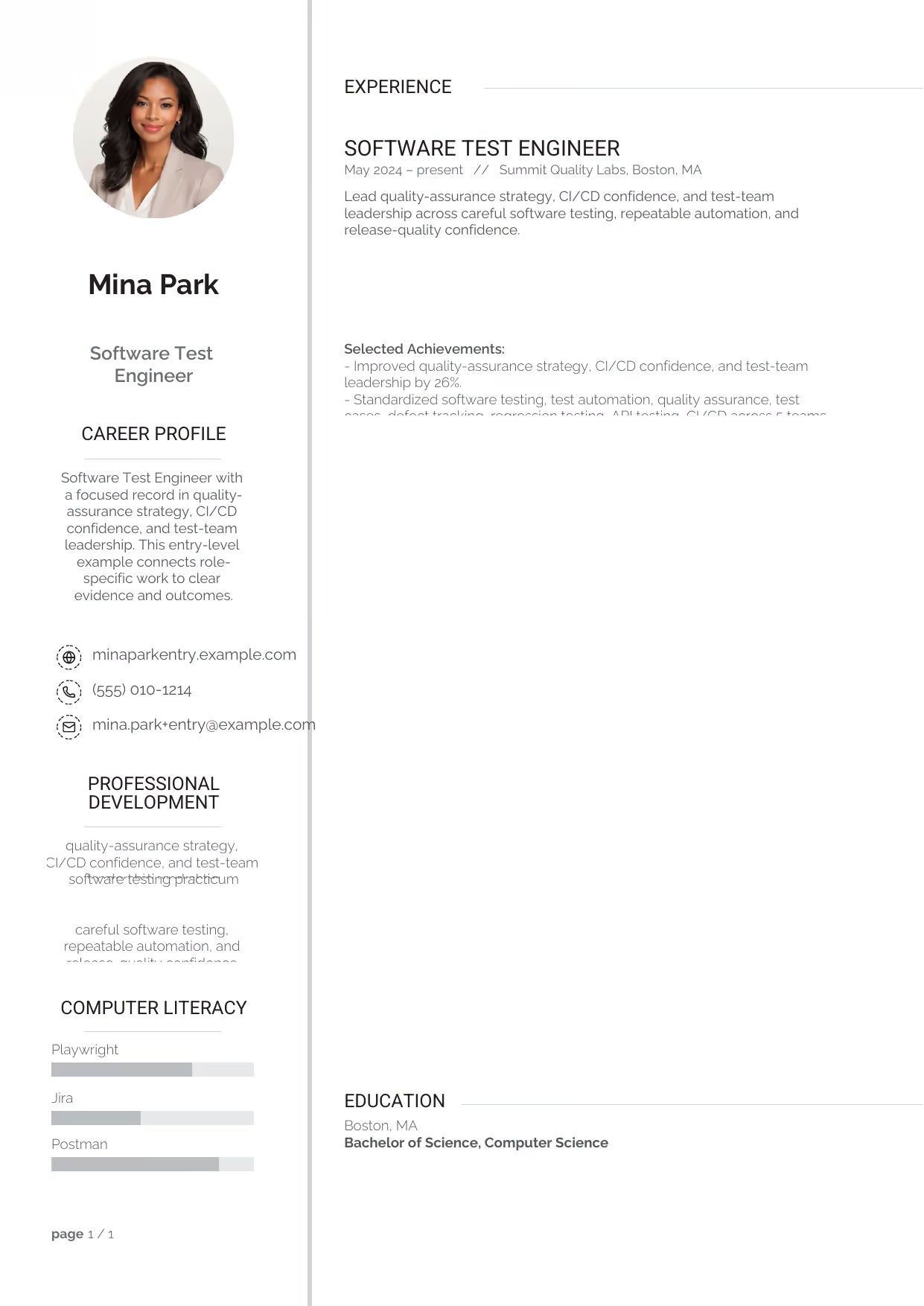
Software Test Engineer
A builder-ready entry-level Software Test Engineer example in the Synnove template, showing stage-appropriate evidence in a focused, editable resume format.
- Editable role positioning in the Synnove layout
- Role-specific evidence and delivery context
- Review the Synnove structure with a clean visual hierarchy
View this resume
Mid-Level Software Test Engineer Resume (3-7 Years Experience)
Use these mid-level examples to compare the scope, evidence, and language expected for Software Test Engineer roles at this stage.
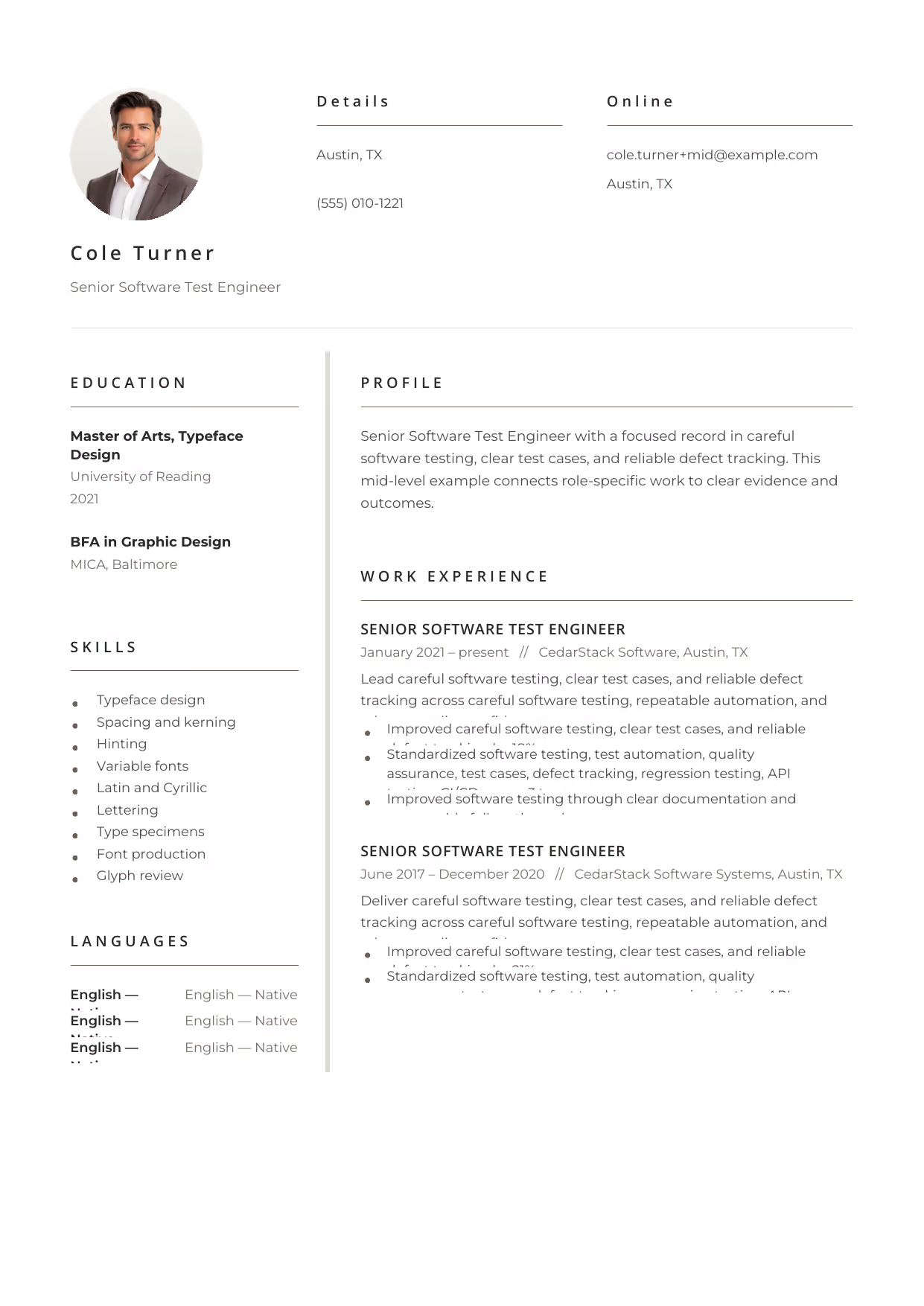
Senior Software Test Engineer
A builder-ready mid-level Software Test Engineer example in the Pictor template, showing stage-appropriate evidence in a focused, editable resume format.
- Editable role positioning in the Pictor layout
- Role-specific evidence and delivery context
- Review the Pictor structure with a clean visual hierarchy
View this resume

Senior Software Test Engineer
A builder-ready mid-level Software Test Engineer example in the Indus template, showing stage-appropriate evidence in a focused, editable resume format.
- Editable role positioning in the Indus layout
- Role-specific evidence and delivery context
- Review the Indus structure with a clean visual hierarchy
View this resume
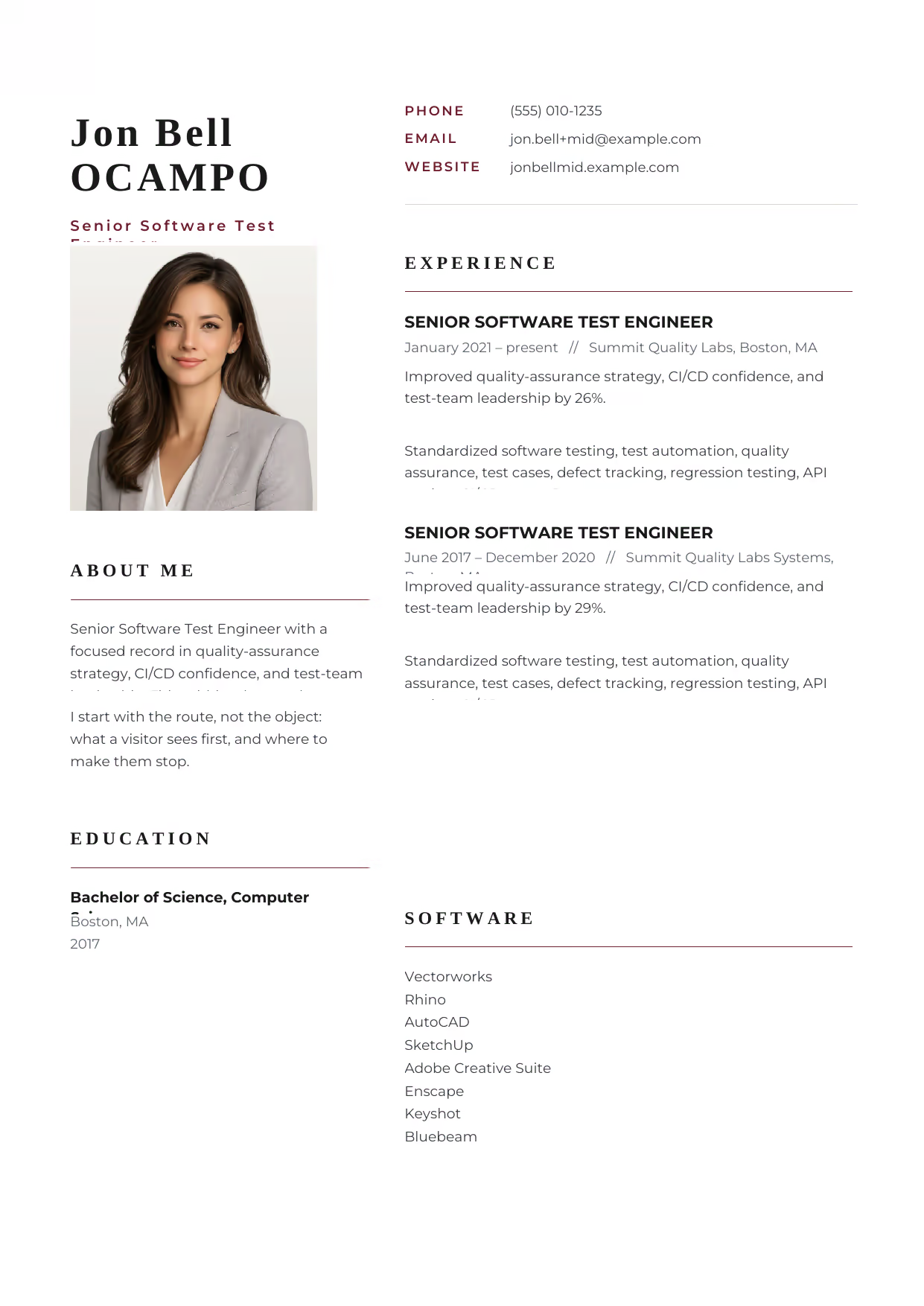
Senior Software Test Engineer
A builder-ready mid-level Software Test Engineer example in the Hydra template, showing stage-appropriate evidence in a focused, editable resume format.
- Editable role positioning in the Hydra layout
- Role-specific evidence and delivery context
- Review the Hydra structure with a clean visual hierarchy
View this resume
Senior Software Test Engineer Resume (8+ Years / Management)
Use these advanced examples to compare the scope, evidence, and language expected for Software Test Engineer roles at this stage.
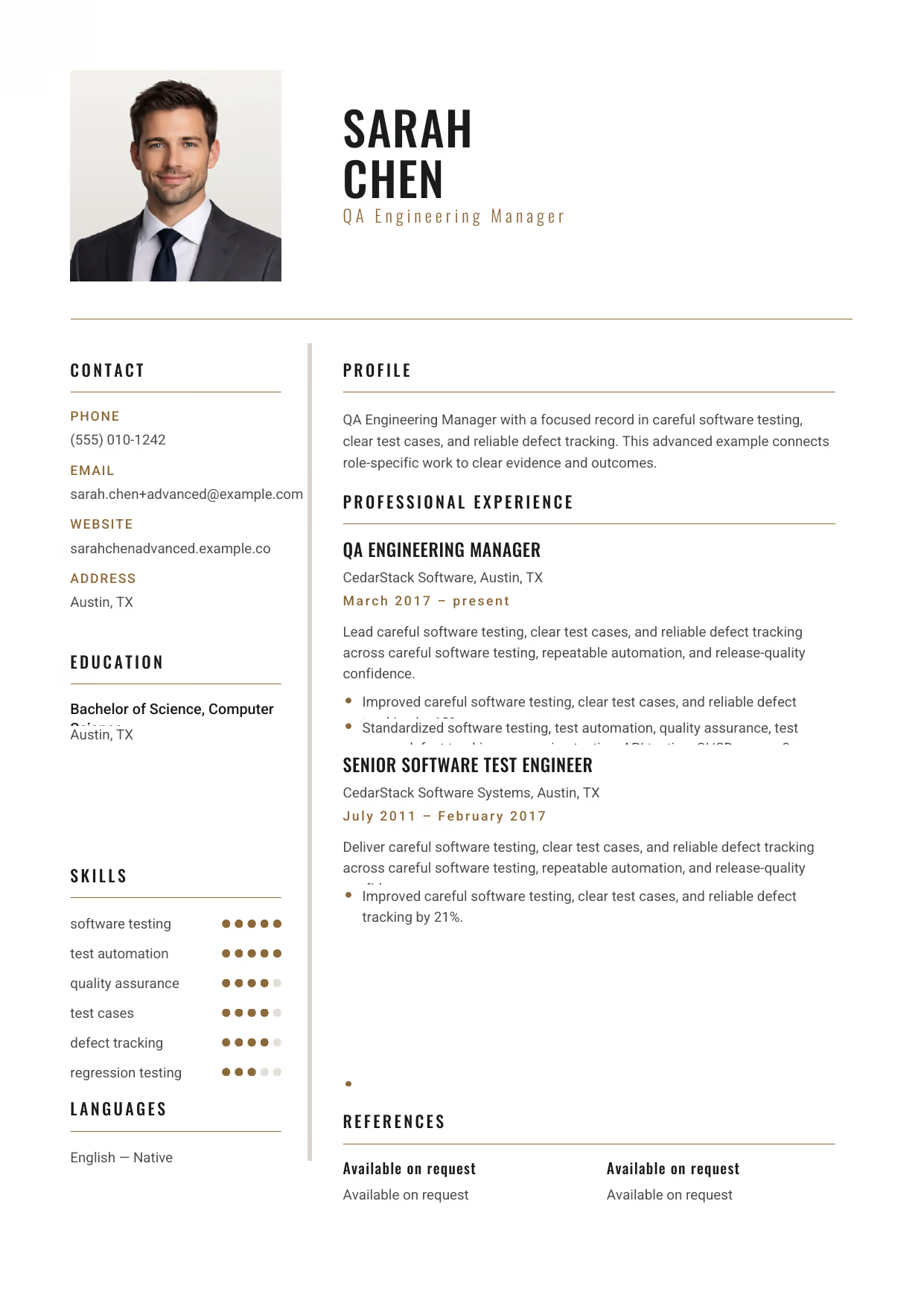
QA Engineering Manager
A builder-ready advanced Software Test Engineer example in the Acamar template, showing stage-appropriate evidence in a focused, editable resume format.
- Editable role positioning in the Acamar layout
- Role-specific evidence and delivery context
- Review the Acamar structure with a clean visual hierarchy
View this resume

QA Engineering Manager
A builder-ready advanced Software Test Engineer example in the Eridanus template, showing stage-appropriate evidence in a focused, editable resume format.
- Editable role positioning in the Eridanus layout
- Role-specific evidence and delivery context
- Review the Eridanus structure with a clean visual hierarchy
View this resume
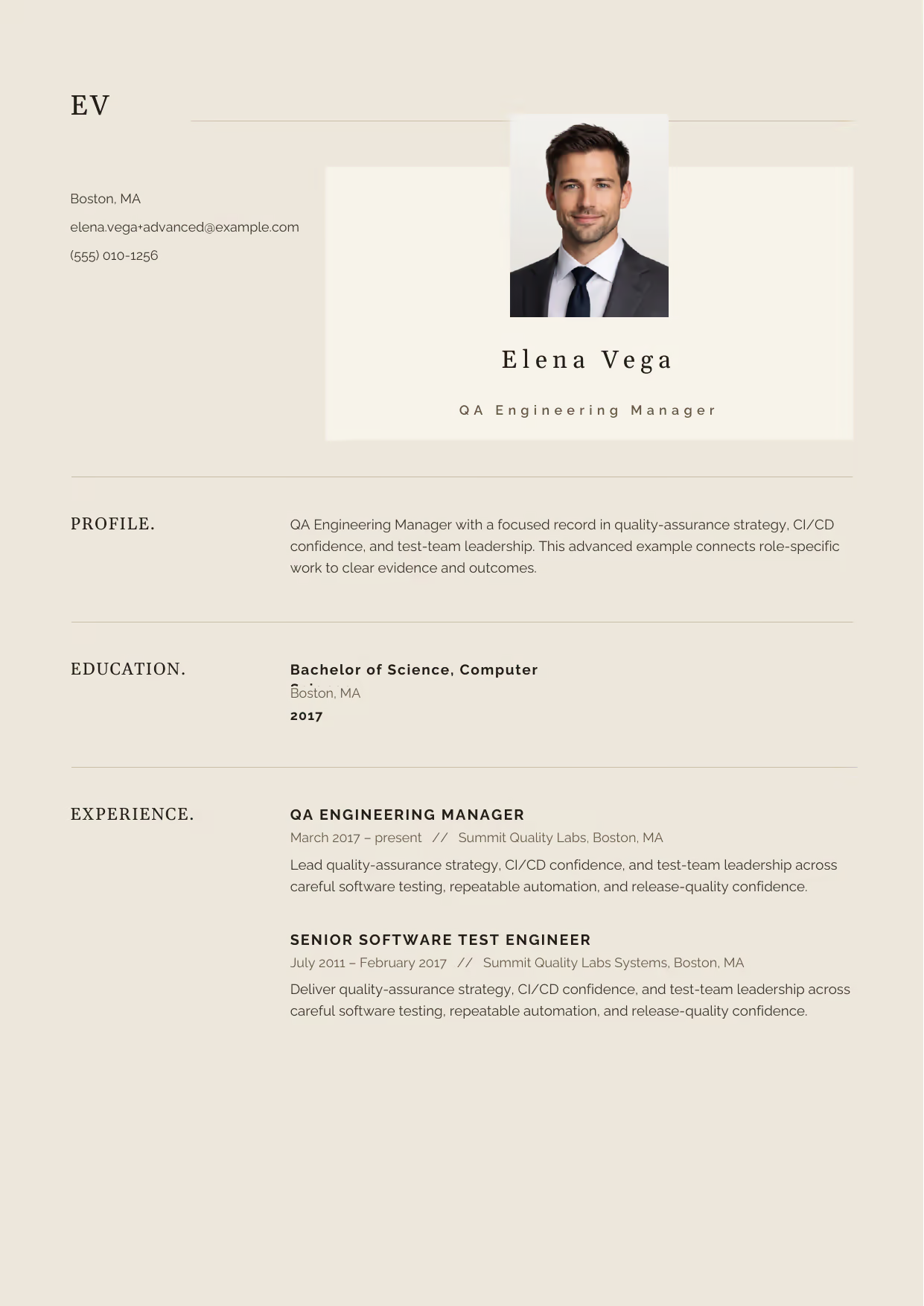
QA Engineering Manager
A builder-ready advanced Software Test Engineer example in the Norma template, showing stage-appropriate evidence in a focused, editable resume format.
- Editable role positioning in the Norma layout
- Role-specific evidence and delivery context
- Review the Norma structure with a clean visual hierarchy
View this resume
How to Write a Software Test Engineer Resume
The Resume Summary
The resume summary is your first chance to grab the recruiter’s attention. It should be a concise overview of your skills, experience, and career goals. Use this formula: [Years of Experience] + [Job Title] + [Key Skills] + [Key Achievement] + [Career Goal]
Entry-Level Example: Highly motivated recent graduate with a Bachelor of Science in Computer Science seeking an Entry-Level Software Test Engineer position. Eager to apply academic knowledge and strong analytical skills to contribute to a dynamic software development team.
Mid-Level Example: Results-oriented Software Test Engineer with 5+ years of experience in designing, developing, and executing comprehensive test plans for web and mobile applications. Proven ability to identify and resolve critical software defects, resulting in improved software quality and user satisfaction.
Senior Example: Highly accomplished and results-driven Senior Software Test Engineer with 10+ years of experience in leading testing teams and implementing quality assurance strategies. Proven ability to improve software quality, reduce defect rates, and enhance user satisfaction. Certified Software Quality Analyst (CSQA).
Work Experience & Action Verbs
The work experience section is where you showcase your accomplishments and demonstrate your value to potential employers. Focus on achievements rather than just listing duties. Use strong action verbs to describe your accomplishments and quantify your results whenever possible.
Here are some examples of how to transform duties into achievements:
- Before: Responsible for testing software applications. After: Developed and executed test cases for web applications, identifying and reporting 15+ bugs.
- Before: Conducted manual testing. After: Performed manual testing on mobile applications, ensuring functionality and usability.
- Before: Reported bugs. After: Identified and reported over 200+ critical software defects, contributing to improved software stability.
- Before: Collaborated with developers. After: Collaborated with developers and product managers to ensure high-quality software releases.
- Before: Implemented performance testing. After: Implemented performance testing strategies, resulting in a 15% improvement in application response time.
Top Skills for Software Test Engineers
Here are some of the top skills that Software Test Engineers should include on their resumes:
Hard Skills
- Test Case Development
- Bug Reporting
- Regression Testing
- Automation Testing
- Performance Testing
- SQL
Soft Skills
- Analytical Thinking
- Problem-Solving
- Communication
- Attention to Detail
- Teamwork
Tools/Software
- Selenium
- JUnit
- JIRA
- TestRail
- LoadRunner
Education & Certifications
The education section should include your degree and any relevant coursework. If you have limited work experience, you can include your GPA and any academic achievements. For senior-level roles, focus on certifications and professional development.
Here are some required or recommended certifications for Software Test Engineers:
- Certified Software Quality Analyst (CSQA)
- Certified Software Tester (CSTE)
- ISTQB Certified Tester Foundation Level (CTFL)
10 Common Software Test Engineer Resume Mistakes
- Generic Resume Summary: A vague summary fails to capture a recruiter’s attention. Instead, tailor your summary to the specific role, highlighting your key skills and achievements relevant to Software Test Engineering. This will ensure your resume passes initial screenings.
- Listing Duties Instead of Impact: Recruiters want to know how well you performed your duties, not just what you did. Replace passive phrases like ‘Responsible for testing’ with quantified wins like ‘Reduced bug-related incidents by 20%‘. This demonstrates your value.
- Lack of Relevant Keywords: Failing to include relevant keywords means your resume might not pass ATS scans. Research the job description and incorporate keywords like ‘automation testing’, ‘performance testing’, and ‘agile methodologies’.
- Poor Formatting: A poorly formatted resume is difficult to read and can be quickly discarded. Use clear headings, bullet points, and a consistent font to make your resume visually appealing and easy to scan.
- Typos and Grammatical Errors: Typos and grammatical errors make you look unprofessional and careless. Proofread your resume carefully before submitting it. Consider using a grammar checker tool.
- Irrelevant Information: Including irrelevant information, such as unrelated hobbies, wastes valuable space. Focus on skills and experiences directly related to Software Test Engineering.
- Inconsistent Dates: Inconsistent or missing dates can raise red flags about your employment history. Ensure all dates are accurate and consistent throughout your resume.
- Ignoring ATS Optimization: Many companies use Applicant Tracking Systems (ATS) to screen resumes. Optimize your resume for ATS by using simple formatting, avoiding tables and graphics, and using keywords from the job description.
- Not Tailoring to the Job Description: A generic resume shows a lack of interest in the specific role. Tailor your resume to each job description, highlighting the skills and experiences most relevant to the position.
- Misspelling Core Industry Terminology: Typos in general are bad, but misspelling critical tools or certifications (like ‘Selenium’, ‘JUnit’, or ‘ISTQB’) acts as an immediate red flag regarding your attention to detail.
Frequently Asked Questions (Software Test Engineer)
- What should a Software Test Engineer resume emphasize first? Lead with the scope of careful software testing, clear test cases, and reliable defect tracking, then connect your contribution to a clear outcome, tool, or decision.
- Which skills deserve priority on a Software Test Engineer resume? Prioritize software testing, test automation, and quality assurance when they match the role and can be supported by evidence.
- How can a Software Test Engineer show project scope and impact? Name the environment, scale, constraints, and result; test automation, regression testing, and API quality coverage becomes more credible when the context is concrete.
- How should a Software Test Engineer describe tools and technical decisions? Describe why you selected a method, how you implemented it, and what changed afterward in the Software Test Engineer role.
- Which achievements matter most for a Software Test Engineer application? Use outcome-led bullets that show quality-assurance strategy, CI/CD confidence, and test-team leadership through delivery quality, measurable scope, or stakeholder value.
- How long should a Software Test Engineer resume be? Use the shortest length that proves fit; a focused page can work early-career, while broader Software Test Engineer scope may need more room.
- How can a Software Test Engineer explain progression between career stages? Group examples by increasing ownership, moving from careful software testing, clear test cases, and reliable defect tracking toward quality-assurance strategy, CI/CD confidence, and test-team leadership as responsibility grows.
- Which keywords should a Software Test Engineer include for screening systems? Mirror truthful language from the posting, especially test cases, without stuffing unrelated terms.
- How should a Software Test Engineer present reliability, quality, or safety work? Show how you protected outcomes through defect tracking and explain the evidence a hiring team can verify.
- What format makes a Software Test Engineer resume easy for hiring teams to scan? Use clear headings, readable bullets, and consistent dates so a hiring manager can evaluate Software Test Engineer fit quickly.
Crafting a compelling Software Test Engineer resume requires careful attention to detail, strategic keyword usage, and a focus on quantifiable achievements. By following the examples and tips outlined in this guide, you can create a resume that stands out from the competition and lands you more interviews.
Ready to take the next step? Search more Software Test Engineer resources on our site to find even more templates, tips, and advice!
Editorial review: RockStarCV Editorial Team reviewed this Software Test Engineer guide for source fidelity, role-specific usefulness, accessibility, builder examples, and question completeness.