Recruiting Coordinator Resume Examples & Guide
Landing a Recruiting Coordinator role is challenging. Applicant Tracking Systems (ATS) filter out countless resumes, and the competition is fierce. This guide provides Recruiting Coordinator resume examples for every experience level, offering strategies to bypass the bots and impress hiring managers.
- Quantify Achievements: Use numbers to demonstrate the impact of your work.
- Highlight Relevant Skills: Showcase your skills in applicant tracking systems, scheduling software, and communication.
- Tailor to Job Description: Customize your resume to match the specific requirements of each job you apply for.
- Optimize for ATS: Use keywords from the job description to ensure your resume is not overlooked by the ATS.
- Use Action Verbs: Start your bullet points with strong action verbs to highlight your accomplishments.
- Proofread Carefully: Ensure your resume is free of grammatical errors and typos.
Let’s dive into some Recruiting Coordinator resume examples.
Explore editable Recruiting Coordinator resume examples by career stage. Each sample opens in the RockStarCV builder so you can study the structure and make your own version.
Entry-Level Recruiting Coordinator Resume (0-2 Years Experience)
Use these entry-level examples to compare the scope, evidence, and language expected for Recruiting Coordinator roles at this stage.

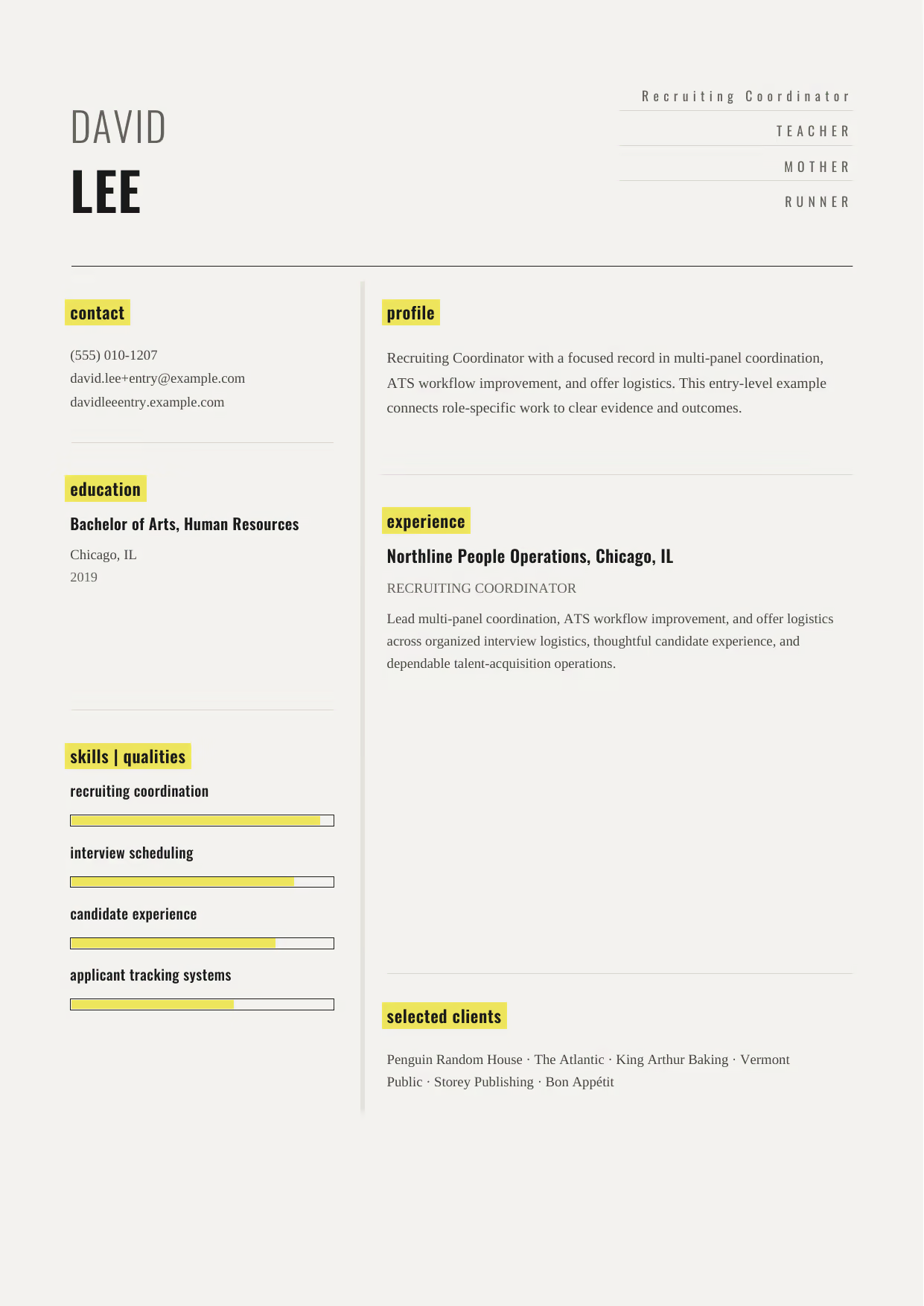
Recruiting Coordinator
A builder-ready entry-level Recruiting Coordinator example in the Draco template, showing stage-appropriate evidence in a focused, editable resume format.
- Editable role positioning in the Draco layout
- Role-specific evidence and delivery context
- Review the Draco structure with a clean visual hierarchy
View this resume
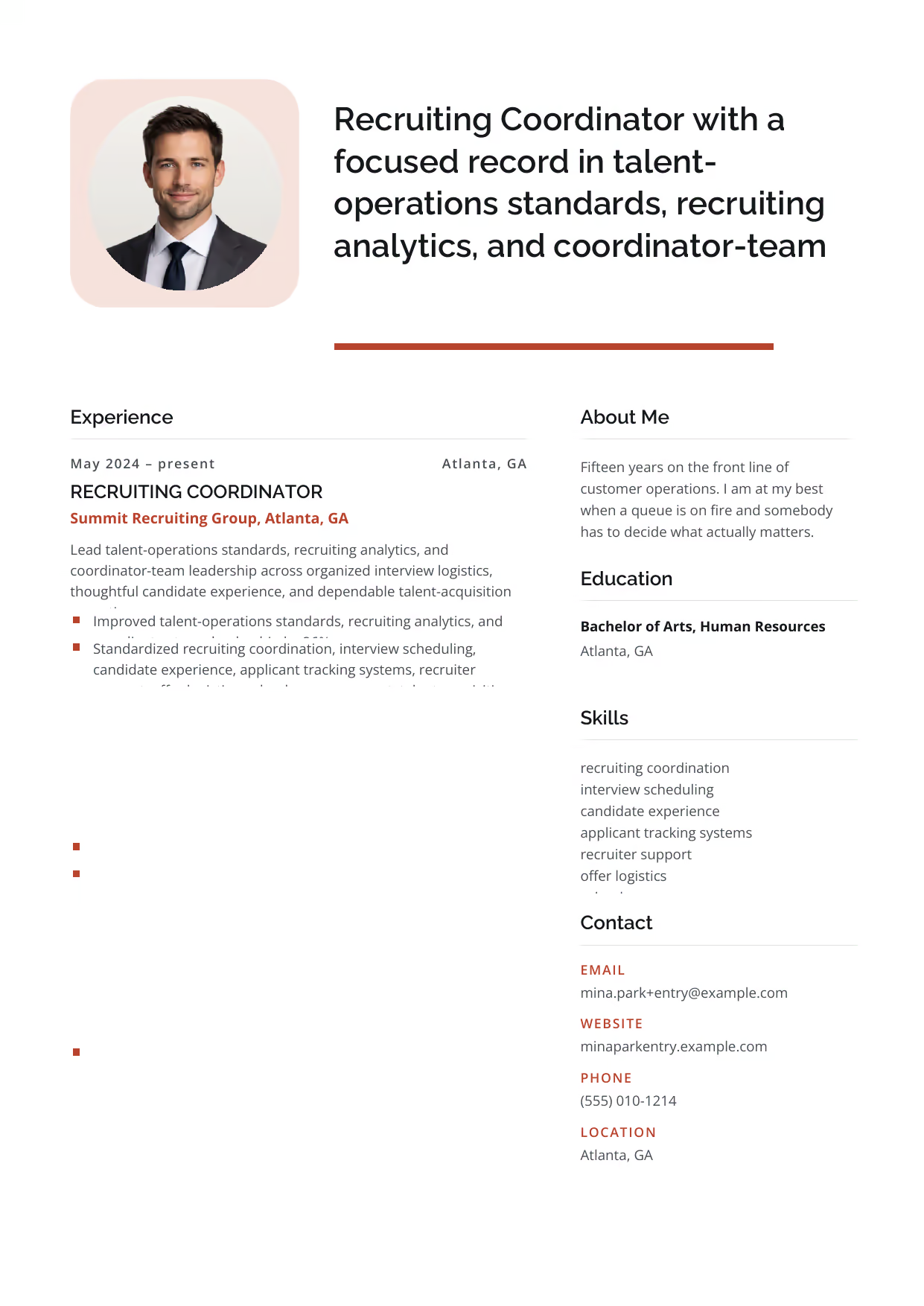
Recruiting Coordinator
A builder-ready entry-level Recruiting Coordinator example in the Dorado template, showing stage-appropriate evidence in a focused, editable resume format.
- Editable role positioning in the Dorado layout
- Role-specific evidence and delivery context
- Review the Dorado structure with a clean visual hierarchy
View this resume
Recruiting Coordinator
A builder-ready entry-level Recruiting Coordinator example in the Andromeda template, showing stage-appropriate evidence in a focused, editable resume format.
- Editable role positioning in the Andromeda layout
- Role-specific evidence and delivery context
- Review the Andromeda structure with a clean visual hierarchy
View this resume
Mid-Level Recruiting Coordinator Resume (3-7 Years Experience)
Use these mid-level examples to compare the scope, evidence, and language expected for Recruiting Coordinator roles at this stage.
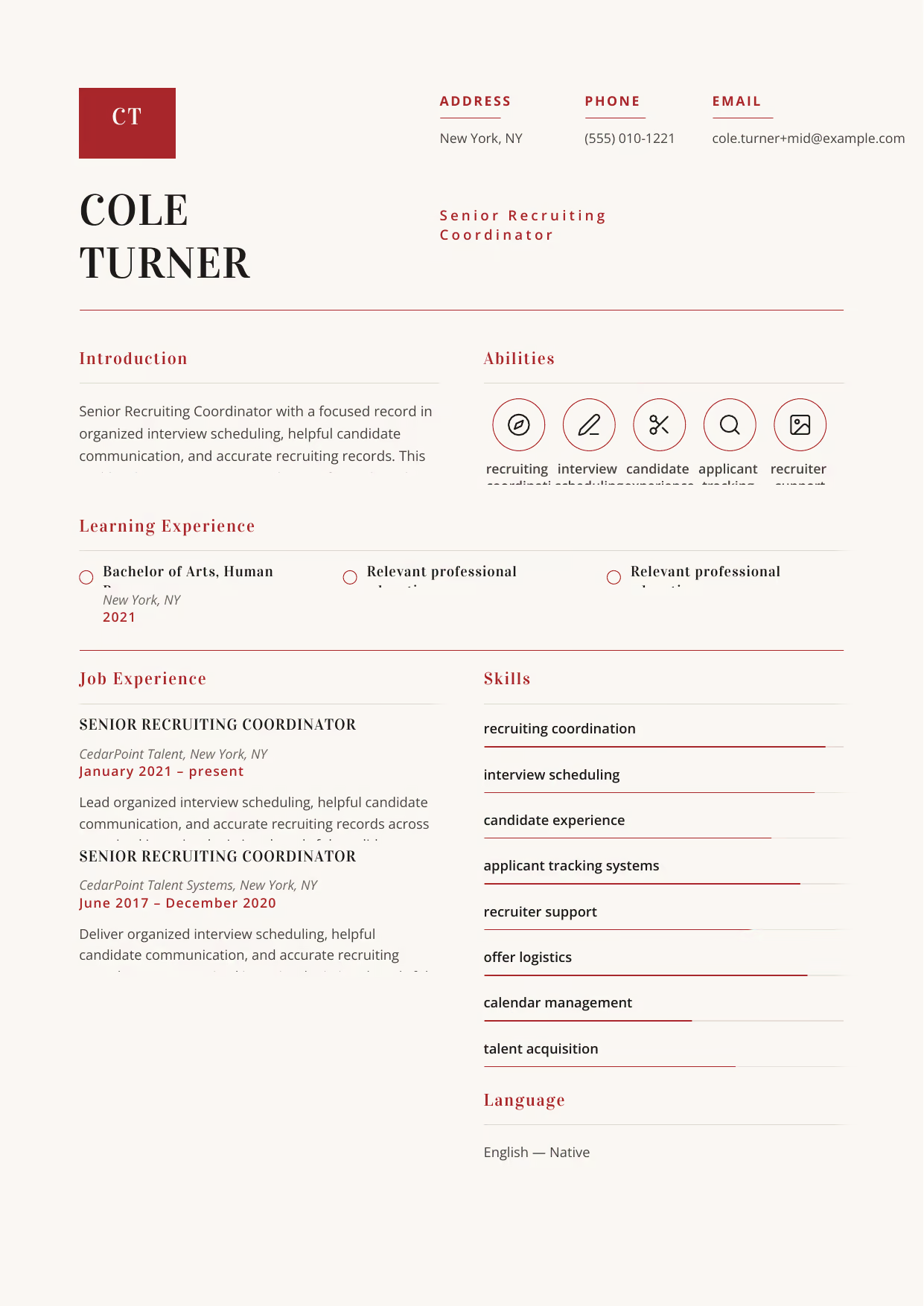
Senior Recruiting Coordinator
A builder-ready mid-level Recruiting Coordinator example in the Delphinus template, showing stage-appropriate evidence in a focused, editable resume format.
- Editable role positioning in the Delphinus layout
- Role-specific evidence and delivery context
- Review the Delphinus structure with a clean visual hierarchy
View this resume
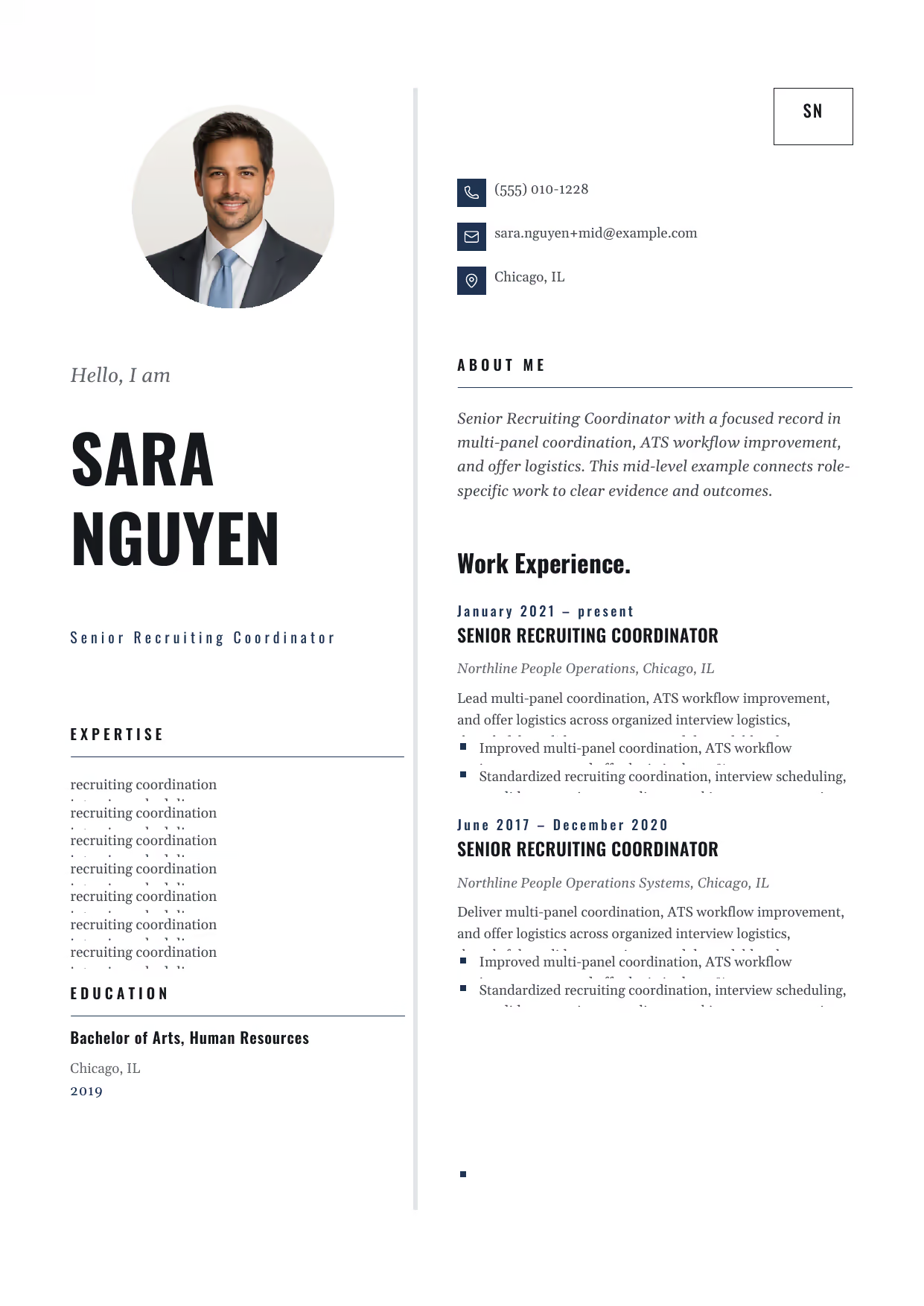
Senior Recruiting Coordinator
A builder-ready mid-level Recruiting Coordinator example in the Equuleus template, showing stage-appropriate evidence in a focused, editable resume format.
- Editable role positioning in the Equuleus layout
- Role-specific evidence and delivery context
- Review the Equuleus structure with a clean visual hierarchy
View this resume
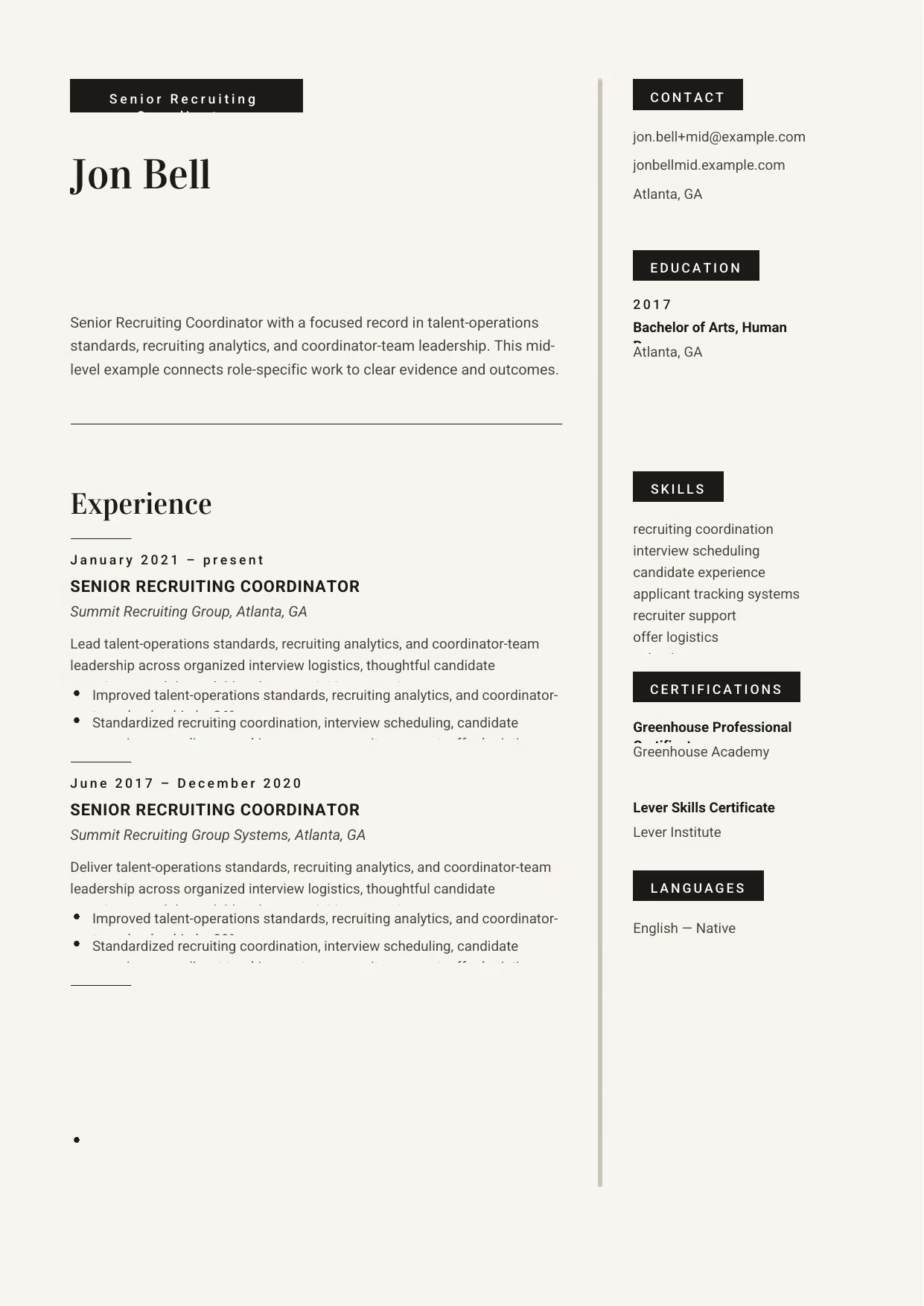
Senior Recruiting Coordinator
A builder-ready mid-level Recruiting Coordinator example in the Aquila template, showing stage-appropriate evidence in a focused, editable resume format.
- Editable role positioning in the Aquila layout
- Role-specific evidence and delivery context
- Review the Aquila structure with a clean visual hierarchy
View this resume
Senior Recruiting Coordinator Resume (8+ Years / Management)
Use these advanced examples to compare the scope, evidence, and language expected for Recruiting Coordinator roles at this stage.
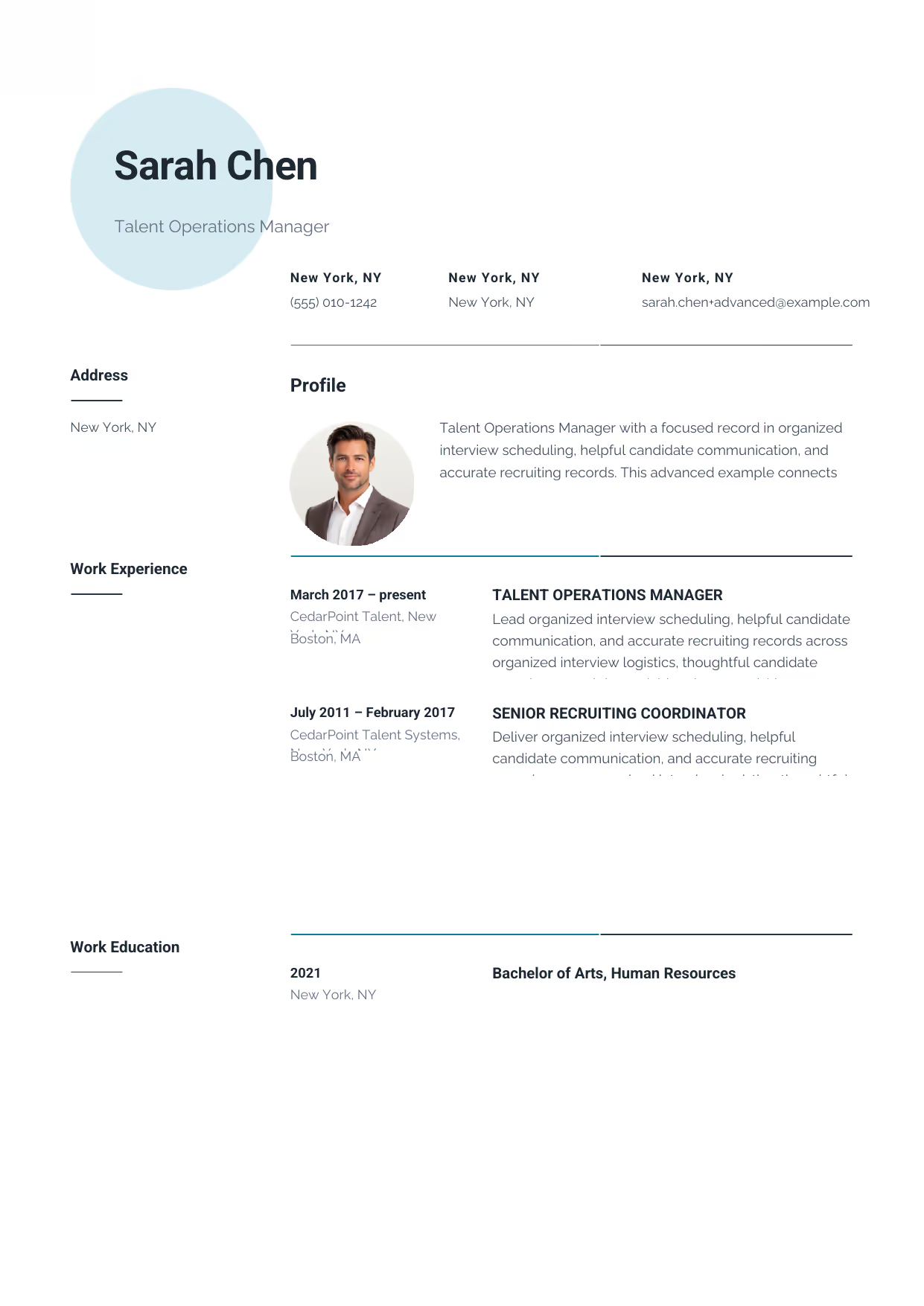
Talent Operations Manager
A builder-ready advanced Recruiting Coordinator example in the Pavo template, showing stage-appropriate evidence in a focused, editable resume format.
- Editable role positioning in the Pavo layout
- Role-specific evidence and delivery context
- Review the Pavo structure with a clean visual hierarchy
View this resume
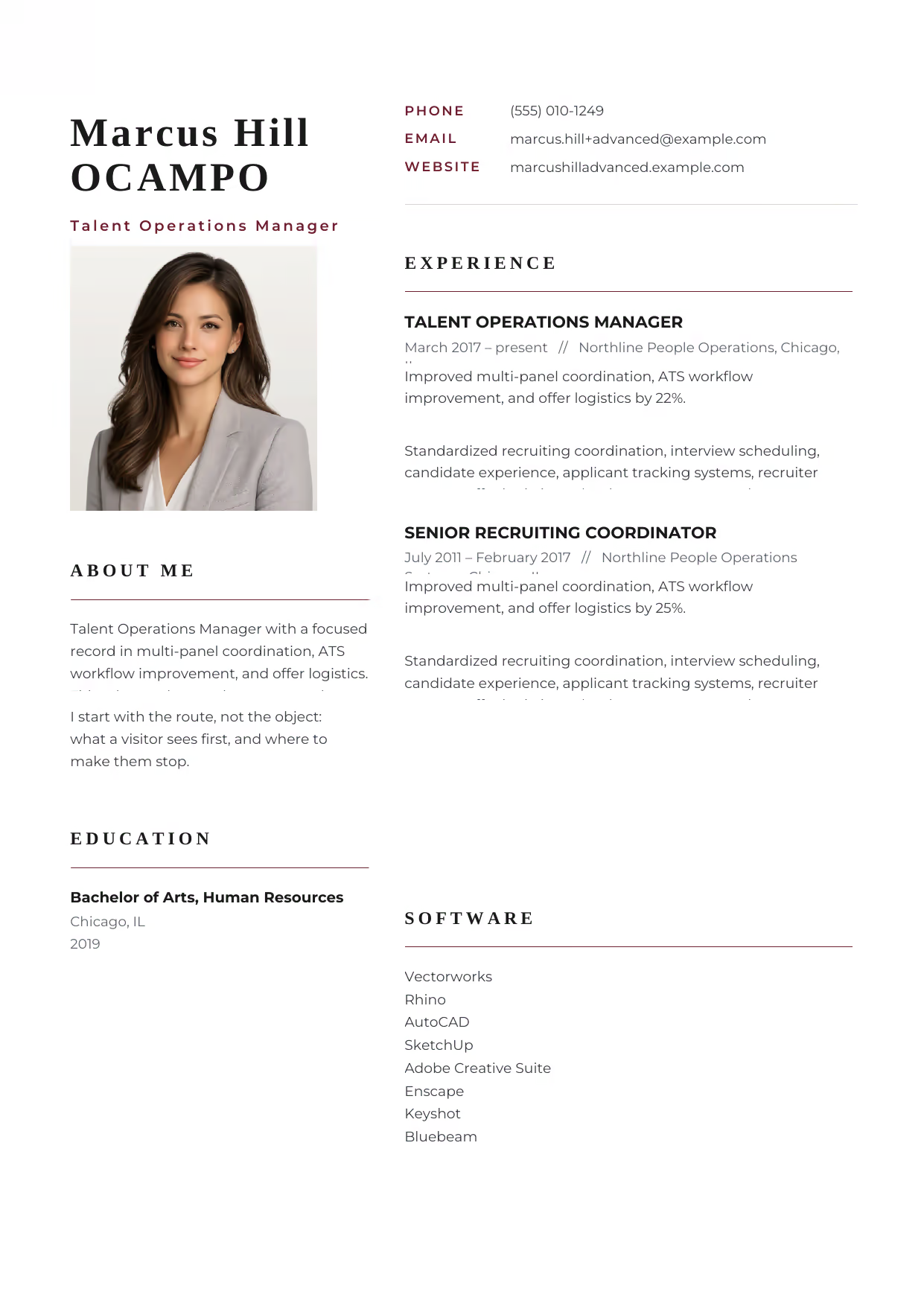
Talent Operations Manager
A builder-ready advanced Recruiting Coordinator example in the Hydra template, showing stage-appropriate evidence in a focused, editable resume format.
- Editable role positioning in the Hydra layout
- Role-specific evidence and delivery context
- Review the Hydra structure with a clean visual hierarchy
View this resume
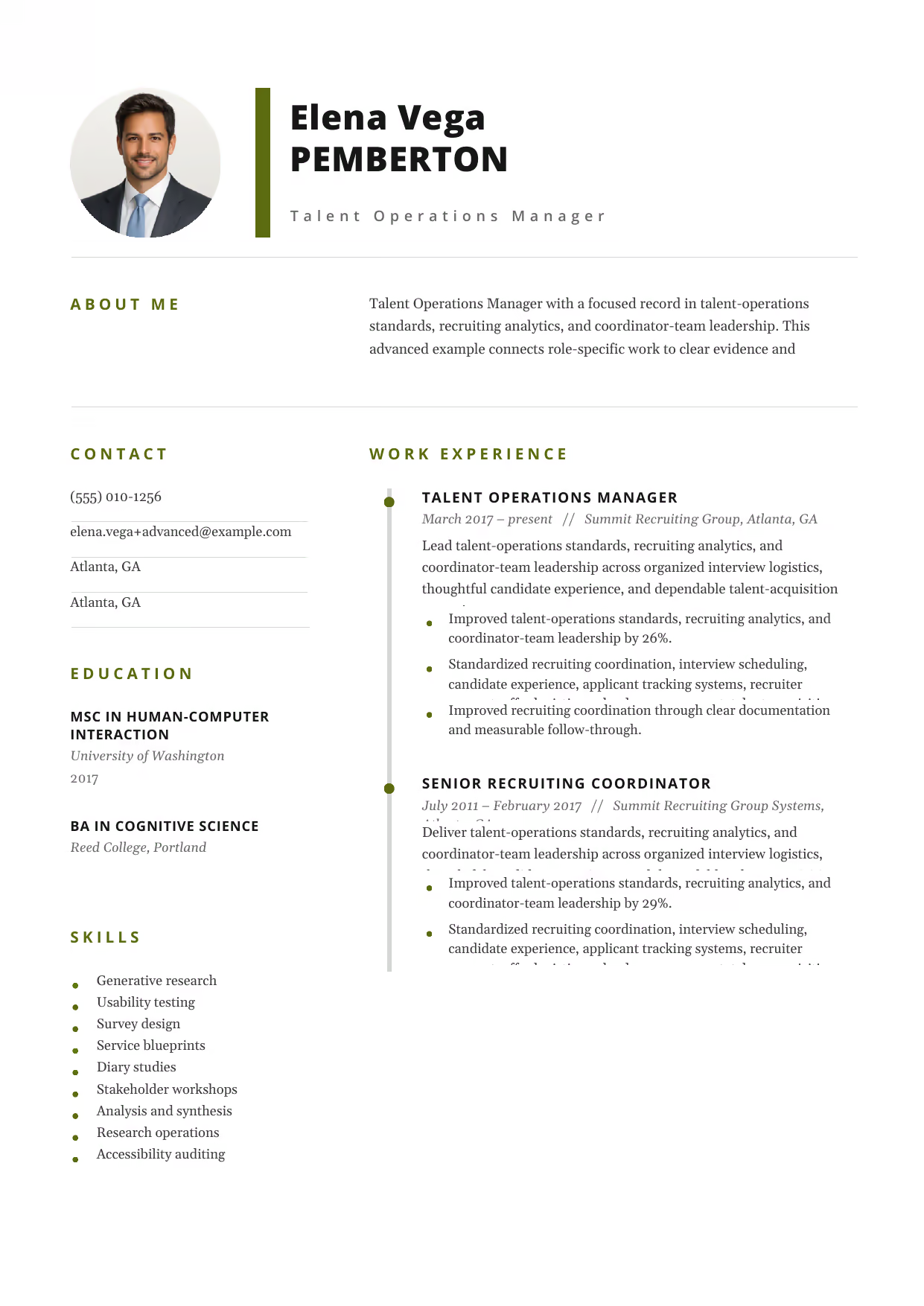
Talent Operations Manager
A builder-ready advanced Recruiting Coordinator example in the Pegasus template, showing stage-appropriate evidence in a focused, editable resume format.
- Editable role positioning in the Pegasus layout
- Role-specific evidence and delivery context
- Review the Pegasus structure with a clean visual hierarchy
View this resume
How to Write a Recruiting Coordinator Resume
The Resume Summary
The resume summary is your first chance to make a strong impression. It should be a concise overview of your skills, experience, and career goals. Use this formula: [Years of Experience] + [Job Title] + [Key Skills] + [Quantifiable Achievement] + [Career Goal].
Entry-Level Example: Recent Human Resources graduate seeking an entry-level Recruiting Coordinator position to leverage strong organizational skills and contribute to a dynamic recruitment team.
Mid-Level Example: Highly organized Recruiting Coordinator with 5+ years of experience streamlining recruitment processes and improving candidate experience, seeking a challenging role to leverage my skills and contribute to a high-performing team.
Senior Example: Strategic Senior Recruiting Coordinator with 10+ years of experience leading high-performing recruitment teams and driving successful talent acquisition initiatives, seeking a leadership role to contribute to the growth and success of a dynamic organization.
Work Experience & Action Verbs
When describing your work experience, focus on achievements rather than just duties. Achievements demonstrate the impact of your work and provide quantifiable evidence of your skills.
- Before: Responsible for scheduling interviews. After: Scheduled and coordinated over 200 interviews per month, ensuring a smooth and efficient process for candidates and hiring managers.
- Before: Assisted with onboarding new hires. After: Streamlined the onboarding process, reducing paperwork by 30% and improving new hire satisfaction scores.
- Before: Managed candidate records. After: Maintained accurate and up-to-date candidate records in the ATS, ensuring compliance with data privacy regulations and facilitating efficient reporting.
- Before: Sourced candidates for open positions. After: Implemented a new sourcing strategy that increased the number of qualified candidates by 40%.
- Before: Supported the recruiting team. After: Provided administrative support to the recruiting team, contributing to a 15% reduction in time-to-fill.
Top Skills for Recruiting Coordinators
- Applicant Tracking Systems (ATS) Management
- Interview Scheduling
- Onboarding
- Data Entry and Analysis
- Compliance and Record Keeping
- Communication (Written and Verbal)
- Organization and Time Management
- Problem-Solving
- Attention to Detail
- Interpersonal Skills
- Taleo
- Workday
- Greenhouse
- Lever
- Calendly
- Google Calendar
Education & Certifications
For entry-level candidates, list your education prominently, including relevant coursework and GPA (if above 3.5). For mid-level and senior candidates, list your education after your experience section. Consider these certifications:
- SHRM-CP/SHRM-SCP
- HRCI Certification
10 Common Recruiting Coordinator Resume Mistakes
- Generic Resume Summary: A vague summary fails to capture the recruiter’s attention. Tailor your summary to the specific job description, highlighting relevant skills and achievements. This shows you understand the role’s requirements and are a good fit.
- Listing Duties Instead of Impact: Recruiters want to know how well you performed your duties, not just what you did. Replace passive phrases like ‘Responsible for scheduling’ with quantified wins like ‘Scheduled 300+ interviews per month, maintaining a 98% satisfaction rating.’
- Ignoring ATS Keywords: Applicant Tracking Systems (ATS) scan resumes for specific keywords. Failing to include these keywords from the job description can result in your resume being overlooked. Use tools like Jobscan to optimize your resume for ATS.
- Poor Formatting: A cluttered or poorly formatted resume is difficult to read and can detract from your qualifications. Use clear headings, bullet points, and white space to make your resume visually appealing and easy to scan.
- Typos and Grammatical Errors: Typos and grammatical errors make you appear unprofessional and careless. Proofread your resume carefully before submitting it. Consider using a grammar checker like Grammarly.
- Inconsistent Tense: Use consistent tense throughout your resume. Use past tense for previous roles and present tense for your current role. Inconsistent tense can confuse recruiters and make your resume appear sloppy.
- Lack of Quantifiable Achievements: Without quantifiable achievements, it’s difficult to demonstrate the impact of your work. Include numbers, percentages, and other metrics to showcase your accomplishments and provide evidence of your skills.
- Irrelevant Information: Including irrelevant information, such as hobbies or outdated skills, can distract from your core qualifications. Focus on the skills and experience that are most relevant to the job description.
- Missing Contact Information: An obvious mistake, but ensure your contact information is accurate and up-to-date. Include your phone number, email address, and LinkedIn profile URL.
- Not Tailoring to the Job Description: Failing to tailor your resume to the specific job description is a common mistake. Customize your resume to highlight the skills and experience that are most relevant to the role.
Frequently Asked Questions (Recruiting Coordinator)
- What should a Recruiting Coordinator resume emphasize first? Lead with the scope of organized interview scheduling, helpful candidate communication, and accurate recruiting records, then connect your contribution to a clear outcome, tool, or decision.
- Which skills deserve priority on a Recruiting Coordinator resume? Prioritize recruiting coordination, interview scheduling, and candidate experience when they match the role and can be supported by evidence.
- How can a Recruiting Coordinator show project scope and impact? Name the environment, scale, constraints, and result; multi-panel coordination, ATS workflow improvement, and offer logistics becomes more credible when the context is concrete.
- How should a Recruiting Coordinator describe tools and technical decisions? Describe why you selected a method, how you implemented it, and what changed afterward in the Recruiting Coordinator role.
- Which achievements matter most for a Recruiting Coordinator application? Use outcome-led bullets that show talent-operations standards, recruiting analytics, and coordinator-team leadership through delivery quality, measurable scope, or stakeholder value.
- How long should a Recruiting Coordinator resume be? Use the shortest length that proves fit; a focused page can work early-career, while broader Recruiting Coordinator scope may need more room.
- How can a Recruiting Coordinator explain progression between career stages? Group examples by increasing ownership, moving from organized interview scheduling, helpful candidate communication, and accurate recruiting records toward talent-operations standards, recruiting analytics, and coordinator-team leadership as responsibility grows.
- Which keywords should a Recruiting Coordinator include for screening systems? Mirror truthful language from the posting, especially applicant tracking systems, without stuffing unrelated terms.
- How should a Recruiting Coordinator present reliability, quality, or safety work? Show how you protected outcomes through recruiter support and explain the evidence a hiring team can verify.
- What format makes a Recruiting Coordinator resume easy for hiring teams to scan? Use clear headings, readable bullets, and consistent dates so a hiring manager can evaluate Recruiting Coordinator fit quickly.
Crafting a compelling Recruiting Coordinator resume requires careful attention to detail and a strategic approach. By following the examples and tips outlined in this guide, you can create a resume that showcases your skills, experience, and potential value to employers.
To further enhance your job search, Search more Recruiting Coordinator resources on our site.
Editorial review: RockStarCV Editorial Team reviewed this Recruiting Coordinator guide for source fidelity, role-specific usefulness, accessibility, builder examples, and question completeness.