Product Engineer Resume Examples & Guide
Landing a Product Engineer role can be challenging. Applicant Tracking Systems (ATS) filter out many qualified candidates, and the competition is fierce. This guide provides Product Engineer resume examples tailored for every experience level, from students to seasoned professionals, to help you stand out.
- Quantify Achievements: Use numbers and metrics to showcase the impact of your contributions.
- Highlight Relevant Skills: Emphasize navigation, software, and other tools essential for Product Engineers.
- Tailor to Job Description: Customize your resume to match the specific requirements outlined in each job posting.
- Optimize for ATS: Use keywords and formatting that are easily parsed by Applicant Tracking Systems.
- Use Action Verbs: Start each bullet point with strong action verbs to demonstrate your accomplishments.
Let’s explore some Product Engineer resume examples to inspire your own.
Explore editable Product Engineer resume examples by career stage. Each sample opens in the RockStarCV builder so you can study the structure and make your own version.
Entry-Level Product Engineer Resume (0-2 Years Experience)
Use these entry-level examples to compare the scope, evidence, and language expected for Product Engineer roles at this stage.
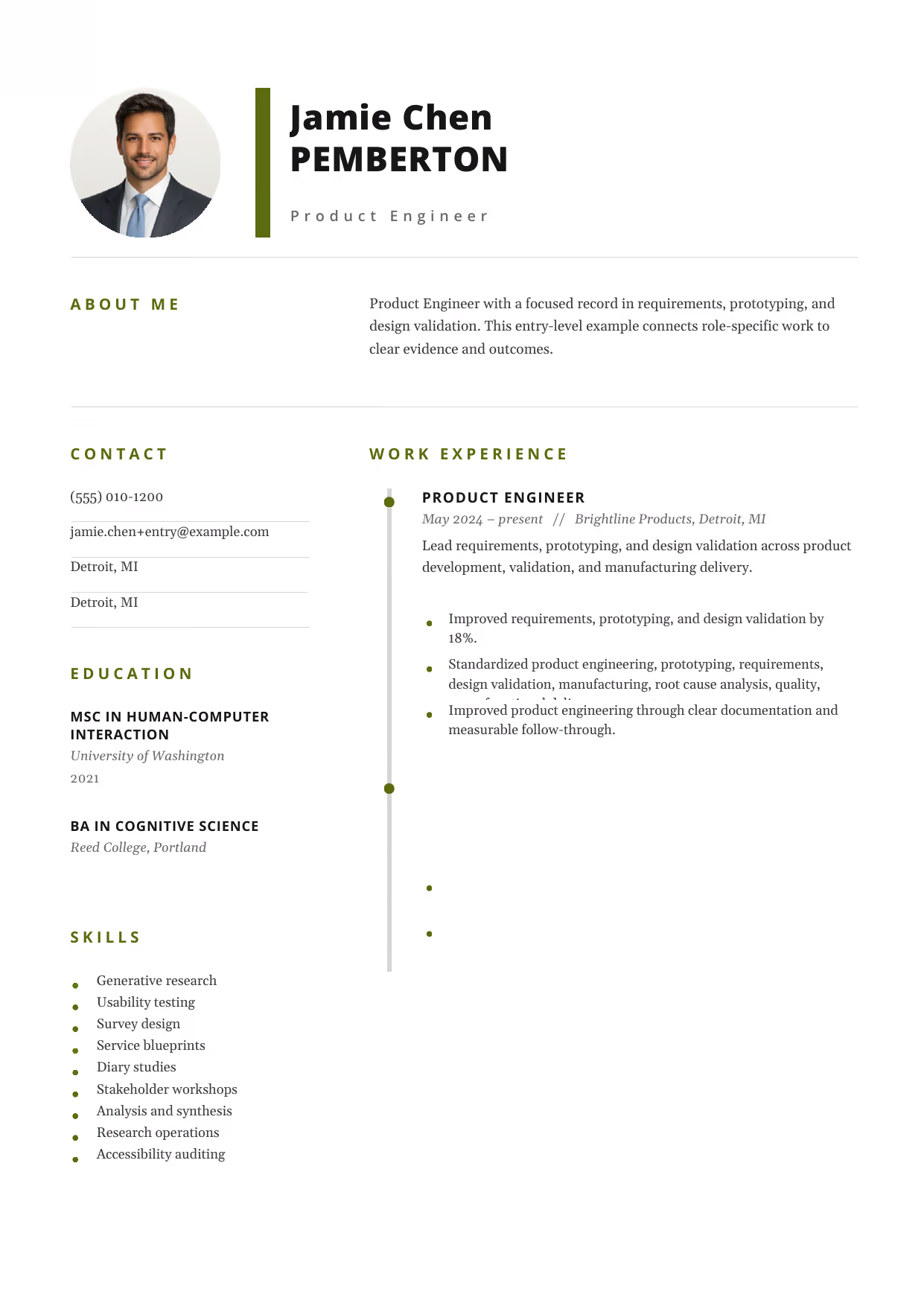
Product Engineer
A builder-ready entry-level Product Engineer example in the Pegasus template, showing stage-appropriate evidence in a focused, editable resume format.
- Editable role positioning in the Pegasus layout
- Role-specific evidence and delivery context
- Review the Pegasus structure with a clean visual hierarchy
View this resume

Product Engineer
A builder-ready entry-level Product Engineer example in the Cetus template, showing stage-appropriate evidence in a focused, editable resume format.
- Editable role positioning in the Cetus layout
- Role-specific evidence and delivery context
- Review the Cetus structure with a clean visual hierarchy
View this resume

Product Engineer
A builder-ready entry-level Product Engineer example in the Pictor template, showing stage-appropriate evidence in a focused, editable resume format.
- Editable role positioning in the Pictor layout
- Role-specific evidence and delivery context
- Review the Pictor structure with a clean visual hierarchy
View this resume
Mid-Level Product Engineer Resume (3-7 Years Experience)
Use these mid-level examples to compare the scope, evidence, and language expected for Product Engineer roles at this stage.

Senior Product Engineer
A builder-ready mid-level Product Engineer example in the Acamar template, showing stage-appropriate evidence in a focused, editable resume format.
- Editable role positioning in the Acamar layout
- Role-specific evidence and delivery context
- Review the Acamar structure with a clean visual hierarchy
View this resume
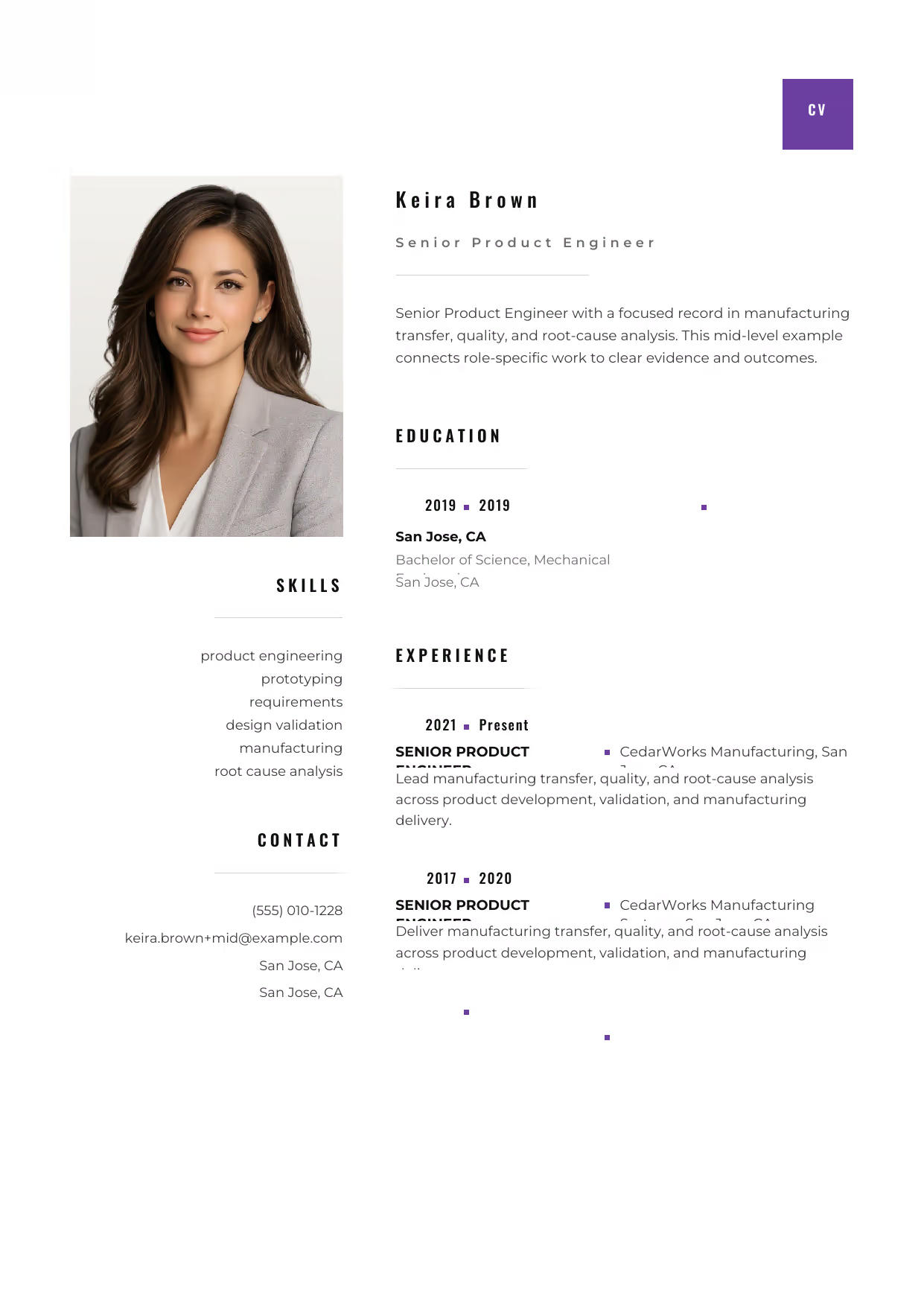
Senior Product Engineer
A builder-ready mid-level Product Engineer example in the Pyxis template, showing stage-appropriate evidence in a focused, editable resume format.
- Editable role positioning in the Pyxis layout
- Role-specific evidence and delivery context
- Review the Pyxis structure with a clean visual hierarchy
View this resume
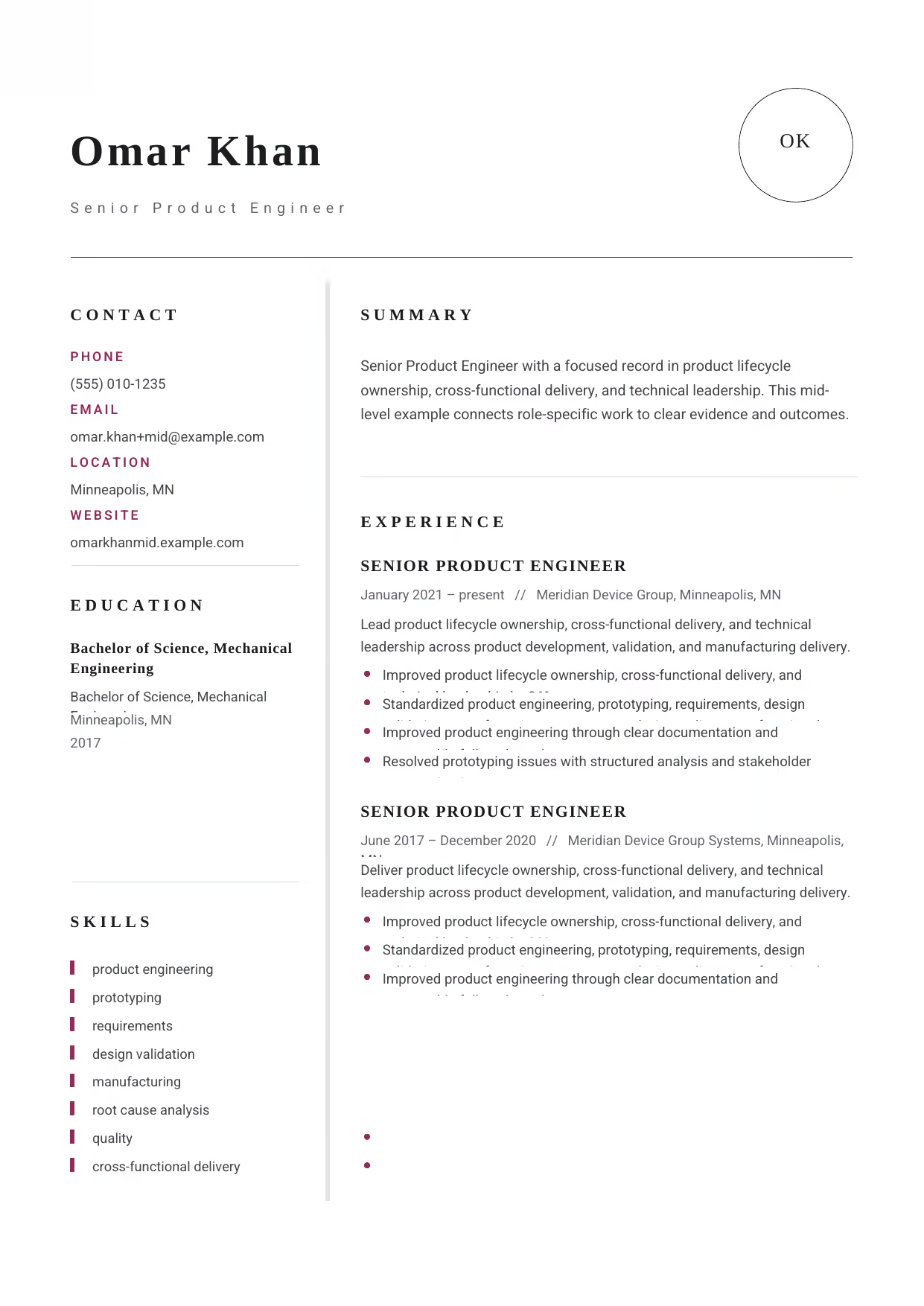
Senior Product Engineer
A builder-ready mid-level Product Engineer example in the Grus template, showing stage-appropriate evidence in a focused, editable resume format.
- Editable role positioning in the Grus layout
- Role-specific evidence and delivery context
- Review the Grus structure with a clean visual hierarchy
View this resume
Senior Product Engineer Resume (8+ Years / Management)
Use these advanced examples to compare the scope, evidence, and language expected for Product Engineer roles at this stage.

Lead Product Engineer
A builder-ready advanced Product Engineer example in the Andromeda template, showing stage-appropriate evidence in a focused, editable resume format.
- Editable role positioning in the Andromeda layout
- Role-specific evidence and delivery context
- Review the Andromeda structure with a clean visual hierarchy
View this resume
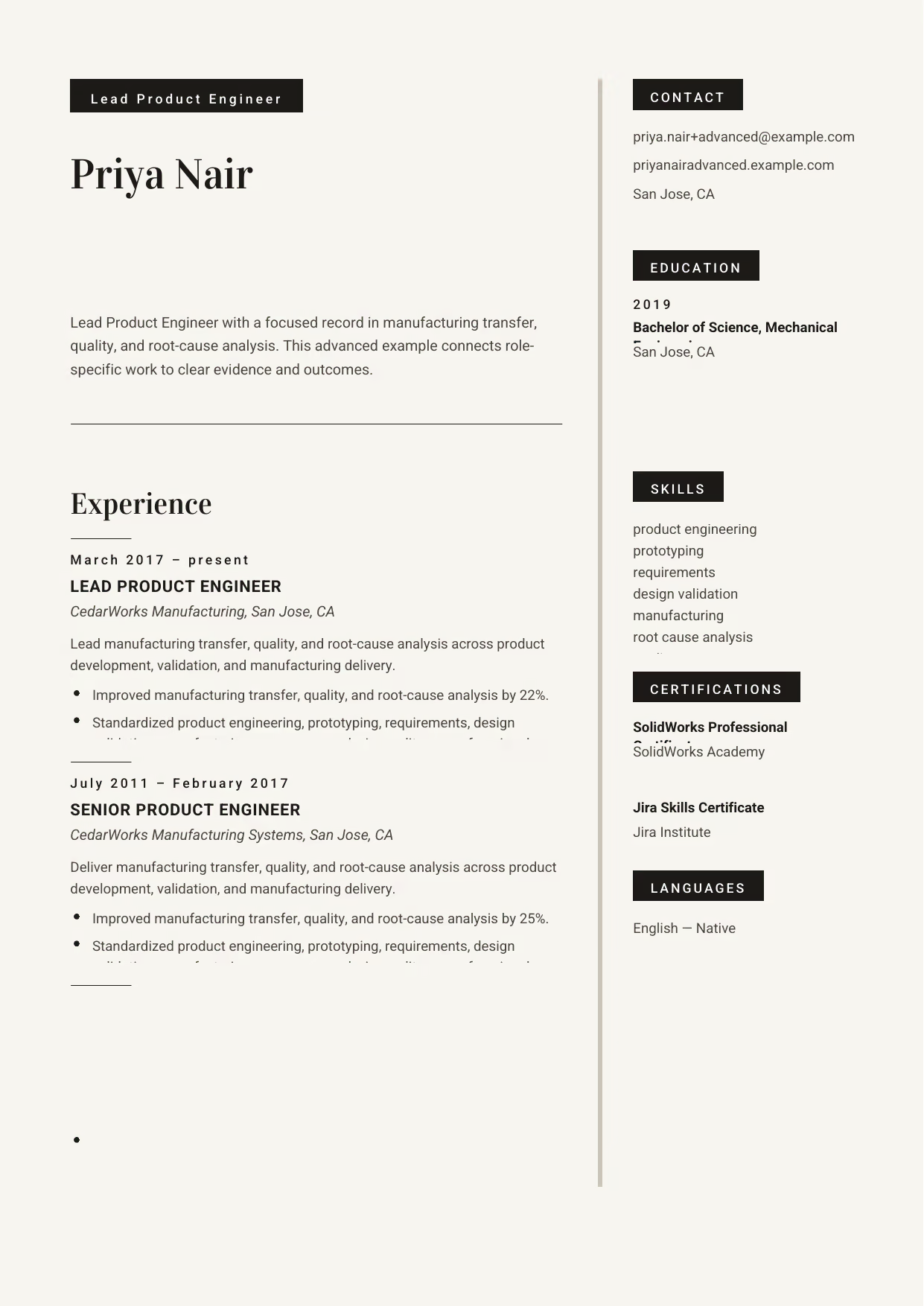
Lead Product Engineer
A builder-ready advanced Product Engineer example in the Aquila template, showing stage-appropriate evidence in a focused, editable resume format.
- Editable role positioning in the Aquila layout
- Role-specific evidence and delivery context
- Review the Aquila structure with a clean visual hierarchy
View this resume
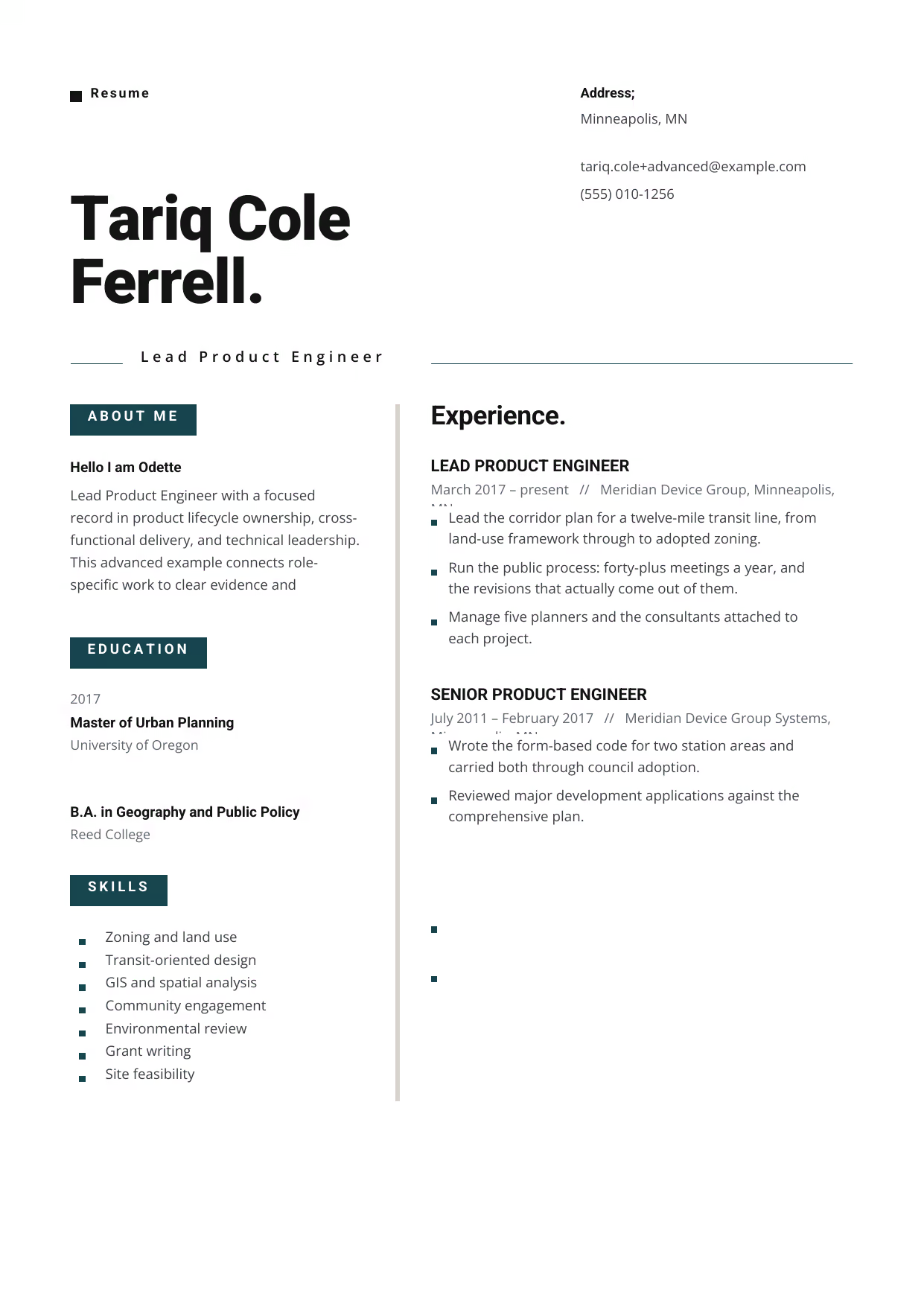
Lead Product Engineer
A builder-ready advanced Product Engineer example in the Indus template, showing stage-appropriate evidence in a focused, editable resume format.
- Editable role positioning in the Indus layout
- Role-specific evidence and delivery context
- Review the Indus structure with a clean visual hierarchy
View this resume
How to Write a Product Engineer Resume
The Resume Summary
The resume summary is your first chance to make a strong impression. Use this formula:
[Years of Experience] + [Adjective Describing Work Ethic] + Product Engineer with expertise in [Area of Expertise] and a proven track record of [Quantifiable Achievement]. Seeking to leverage skills in [Skill 1] and [Skill 2] to contribute to [Company Name]’s success.
Entry-Level Example: Recent Engineering graduate with a strong understanding of CAD design and manufacturing processes. Eager to apply theoretical knowledge and problem-solving skills to contribute to innovative product development at [Company Name].
Mid-Level Example: Results-oriented Product Engineer with 5+ years of experience in optimizing product design and manufacturing processes. Proven ability to identify and resolve product defects, improve efficiency, and reduce costs.
Senior-Level Example: Highly accomplished Senior Product Engineer with 10+ years of experience leading product development initiatives and driving innovation. Proven ability to manage cross-functional teams, optimize processes, and deliver high-quality products on time and within budget.
Work Experience & Action Verbs
Focus on achievements rather than just listing duties. Use strong action verbs to highlight your contributions.
Duties describe what you were *responsible* for. Achievements describe *how well* you performed those responsibilities.
- Before: Responsible for product testing. After: Conducted product testing, identifying and resolving 12 critical defects, resulting in a 10% reduction in product failure rates.
- Before: Assisted with process improvement initiatives. After: Led process improvement initiatives, streamlining workflows and reducing production time by 15%.
- Before: Managed product documentation. After: Managed and updated product documentation, ensuring compliance with industry standards and regulatory requirements.
- Before: Supported the development of new products. After: Supported the development of three new products, contributing to a 25% increase in company revenue.
- Before: Collaborated with cross-functional teams. After: Collaborated with cross-functional teams to resolve product performance issues, resulting in a 10% improvement in customer satisfaction.
Top Skills for Product Engineers
Here are some essential skills to include on your Product Engineer resume:
Hard Skills
- CAD Software (SolidWorks, AutoCAD)
- Statistical Analysis
- Design Validation
- Root Cause Analysis
- Finite Element Analysis (FEA)
- Process Optimization
- Manufacturing Processes
Soft Skills
- Problem-solving
- Teamwork
- Communication
- Critical Thinking
- Analytical Skills
- Attention to Detail
Tools/Software
- Six Sigma
- MATLAB
- SQL
- Microsoft Office Suite
- Project Management Software
Education & Certifications
List your education in reverse chronological order. For entry-level candidates, highlight relevant coursework and GPA. For experienced candidates, focus on degrees and certifications.
Recommended certifications for Product Engineers:
- PMP (Project Management Professional)
- Six Sigma (Green Belt, Black Belt)
- Certified Quality Engineer (CQE)
10 Common Product Engineer Resume Mistakes
- Misspelling Core Industry Terminology: Typos in general are bad, but misspelling critical tools or certifications (like ‘SolidWorks’, ‘Six Sigma’, or ‘MATLAB’) acts as an immediate red flag regarding your attention to detail. Double-check your spelling of technical terms.
- Listing Duties Instead of Impact: Recruiters know what a Product Engineer does; they want to know how well you did it. Replace passive phrases like ‘Responsible for product testing’ with quantified wins like ‘Reduced product failure rates by 10% through rigorous testing protocols’.
- Lack of Keyword Optimization: Applicant Tracking Systems (ATS) scan resumes for specific keywords related to the job description. Failing to include relevant terms like ‘CAD’, ‘FEA’, or ‘Statistical Analysis’ can result in your resume being overlooked.
- Ignoring Transferable Skills: Even with limited experience, highlight transferable skills such as problem-solving, teamwork, and communication. Provide specific examples of how you’ve applied these skills in academic or extracurricular settings.
- Poor Formatting and Readability: A cluttered or poorly formatted resume can be difficult to read and may deter recruiters from reviewing your qualifications. Use clear headings, bullet points, and concise language to enhance readability.
- Failing to Tailor to the Job Description: Generic resumes rarely stand out. Customize your resume to match the specific requirements and keywords outlined in each job posting. Highlight the skills and experiences that are most relevant to the role.
- Omitting Quantifiable Achievements: Numbers speak louder than words. Include quantifiable achievements whenever possible to demonstrate the impact of your contributions. Use metrics like percentage improvements, cost savings, or revenue increases.
- Inconsistent Tense: Use past tense for previous roles and present tense for current roles. Inconsistent tense can make your resume appear unprofessional and careless.
- Ignoring Action Verbs: Use strong action verbs to start each bullet point and highlight your accomplishments. Avoid passive voice and focus on what you did and how you did it.
- Lack of a Summary or Objective: A well-crafted summary or objective statement can grab the recruiter’s attention and highlight your key qualifications. Tailor your summary to match the job description and showcase your skills and experience.
Frequently Asked Questions (Product Engineer)
- What should a Product Engineer resume emphasize first? Lead with the scope of requirements, prototyping, and design validation, then connect your contribution to a clear outcome, tool, or decision.
- Which skills deserve priority on a Product Engineer resume? Prioritize product engineering, prototyping, and requirements when they match the role and can be supported by evidence.
- How can a Product Engineer show project scope and impact? Name the environment, scale, constraints, and result; manufacturing transfer, quality, and root-cause analysis becomes more credible when the context is concrete.
- How should a Product Engineer describe tools and technical decisions? Describe why you selected a method, how you implemented it, and what changed afterward in the Product Engineer role.
- Which achievements matter most for a Product Engineer application? Use outcome-led bullets that show product lifecycle ownership, cross-functional delivery, and technical leadership through delivery quality, measurable scope, or stakeholder value.
- How long should a Product Engineer resume be? Use the shortest length that proves fit; a focused page can work early-career, while broader Product Engineer scope may need more room.
- How can a Product Engineer explain progression between career stages? Group examples by increasing ownership, moving from requirements, prototyping, and design validation toward product lifecycle ownership, cross-functional delivery, and technical leadership as responsibility grows.
- Which keywords should a Product Engineer include for screening systems? Mirror truthful language from the posting, especially design validation, without stuffing unrelated terms.
- How should a Product Engineer present reliability, quality, or safety work? Show how you protected outcomes through manufacturing and explain the evidence a hiring team can verify.
- What format makes a Product Engineer resume easy for hiring teams to scan? Use clear headings, readable bullets, and consistent dates so a hiring manager can evaluate Product Engineer fit quickly.
Crafting a compelling Product Engineer resume requires careful attention to detail and a strategic approach. By following the tips and examples outlined in this guide, you can create a resume that showcases your skills, experience, and accomplishments, and helps you land your dream job. Search more Product Engineer resources on our site.
Editorial review: RockStarCV Editorial Team reviewed this Product Engineer guide for source fidelity, role-specific usefulness, accessibility, builder examples, and question completeness.