Chapter 01
Introduction
The interviewer is checking for a coherent transition and unresolved concerns.
One previous exit rarely defines an entire career. Choose the professional starting point that makes this answer useful now. Name the work, responsibility, or transition before adding background, so the interviewer can understand why the detail belongs in your response.
Past exits should form a coherent history without requiring a perfect narrative. A previous departure deserves enough context to keep your history coherent, not a courtroom defense. Most interviewers will move on if the reason is clear and credible. Test the evidence against the vacancy. Keep the facts you can explain in a follow-up, remove biography that does not help the decision, and make the final sentence point toward the role in front of you.
- 01Set the direction
The interviewer is checking for a coherent transition and unresolved concerns.
- 02Choose the proof
One previous exit rarely defines an entire career.
- 03Connect it to the role
Choose the professional starting point that makes this answer useful now.
Chapter 02
Understanding the Question
The interviewer is asking for the real transition and whether it leaves a concern to discuss.
Read the question as an assessment, not only a request for information. Decide which judgment, risk, working habit, or motivation the interviewer needs to see, then make that purpose visible through one concrete detail.
If the previous role was brief, expect a straightforward question about what you learned before moving. If the answer involves a layoff or contract end, prepare what you did during the transition and why the next role made sense. Prepare for the next question as well as this one. If you mention a result, transition, conflict, or constraint, keep the context and your exact contribution ready so the interviewer can test the claim without weakening it.
- 01What they are testing
The interviewer is asking for the real transition and whether it leaves a concern to discuss.
- 02Prepare the follow-up
Read the question as an assessment, not only a request for information.
- 03Keep the evidence ready
Decide which judgment, risk, working habit, or motivation the interviewer needs to see, then make that purpose visible through one concrete detail.
Chapter 03
Preparing Your Answer
State the real reason, then show what you sought next.
Separate the event that ended the role from the reason you chose the next one. Build a small evidence bank before rehearsing. Write the setting, the decision you owned, the action you took, and the observable result. That gives you facts to select instead of forcing you to invent polished language under pressure.
Check the timeline and prepare the real reason in language you could use with a former colleague present. Put the departure in the timeline, state the reason, then connect the following choice to a capability or interest. Keep private matters at the level you are comfortable sharing. Arrange the answer so the listener never has to guess why a detail matters. Put the strongest evidence near the claim it supports, keep your role precise, and finish with the lesson or relevance to this position.
- 01Build your evidence
State the real reason, then show what you sought next.
- 02Shape the sequence
Separate the event that ended the role from the reason you chose the next one.
- 03Keep the evidence ready
Build a small evidence bank before rehearsing.
Chapter 04
Dos and Don’ts
What to do: Keep context proportionate and avoid blame.
Do
- Keep context proportionate and avoid blame.
- Do explain the next choice as well as the event that ended the previous role.
Don’t
- Do not imply that every departure was someone else's fault.
- Do not use an invented growth story to cover an ordinary contract end.
- Avoid claiming that every exit was a deliberate promotion.
- Ordinary circumstances happen, and pretending otherwise makes the rest of the story less trustworthy.
Chapter 05
Example Answers
The examples show a completed project, study alongside part-time work, and a position eliminated in consolidation.
They differ in circumstance but keep the transition factual. Compare the examples by structure rather than memorizing their wording. Notice where each candidate sets the context, states personal ownership, and closes with a result, lesson, or reason the experience matters to the employer.
“The project I was hired for reached its planned end. I had developed strong documentation and training skills there, so I moved into a role where I could use them more regularly.”
Why it works: Treat this first example as a model for sequence. Replace its workplace, task, people, and result with truthful details of your own while keeping the connection between the claim and the supporting evidence.
“I left to complete a qualification while working part-time. That period helped me build a more deliberate direction, and the role I took afterward was closer to my long-term interest in operations.”
Why it works: Use the second example to explore a different route to the same competency. Your version can come from paid work, study, volunteering, or a project, provided you state the context and do not overstate your responsibility.
“The organization consolidated two teams and my position was eliminated. I stayed through the transition to document the handover, then focused my search on roles that use the same client-coordination strengths.”
Why it works: Use the third example to test whether your answer sounds recognisably yours. Keep the useful structure, then change every borrowed fact.
Chapter 06
Fine-Tuning Your Answer
A layoff or contract end is not a character flaw; do not over-explain it.
Keep the chronology accurate; a shorter honest explanation is safer than a polished fiction. Fine-tuning is mainly subtraction and precision. Move the strongest fact earlier, replace labels with actions, and check that the ending answers the question rather than drifting into a second example or an unrelated career summary.
Leave out extraneous personal detail unless it is necessary to understand the transition. Remove adjectives about other people's motives. A neutral account lets your actions and choices carry the answer. Record one practice version and listen for the first useful fact. If it arrives late, shorten the setup. Then check every result, number, and claim so the final wording remains accurate when the interviewer asks for detail.
- 01Make it sharper
A layoff or contract end is not a character flaw; do not over-explain it.
- 02Test the wording
Keep the chronology accurate; a shorter honest explanation is safer than a polished fiction.
- 03Keep the evidence ready
Fine-tuning is mainly subtraction and precision.
Chapter 07
Additional Considerations
If you were laid off, the useful detail is what you learned and pursued afterward.
Adapt the structure to your circumstances without hiding them. Career changes, gaps, early-career evidence, senior scope, confidentiality, and reasonable boundaries may change the example, but they do not remove the need for relevance and honest ownership.
When the reason was difficult, accuracy and composure are more valuable than an immaculate account. If there was a disagreement, explain your part and what you learned without revealing confidential details or asking the interviewer to choose a side. Protect credibility where context is sensitive. Use the level of detail you can share, separate team results from your contribution, and explain constraints without disclosing private information or blaming people who are not present.
- 01Adapt the answer
If you were laid off, the useful detail is what you learned and pursued afterward.
- 02Keep it credible
Adapt the structure to your circumstances without hiding them.
- 03Keep the evidence ready
Career changes, gaps, early-career evidence, senior scope, confidentiality, and reasonable boundaries may change the example, but they do not remove the need for relevance and honest ownership.
Chapter 08
Conclusion
Treat the move as one chapter in a coherent history, not a case to defend.
Bring the answer back to one clear message. The interviewer should be able to repeat your main claim, the evidence supporting it, and why it matters to the role without reconstructing the meaning from several disconnected points.
A brief explanation leaves more time for the experience you gained afterward. A brief answer preserves time for the work you have done since leaving and the reason you are here now. End deliberately. Stop when the question has been answered, the evidence is credible, and the relevance is clear. A concise landing invites a useful follow-up and leaves the listener with the professional judgment you intended to show.
A concise landing invites a useful follow-up and leaves the listener with the professional judgment you intended to show.
Source & adaptation
Built from the RockStarCV interview-question library
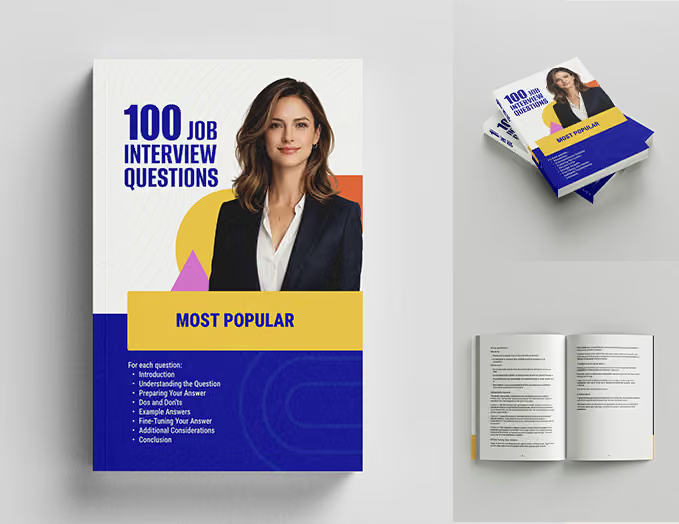
Adapted from the RockStarCV guide 100 Most Popular Job Interview Questions and its long-form narration. The structure and examples have been edited for a practical web reading experience.
Book reference: Question 16