Chapter 01
Introduction
This explores helpfulness without losing ownership of your own work.
Support is strongest when it enables the colleague rather than making them dependent. Support should preserve the colleague's ownership whenever possible. Choose the professional starting point that makes this answer useful now. Name the work, responsibility, or transition before adding background, so the interviewer can understand why the detail belongs in your response.
Supporting a colleague can be more substantial than offering to help. Pick a situation where your assistance removed a blocker, transferred knowledge, or protected the team's commitment without quietly taking over the other person's role. Test the evidence against the vacancy. Keep the facts you can explain in a follow-up, remove biography that does not help the decision, and make the final sentence point toward the role in front of you.
- 01Set the direction
This explores helpfulness without losing ownership of your own work.
- 02Choose the proof
Support is strongest when it enables the colleague rather than making them dependent.
- 03Connect it to the role
Support should preserve the colleague's ownership whenever possible.
Chapter 02
Understanding the Question
They want to know whether you notice a real need and respond proportionately.
A follow-up may ask how you avoided neglecting your own commitments while helping. Read the question as an assessment, not only a request for information. Decide which judgment, risk, working habit, or motivation the interviewer needs to see, then make that purpose visible through one concrete detail.
The interviewer is interested in generosity paired with judgment. They want to know whether you noticed a need, checked what help was welcome, and balanced the support with your own responsibilities. Prepare for the next question as well as this one. If you mention a result, transition, conflict, or constraint, keep the context and your exact contribution ready so the interviewer can test the claim without weakening it.
- 01What they are testing
They want to know whether you notice a real need and respond proportionately.
- 02Prepare the follow-up
A follow-up may ask how you avoided neglecting your own commitments while helping.
- 03Keep the evidence ready
Read the question as an assessment, not only a request for information.
Chapter 03
Preparing Your Answer
Choose support that matched what the colleague actually needed.
Recall what you handed over, demonstrated, or covered, and what the colleague retained ownership of. Identify the requested help, the boundary you agreed, and what the colleague did independently afterward. Build a small evidence bank before rehearsing. Write the setting, the decision you owned, the action you took, and the observable result. That gives you facts to select instead of forcing you to invent polished language under pressure.
Recall the colleague's constraint, what you offered, and the boundary of your involvement. Explain whether you provided context, shared a tool, covered a handoff, or advocated for a realistic deadline. Name the result for the colleague and the work. Arrange the answer so the listener never has to guess why a detail matters. Put the strongest evidence near the claim it supports, keep your role precise, and finish with the lesson or relevance to this position.
- 01Build your evidence
Choose support that matched what the colleague actually needed.
- 02Shape the sequence
Recall what you handed over, demonstrated, or covered, and what the colleague retained ownership of.
- 03Keep the evidence ready
Identify the requested help, the boundary you agreed, and what the colleague did independently afterward.
Chapter 04
Dos and Don’ts
What to do: Explain the boundary and outcome, not only your generosity.
Do
- Explain the boundary and outcome, not only your generosity.
- Do give context or practice that will remain useful beyond this one task.
Don’t
- Do not turn the colleague into a prop for your achievement.
- Do not turn temporary cover into permanent invisible work without discussion.
- Ask what would be useful rather than assuming the person needs rescuing.
- Do not reveal private details or imply that a colleague was incapable.
Chapter 05
Example Answers
The strongest example lets the colleague remain the owner.
You can describe a small intervention that gave them access to information or time and made their success more likely. Compare the examples by structure rather than memorizing their wording. Notice where each candidate sets the context, states personal ownership, and closes with a result, lesson, or reason the experience matters to the employer.
“A teammate inherited a complex account during an absence. I gave them the decision history, introduced the key contact, and stayed available for the first review. They took ownership quickly without clients having to repeat the background.”
Why it works: Treat this first example as a model for sequence. Replace its workplace, task, people, and result with truthful details of your own while keeping the connection between the claim and the supporting evidence.
“A colleague struggled with a report template I knew well. Instead of fixing every file for them, I worked through one example and wrote a short guide. They could complete the next cycle independently.”
Why it works: Use the second example to explore a different route to the same competency. Your version can come from paid work, study, volunteering, or a project, provided you state the context and do not overstate your responsibility.
“When a teammate had a family emergency, I took over the urgent supplier confirmations we had agreed were critical. I logged the remaining decisions clearly so they could resume without rebuilding the context.”
Why it works: Use the third example to test whether your answer sounds recognisably yours. Keep the useful structure, then change every borrowed fact.
Chapter 06
Fine-Tuning Your Answer
Support should preserve the other person's agency when possible.
Do not make their difficulty the dramatic backdrop for your generosity. Fine-tuning is mainly subtraction and precision. Move the strongest fact earlier, replace labels with actions, and check that the ending answers the question rather than drifting into a second example or an unrelated career summary.
Keep the colleague's competence at the center of the outcome. If the issue was repeated overload, distinguish short-term cover from a structural fix. A team cannot depend indefinitely on informal heroics to compensate for broken staffing or unclear responsibilities. Record one practice version and listen for the first useful fact. If it arrives late, shorten the setup. Then check every result, number, and claim so the final wording remains accurate when the interviewer asks for detail.
- 01Make it sharper
Support should preserve the other person's agency when possible.
- 02Test the wording
Do not make their difficulty the dramatic backdrop for your generosity.
- 03Keep the evidence ready
Fine-tuning is mainly subtraction and precision.
Chapter 07
Additional Considerations
When covering urgent work, document what remains so the colleague can resume cleanly.
In urgent cases, a clean handback is part of the help. Adapt the structure to your circumstances without hiding them. Career changes, gaps, early-career evidence, senior scope, confidentiality, and reasonable boundaries may change the example, but they do not remove the need for relevance and honest ownership.
Some support is quiet: documenting a process, introducing a contact, or making a handoff easier. It still counts if you can show its specific effect rather than claiming a general supportive attitude. Protect credibility where context is sensitive. Use the level of detail you can share, separate team results from your contribution, and explain constraints without disclosing private information or blaming people who are not present.
- 01Adapt the answer
When covering urgent work, document what remains so the colleague can resume cleanly.
- 02Keep it credible
In urgent cases, a clean handback is part of the help.
- 03Keep the evidence ready
Adapt the structure to your circumstances without hiding them.
Chapter 08
Conclusion
Show the other person's capability at the end of the story.
Good support makes the colleague more capable, not less independent. Bring the answer back to one clear message. The interviewer should be able to repeat your main claim, the evidence supporting it, and why it matters to the role without reconstructing the meaning from several disconnected points.
Conclude with what the colleague could do afterward. The point is a healthier team capability, not an account of how indispensable you became. End deliberately. Stop when the question has been answered, the evidence is credible, and the relevance is clear. A concise landing invites a useful follow-up and leaves the listener with the professional judgment you intended to show.
A concise landing invites a useful follow-up and leaves the listener with the professional judgment you intended to show.
Source & adaptation
Built from the RockStarCV interview-question library
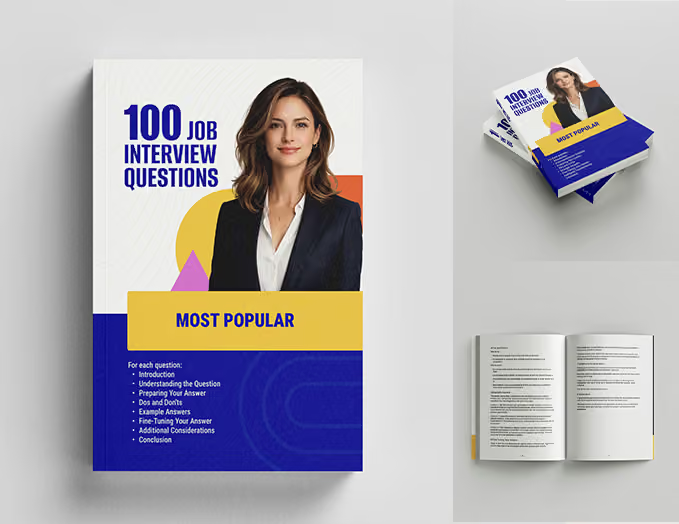
Adapted from the RockStarCV guide 100 Most Popular Job Interview Questions and its long-form narration. The structure and examples have been edited for a practical web reading experience.
Book reference: Question 60