Chapter 01
Introduction
This tests learning speed and judgement when assumptions shift.
Adaptability includes preserving what should not change. Adaptation is credible when you admit what became harder and explain your new method. Choose the professional starting point that makes this answer useful now. Name the work, responsibility, or transition before adding background, so the interviewer can understand why the detail belongs in your response.
Adaptability means preserving the goal while changing a plan that no longer fits. Choose a change that altered your tasks, tools, team, or customer expectation enough to require a real adjustment. Test the evidence against the vacancy. Keep the facts you can explain in a follow-up, remove biography that does not help the decision, and make the final sentence point toward the role in front of you.
- 01Set the direction
This tests learning speed and judgement when assumptions shift.
- 02Choose the proof
Adaptability includes preserving what should not change.
- 03Connect it to the role
Adaptation is credible when you admit what became harder and explain your new method.
Chapter 02
Understanding the Question
They are assessing how you learn a new reality while protecting commitments.
The interviewer may ask which earlier habit no longer worked under the changed conditions. Read the question as an assessment, not only a request for information. Decide which judgment, risk, working habit, or motivation the interviewer needs to see, then make that purpose visible through one concrete detail.
The interviewer may be testing learning speed and willingness to let go of an old approach. They want to know what you learned first, whose perspective you sought, and how you kept delivery moving during the transition. Prepare for the next question as well as this one. If you mention a result, transition, conflict, or constraint, keep the context and your exact contribution ready so the interviewer can test the claim without weakening it.
- 01What they are testing
They are assessing how you learn a new reality while protecting commitments.
- 02Prepare the follow-up
The interviewer may ask which earlier habit no longer worked under the changed conditions.
- 03Keep the evidence ready
Read the question as an assessment, not only a request for information.
Chapter 03
Preparing Your Answer
Choose a change that altered your work, not just your calendar.
Prepare what changed, which standard stayed fixed, and the first adjustment you made. Build a small evidence bank before rehearsing. Write the setting, the decision you owned, the action you took, and the observable result. That gives you facts to select instead of forcing you to invent polished language under pressure.
Contrast the old assumption, the new constraint, and the first adjustment you tested. Prepare a before-and-after case. State what changed, what assumptions became invalid, what new information you gathered, and one thing you did differently. Give the outcome and any cost of the transition honestly. Arrange the answer so the listener never has to guess why a detail matters. Put the strongest evidence near the claim it supports, keep your role precise, and finish with the lesson or relevance to this position.
- 01Build your evidence
Choose a change that altered your work, not just your calendar.
- 02Shape the sequence
Prepare what changed, which standard stayed fixed, and the first adjustment you made.
- 03Keep the evidence ready
Build a small evidence bank before rehearsing.
Chapter 04
Dos and Don’ts
What to do: Show what you kept stable and what you changed.
Do
- Show what you kept stable and what you changed.
- Do preserve the standards that mattered despite the changed process.
Don’t
- Do not pretend the transition had no cost.
- Do not claim a new system or scope felt effortless if colleagues faced real disruption.
- Show an active adjustment, not just a positive attitude.
- Do not portray everyone else as resistant while you alone embraced the change.
Chapter 05
Example Answers
A strong example might include a first attempt that did not work and a corrected second approach.
That makes adaptation tangible and distinguishes it from simple compliance with a new instruction. Compare the examples by structure rather than memorizing their wording. Notice where each candidate sets the context, states personal ownership, and closes with a result, lesson, or reason the experience matters to the employer.
“Our team adopted a new case platform halfway through a busy period. I learned the essential workflow, documented the exceptions I found, and helped colleagues compare old and new steps. We protected response times while improving the guide.”
Why it works: Treat this first example as a model for sequence. Replace its workplace, task, people, and result with truthful details of your own while keeping the connection between the claim and the supporting evidence.
“A client changed the project scope after research had begun. I mapped what evidence still answered the revised question, stopped unnecessary work, and agreed a new timeline. The earlier effort was not all wasted, but the plan had to change.”
Why it works: Use the second example to explore a different route to the same competency. Your version can come from paid work, study, volunteering, or a project, provided you state the context and do not overstate your responsibility.
“When a supplier closed unexpectedly, I checked which commitments were affected and secured approved alternatives for the urgent items. I also updated the risk register so the team would see dependencies sooner next time.”
Why it works: Use the third example to test whether your answer sounds recognisably yours. Keep the useful structure, then change every borrowed fact.
Chapter 06
Fine-Tuning Your Answer
Adaptation is credible when you acknowledge what became harder.
Do not claim the transition was effortless if colleagues had to absorb real cost. Fine-tuning is mainly subtraction and precision. Move the strongest fact earlier, replace labels with actions, and check that the ending answers the question rather than drifting into a second example or an unrelated career summary.
Explain how you learned from people already dealing with the change. If the change came from a reorganization, do not share confidential details or speculate about motives. Focus on the work boundary, coordination, and decisions within your control. Record one practice version and listen for the first useful fact. If it arrives late, shorten the setup. Then check every result, number, and claim so the final wording remains accurate when the interviewer asks for detail.
- 01Make it sharper
Adaptation is credible when you acknowledge what became harder.
- 02Test the wording
Do not claim the transition was effortless if colleagues had to absorb real cost.
- 03Keep the evidence ready
Fine-tuning is mainly subtraction and precision.
Chapter 07
Additional Considerations
A useful adaptation may be a staged rollout rather than a full reversal.
Adapt the structure to your circumstances without hiding them. Career changes, gaps, early-career evidence, senior scope, confidentiality, and reasonable boundaries may change the example, but they do not remove the need for relevance and honest ownership.
A staged response can be wiser than an instant overhaul. Speed matters, but so does continuity. Describe how you preserved the critical service or knowledge while learning the new process. Protect credibility where context is sensitive. Use the level of detail you can share, separate team results from your contribution, and explain constraints without disclosing private information or blaming people who are not present.
- 01Adapt the answer
A useful adaptation may be a staged rollout rather than a full reversal.
- 02Keep it credible
Adapt the structure to your circumstances without hiding them.
- 03Keep the evidence ready
Career changes, gaps, early-career evidence, senior scope, confidentiality, and reasonable boundaries may change the example, but they do not remove the need for relevance and honest ownership.
Chapter 08
Conclusion
Show what you learned from the new conditions, not just that you endured them.
Acknowledge the cost of change while showing what you kept stable. Bring the answer back to one clear message. The interviewer should be able to repeat your main claim, the evidence supporting it, and why it matters to the role without reconstructing the meaning from several disconnected points.
Close with the capability you carried forward. Adaptation is persuasive when the new way produced a measurable or observable improvement, not merely when you accepted it. End deliberately. Stop when the question has been answered, the evidence is credible, and the relevance is clear. A concise landing invites a useful follow-up and leaves the listener with the professional judgment you intended to show.
A concise landing invites a useful follow-up and leaves the listener with the professional judgment you intended to show.
Source & adaptation
Built from the RockStarCV interview-question library
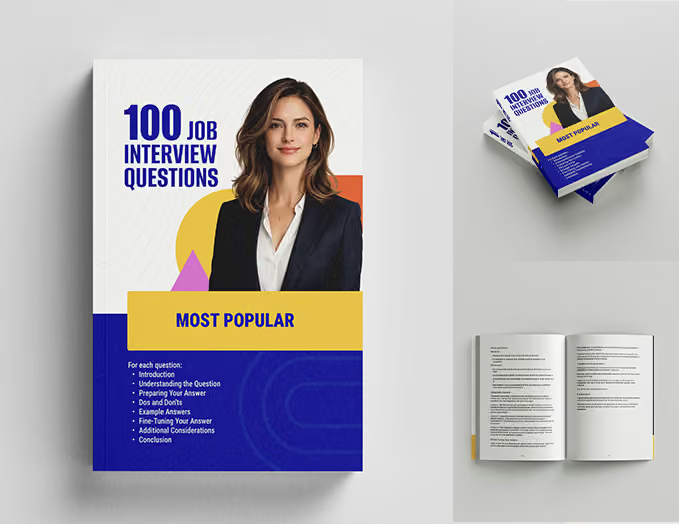
Adapted from the RockStarCV guide 100 Most Popular Job Interview Questions and its long-form narration. The structure and examples have been edited for a practical web reading experience.
Book reference: Question 72