Chapter 01
Introduction
The interviewer wants the tradeoff, not just the final choice.
Difficulty in a decision lies in the tradeoff you could not avoid. Choose the professional starting point that makes this answer useful now. Name the work, responsibility, or transition before adding background, so the interviewer can understand why the detail belongs in your response.
A difficult decision deserves a fair account of both options. A difficult choice has a cost whichever path you take. A useful answer makes that cost legible and shows who had authority to accept it. Test the evidence against the vacancy. Keep the facts you can explain in a follow-up, remove biography that does not help the decision, and make the final sentence point toward the role in front of you.
- 01Set the direction
The interviewer wants the tradeoff, not just the final choice.
- 02Choose the proof
Difficulty in a decision lies in the tradeoff you could not avoid.
- 03Connect it to the role
Choose the professional starting point that makes this answer useful now.
Chapter 02
Understanding the Question
They will ask what you knew, what you valued, and who carried the consequence.
Read the question as an assessment, not only a request for information. Decide which judgment, risk, working habit, or motivation the interviewer needs to see, then make that purpose visible through one concrete detail.
The interviewer may ask who bore the cost of your choice and who authorized it. Expect the interviewer to ask for the strongest argument on the side you rejected. Prepare for the next question as well as this one. If you mention a result, transition, conflict, or constraint, keep the context and your exact contribution ready so the interviewer can test the claim without weakening it.
- 01What they are testing
They will ask what you knew, what you valued, and who carried the consequence.
- 02Prepare the follow-up
Read the question as an assessment, not only a request for information.
- 03Keep the evidence ready
Decide which judgment, risk, working habit, or motivation the interviewer needs to see, then make that purpose visible through one concrete detail.
Chapter 03
Preparing Your Answer
Identify options, criteria, and the consequence of waiting.
Write down the strongest reason for the option you rejected. Build a small evidence bank before rehearsing. Write the setting, the decision you owned, the action you took, and the observable result. That gives you facts to select instead of forcing you to invent polished language under pressure.
List the criteria and give the rejected option its strongest argument. List two real options, the criterion that mattered most, the risk of waiting, and the decision owner. Reconstruct what was known then. Arrange the answer so the listener never has to guess why a detail matters. Put the strongest evidence near the claim it supports, keep your role precise, and finish with the lesson or relevance to this position.
- 01Build your evidence
Identify options, criteria, and the consequence of waiting.
- 02Shape the sequence
Write down the strongest reason for the option you rejected.
- 03Keep the evidence ready
Build a small evidence bank before rehearsing.
Chapter 04
Dos and Don’ts
What to do: Make the decision boundary clear and own your recommendation.
Do
- Make the decision boundary clear and own your recommendation.
- Do state the point at which waiting became a decision with consequences.
Don’t
- Do not portray every alternative as obviously wrong.
- Do not claim every stakeholder agreed if you had to manage real dissent.
- Avoid portraying your choice as the only sensible one; that erases the judgement involved.
- Watch for the common trap of sounding complete but not credible.
Chapter 05
Example Answers
The samples weigh a delayed report against unreliable numbers, a launch date against support readiness, and speed against delivery reliability.
Compare the examples by structure rather than memorizing their wording. Notice where each candidate sets the context, states personal ownership, and closes with a result, lesson, or reason the experience matters to the employer.
“I had to recommend delaying a report that executives expected. The new customer IDs did not reconcile with billing, so the apparent drop was unreliable. I explained the risk, provided the previous verified view, and released the corrected report the next day.”
Why it works: Treat this first example as a model for sequence. Replace its workplace, task, people, and result with truthful details of your own while keeping the connection between the claim and the supporting evidence.
“We could launch a feature on schedule with limited support material or delay it a week. I recommended the delay after seeing how often testers needed help. The extra week gave support a usable guide and reduced confusion at release.”
Why it works: Use the second example to explore a different route to the same competency. Your version can come from paid work, study, volunteering, or a project, provided you state the context and do not overstate your responsibility.
“A supplier offered a faster but less reliable delivery route. I compared the effect on our committed date and the risk of rework, then chose the slower verified route. I told stakeholders early so they could adjust expectations.”
Why it works: Use the third example to test whether your answer sounds recognisably yours. Keep the useful structure, then change every borrowed fact.
Chapter 06
Fine-Tuning Your Answer
A hard decision sounds more credible when the rejected option had a real advantage.
If the alternatives appear obviously unequal, the story may not show judgement. Fine-tuning is mainly subtraction and precision. Move the strongest fact earlier, replace labels with actions, and check that the ending answers the question rather than drifting into a second example or an unrelated career summary.
Keep the recommendation separate from the authority to approve it. If you recommended rather than approved the choice, make that boundary clear. Your influence may lie in the evidence you supplied. Record one practice version and listen for the first useful fact. If it arrives late, shorten the setup. Then check every result, number, and claim so the final wording remains accurate when the interviewer asks for detail.
- 01Make it sharper
A hard decision sounds more credible when the rejected option had a real advantage.
- 02Test the wording
If the alternatives appear obviously unequal, the story may not show judgement.
- 03Keep the evidence ready
Fine-tuning is mainly subtraction and precision.
Chapter 07
Additional Considerations
An irreversible decision warrants different checks from a reversible trial.
Adapt the structure to your circumstances without hiding them. Career changes, gaps, early-career evidence, senior scope, confidentiality, and reasonable boundaries may change the example, but they do not remove the need for relevance and honest ownership.
A reversible trial may be better than a permanent answer when evidence is weak. Reversible decisions can move with less information; irreversible ones need a higher standard of review. Protect credibility where context is sensitive. Use the level of detail you can share, separate team results from your contribution, and explain constraints without disclosing private information or blaming people who are not present.
- 01Adapt the answer
An irreversible decision warrants different checks from a reversible trial.
- 02Keep it credible
Adapt the structure to your circumstances without hiding them.
- 03Keep the evidence ready
Career changes, gaps, early-career evidence, senior scope, confidentiality, and reasonable boundaries may change the example, but they do not remove the need for relevance and honest ownership.
Chapter 08
Conclusion
Show why the choice was responsible under the information available then.
Bring the answer back to one clear message. The interviewer should be able to repeat your main claim, the evidence supporting it, and why it matters to the role without reconstructing the meaning from several disconnected points.
The rejected option should sound attractive enough to make the choice meaningful. A sound answer names the tradeoff without pretending that everyone was satisfied by the result. End deliberately. Stop when the question has been answered, the evidence is credible, and the relevance is clear. A concise landing invites a useful follow-up and leaves the listener with the professional judgment you intended to show.
A concise landing invites a useful follow-up and leaves the listener with the professional judgment you intended to show.
Source & adaptation
Built from the RockStarCV interview-question library
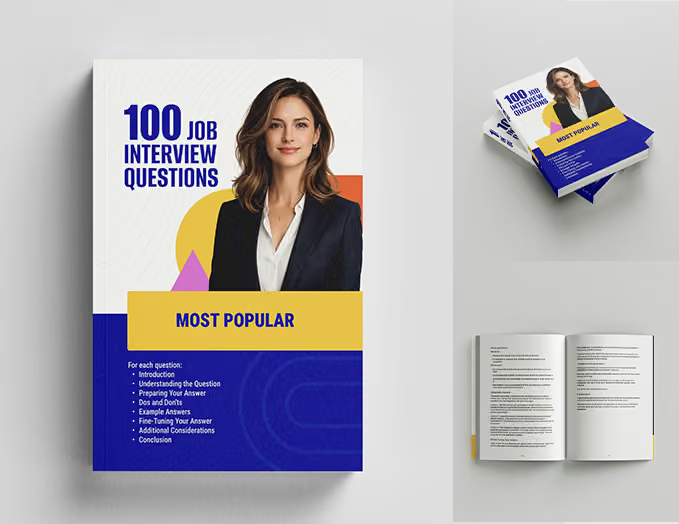
Adapted from the RockStarCV guide 100 Most Popular Job Interview Questions and its long-form narration. The structure and examples have been edited for a practical web reading experience.
Book reference: Question 42