Chapter 01
Introduction
This tests judgement and respect for formal controls.
Confidentiality is a series of access decisions, not a personal virtue claim. Confidentiality requires choices about access, sharing, storage, and reporting. Choose the professional starting point that makes this answer useful now. Name the work, responsibility, or transition before adding background, so the interviewer can understand why the detail belongs in your response.
Confidential information requires disciplined habits even when nobody is watching. The answer should show how you assess access, storage, sharing, and reporting of a mistake without disclosing actual sensitive material. Test the evidence against the vacancy. Keep the facts you can explain in a follow-up, remove biography that does not help the decision, and make the final sentence point toward the role in front of you.
- 01Set the direction
This tests judgement and respect for formal controls.
- 02Choose the proof
Confidentiality is a series of access decisions, not a personal virtue claim.
- 03Connect it to the role
Confidentiality requires choices about access, sharing, storage, and reporting.
Chapter 02
Understanding the Question
They want to see whether you understand authorization, minimum necessary sharing, and incident routes.
Expect the interviewer to ask what you would do when a helpful colleague lacks approved access. Read the question as an assessment, not only a request for information. Decide which judgment, risk, working habit, or motivation the interviewer needs to see, then make that purpose visible through one concrete detail.
The interviewer may be testing whether you understand need-to-know boundaries and whether convenience ever overrides policy. They may also want to know how you respond to an accidental disclosure or suspicious request. Prepare for the next question as well as this one. If you mention a result, transition, conflict, or constraint, keep the context and your exact contribution ready so the interviewer can test the claim without weakening it.
- 01What they are testing
They want to see whether you understand authorization, minimum necessary sharing, and incident routes.
- 02Prepare the follow-up
Expect the interviewer to ask what you would do when a helpful colleague lacks approved access.
- 03Keep the evidence ready
Read the question as an assessment, not only a request for information.
Chapter 03
Preparing Your Answer
Prepare an example where access, sharing, or disposal required care.
Prepare a case where convenience conflicted with a data boundary. Recall the specific policy boundary and the authorized route that still allowed work to proceed. Build a small evidence bank before rehearsing. Write the setting, the decision you owned, the action you took, and the observable result. That gives you facts to select instead of forcing you to invent polished language under pressure.
Use an example involving appropriate handling rather than the content itself. Describe how you confirmed authorization, used approved channels, limited access, and raised a concern when a request exceeded your remit. Avoid naming clients or private records. Arrange the answer so the listener never has to guess why a detail matters. Put the strongest evidence near the claim it supports, keep your role precise, and finish with the lesson or relevance to this position.
- 01Build your evidence
Prepare an example where access, sharing, or disposal required care.
- 02Shape the sequence
Prepare a case where convenience conflicted with a data boundary.
- 03Keep the evidence ready
Recall the specific policy boundary and the authorized route that still allowed work to proceed.
Chapter 04
Dos and Don’ts
What to do: Follow the relevant policy and verify authority before sharing.
Do
- Follow the relevant policy and verify authority before sharing.
- Do share only what the recipient needed after confirming authority.
Don’t
- Do not imply that good intentions authorize an exception.
- Do not invent legal rules or use good intentions as a substitute for permission.
- Follow the organization's controls and ask when permission is unclear.
- Do not imply that you can email yourself a file, use personal storage, or discuss sensitive details merely because the recipient seems trustworthy.
Chapter 05
Example Answers
A strong scenario might involve refusing to include unnecessary identifiers in a report and offering an aggregated or redacted version that served the business purpose.
Compare the examples by structure rather than memorizing their wording. Notice where each candidate sets the context, states personal ownership, and closes with a result, lesson, or reason the experience matters to the employer.
“A colleague asked me for customer details to help with a case, but their access was not clear. I checked the approved route with the data owner and shared only the fields needed after authorization. The case was resolved without broadening access unnecessarily.”
Why it works: Treat this first example as a model for sequence. Replace its workplace, task, people, and result with truthful details of your own while keeping the connection between the claim and the supporting evidence.
“I worked with salary data in a planning report. I kept the source in the restricted workspace, used aggregated figures for wider discussion, and confirmed the audience before distributing the pack.”
Why it works: Use the second example to explore a different route to the same competency. Your version can come from paid work, study, volunteering, or a project, provided you state the context and do not overstate your responsibility.
“When a supplier sent personal information to the wrong shared inbox, I reported it through the established incident process rather than forwarding it around to solve the immediate query. We then used the approved channel for the work.”
Why it works: Use the third example to test whether your answer sounds recognisably yours. Keep the useful structure, then change every borrowed fact.
Chapter 06
Fine-Tuning Your Answer
Do not invent a compliance rule; refer to the policy that governed your situation.
Avoid turning a helpful intention into an unauthorized disclosure. Fine-tuning is mainly subtraction and precision. Move the strongest fact earlier, replace labels with actions, and check that the ending answers the question rather than drifting into a second example or an unrelated career summary.
If data was sent through the wrong channel, follow the incident route before spreading it further. Policies differ, so avoid inventing universal retention periods or legal rules. State the principle of least necessary access and refer to the applicable internal process. Record one practice version and listen for the first useful fact. If it arrives late, shorten the setup. Then check every result, number, and claim so the final wording remains accurate when the interviewer asks for detail.
- 01Make it sharper
Do not invent a compliance rule; refer to the policy that governed your situation.
- 02Test the wording
Avoid turning a helpful intention into an unauthorized disclosure.
- 03Keep the evidence ready
Fine-tuning is mainly subtraction and precision.
Chapter 07
Additional Considerations
Use the policy that actually applied; do not improvise legal language.
Anonymized examples should still be checked for details that reveal a person. Adapt the structure to your circumstances without hiding them. Career changes, gaps, early-career evidence, senior scope, confidentiality, and reasonable boundaries may change the example, but they do not remove the need for relevance and honest ownership.
If you make an error, timely reporting is usually critical. Explain that you would contain it and alert the right owner rather than quietly trying to erase the evidence. Protect credibility where context is sensitive. Use the level of detail you can share, separate team results from your contribution, and explain constraints without disclosing private information or blaming people who are not present.
- 01Adapt the answer
Use the policy that actually applied; do not improvise legal language.
- 02Keep it credible
Anonymized examples should still be checked for details that reveal a person.
- 03Keep the evidence ready
Adapt the structure to your circumstances without hiding them.
Chapter 08
Conclusion
Show that you protect information while still moving legitimate work forward.
Bring the answer back to one clear message. The interviewer should be able to repeat your main claim, the evidence supporting it, and why it matters to the role without reconstructing the meaning from several disconnected points.
Keep access limited while finding an authorized route to help. Conclude with trust as a practical responsibility. Confidentiality is demonstrated by repeatable decisions about who needs which information and why. End deliberately. Stop when the question has been answered, the evidence is credible, and the relevance is clear. A concise landing invites a useful follow-up and leaves the listener with the professional judgment you intended to show.
A concise landing invites a useful follow-up and leaves the listener with the professional judgment you intended to show.
Source & adaptation
Built from the RockStarCV interview-question library
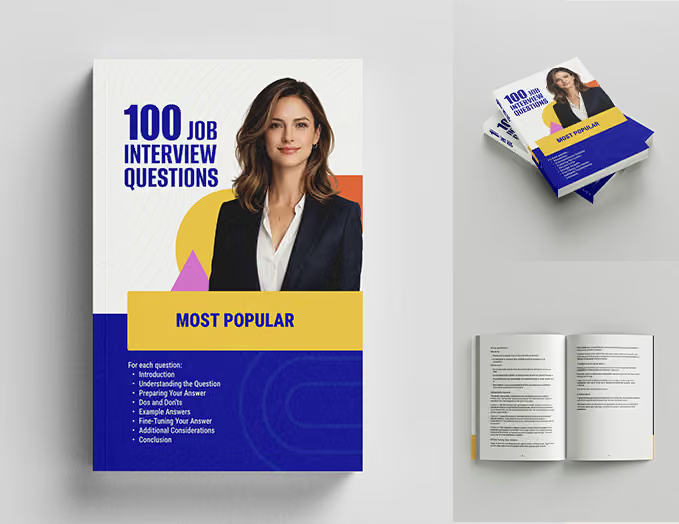
Adapted from the RockStarCV guide 100 Most Popular Job Interview Questions and its long-form narration. The structure and examples have been edited for a practical web reading experience.
Book reference: Question 86