Chapter 01
Introduction
This examines initiative without explicit instruction or reward.
Going beyond a request should solve a real problem, not merely add work. Choose the professional starting point that makes this answer useful now. Name the work, responsibility, or transition before adding background, so the interviewer can understand why the detail belongs in your response.
Exceeding expectations should not mean doing work the team did not need. Going beyond expectations should mean solving a connected problem more responsibly, not merely working longer. The extra action needs a clear reason and boundary. Test the evidence against the vacancy. Keep the facts you can explain in a follow-up, remove biography that does not help the decision, and make the final sentence point toward the role in front of you.
- 01Set the direction
This examines initiative without explicit instruction or reward.
- 02Choose the proof
Going beyond a request should solve a real problem, not merely add work.
- 03Connect it to the role
Choose the professional starting point that makes this answer useful now.
Chapter 02
Understanding the Question
They may be checking whether your initiative respected priorities and ownership.
Read the question as an assessment, not only a request for information. Decide which judgment, risk, working habit, or motivation the interviewer needs to see, then make that purpose visible through one concrete detail.
A follow-up may test whether your added effort had approval or created hidden costs. A follow-up may ask who authorized the expanded scope and whether it delayed the assigned task. Prepare for the next question as well as this one. If you mention a result, transition, conflict, or constraint, keep the context and your exact contribution ready so the interviewer can test the claim without weakening it.
- 01What they are testing
They may be checking whether your initiative respected priorities and ownership.
- 02Prepare the follow-up
Read the question as an assessment, not only a request for information.
- 03Keep the evidence ready
Decide which judgment, risk, working habit, or motivation the interviewer needs to see, then make that purpose visible through one concrete detail.
Chapter 03
Preparing Your Answer
Choose a situation where the extra work solved a real problem.
Recall how you noticed the adjacent issue and whether you sought approval before expanding scope. Build a small evidence bank before rehearsing. Write the setting, the decision you owned, the action you took, and the observable result. That gives you facts to select instead of forcing you to invent polished language under pressure.
Identify the original request and the adjacent problem you saw while completing it. Write the original request, the adjacent issue, the small extra action, and its effect on the people using the result. Arrange the answer so the listener never has to guess why a detail matters. Put the strongest evidence near the claim it supports, keep your role precise, and finish with the lesson or relevance to this position.
- 01Build your evidence
Choose a situation where the extra work solved a real problem.
- 02Shape the sequence
Recall how you noticed the adjacent issue and whether you sought approval before expanding scope.
- 03Keep the evidence ready
Build a small evidence bank before rehearsing.
Chapter 04
Dos and Don’ts
What to do: Explain why your action was within your remit and sustainable.
Do
- Explain why your action was within your remit and sustainable.
- Do show how you checked that the extra step would be useful to someone.
Don’t
- Do not confuse long hours with business value.
- Do not equate unrequested hours with a better outcome.
- Do not present unrequested work as inherently valuable.
- Sometimes the responsible choice is to finish the agreed scope and propose the next step.
Chapter 05
Example Answers
The samples extend an error fix to related reports, a training booking to a reference guide, and launch coordination to a reusable approval list.
Compare the examples by structure rather than memorizing their wording. Notice where each candidate sets the context, states personal ownership, and closes with a result, lesson, or reason the experience matters to the employer.
“I was asked to correct one reporting error. While tracing it, I found the same definition affected two other reports. I documented the cause, agreed the change with the owners, and added a validation check so the issue would not recur.”
Why it works: Treat this first example as a model for sequence. Replace its workplace, task, people, and result with truthful details of your own while keeping the connection between the claim and the supporting evidence.
“My task was to arrange a training session. I noticed attendees needed a quick reference afterward, so I built a one-page decision guide with the trainer. Fewer people had to ask the same question during the first week.”
Why it works: Use the second example to explore a different route to the same competency. Your version can come from paid work, study, volunteering, or a project, provided you state the context and do not overstate your responsibility.
“I was coordinating supplier responses for a single launch. I also created a shared list of recurring approval blockers, which the team later used for other launches. It took little additional effort and saved repeated chasing.”
Why it works: Use the third example to test whether your answer sounds recognisably yours. Keep the useful structure, then change every borrowed fact.
Chapter 06
Fine-Tuning Your Answer
Make clear where you obtained approval if the extra action changed scope.
Do not use long hours as a substitute for a useful outcome. Fine-tuning is mainly subtraction and precision. Move the strongest fact earlier, replace labels with actions, and check that the ending answers the question rather than drifting into a second example or an unrelated career summary.
Keep the unexpected contribution specific; vague claims of initiative are hard to verify. If the extra work required another team's time, include their input or approval. Initiative should not create an invisible burden elsewhere. Record one practice version and listen for the first useful fact. If it arrives late, shorten the setup. Then check every result, number, and claim so the final wording remains accurate when the interviewer asks for detail.
- 01Make it sharper
Make clear where you obtained approval if the extra action changed scope.
- 02Test the wording
Do not use long hours as a substitute for a useful outcome.
- 03Keep the evidence ready
Fine-tuning is mainly subtraction and precision.
Chapter 07
Additional Considerations
The extra step is strongest when it leaves a reusable improvement behind.
Adapt the structure to your circumstances without hiding them. Career changes, gaps, early-career evidence, senior scope, confidentiality, and reasonable boundaries may change the example, but they do not remove the need for relevance and honest ownership.
A sustainable improvement may matter more than a dramatic one-time rescue. An improvement that colleagues reused afterward is more persuasive than a one-day heroic effort. Protect credibility where context is sensitive. Use the level of detail you can share, separate team results from your contribution, and explain constraints without disclosing private information or blaming people who are not present.
- 01Adapt the answer
The extra step is strongest when it leaves a reusable improvement behind.
- 02Keep it credible
Adapt the structure to your circumstances without hiding them.
- 03Keep the evidence ready
Career changes, gaps, early-career evidence, senior scope, confidentiality, and reasonable boundaries may change the example, but they do not remove the need for relevance and honest ownership.
Chapter 08
Conclusion
Show that you knew where the original assignment ended and why the added work was worthwhile.
Bring the answer back to one clear message. The interviewer should be able to repeat your main claim, the evidence supporting it, and why it matters to the role without reconstructing the meaning from several disconnected points.
Extra effort is valuable when it leaves a useful improvement behind. The interviewer should see both that you respected the original assignment and that you noticed a worthwhile opportunity nearby. End deliberately. Stop when the question has been answered, the evidence is credible, and the relevance is clear. A concise landing invites a useful follow-up and leaves the listener with the professional judgment you intended to show.
A concise landing invites a useful follow-up and leaves the listener with the professional judgment you intended to show.
Source & adaptation
Built from the RockStarCV interview-question library
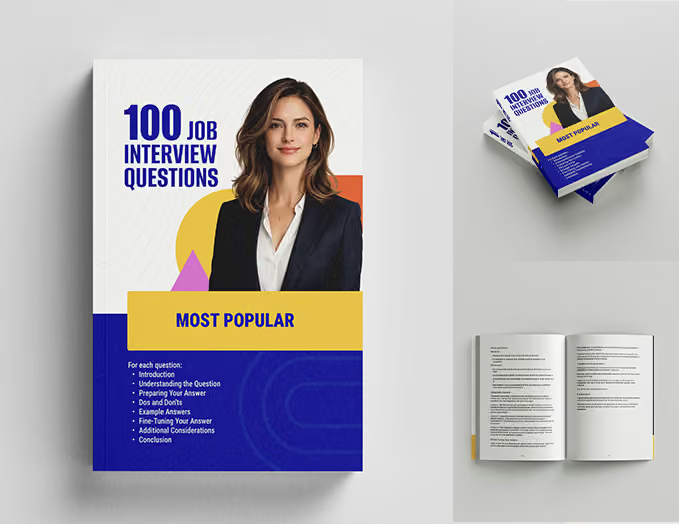
Adapted from the RockStarCV guide 100 Most Popular Job Interview Questions and its long-form narration. The structure and examples have been edited for a practical web reading experience.
Book reference: Question 34