Chapter 01
Introduction
The interviewer wants constructive disagreement and a workable relationship afterward.
Conflict is not automatically dysfunction; unresolved assumptions often are. Conflict is most informative when both people had a defensible concern. Choose the professional starting point that makes this answer useful now. Name the work, responsibility, or transition before adding background, so the interviewer can understand why the detail belongs in your response.
Conflict stories should reveal how you separated the work issue from your feelings about the coworker. Pick a disagreement with real stakes but enough distance to explain it fairly; the other person should remain credible in your telling. Test the evidence against the vacancy. Keep the facts you can explain in a follow-up, remove biography that does not help the decision, and make the final sentence point toward the role in front of you.
- 01Set the direction
The interviewer wants constructive disagreement and a workable relationship afterward.
- 02Choose the proof
Conflict is not automatically dysfunction; unresolved assumptions often are.
- 03Connect it to the role
Conflict is most informative when both people had a defensible concern.
Chapter 02
Understanding the Question
They want to know whether you can disagree and still produce a workable result.
A follow-up may ask what the other person would say about the disagreement now. Read the question as an assessment, not only a request for information. Decide which judgment, risk, working habit, or motivation the interviewer needs to see, then make that purpose visible through one concrete detail.
The interviewer may be testing emotional control as much as problem solving. They want to know whether you raised a concern directly, understood the other person's constraints, and reached a workable next step without recruiting an audience for a private dispute. Prepare for the next question as well as this one. If you mention a result, transition, conflict, or constraint, keep the context and your exact contribution ready so the interviewer can test the claim without weakening it.
- 01What they are testing
They want to know whether you can disagree and still produce a workable result.
- 02Prepare the follow-up
A follow-up may ask what the other person would say about the disagreement now.
- 03Keep the evidence ready
Read the question as an assessment, not only a request for information.
Chapter 03
Preparing Your Answer
Pick a disagreement about work, not a character judgement.
Choose a dispute about a decision, boundary, or method and recall the other person's valid concern. Write each view fairly before explaining the evidence or compromise that moved the work forward. Build a small evidence bank before rehearsing. Write the setting, the decision you owned, the action you took, and the observable result. That gives you facts to select instead of forcing you to invent polished language under pressure.
Prepare a case where the disagreement affected a deadline, customer, quality standard, or division of responsibilities. Identify the first conversation, what you learned from the coworker, and the concrete agreement that followed. Avoid a story that relies on calling the other person unreasonable. Arrange the answer so the listener never has to guess why a detail matters. Put the strongest evidence near the claim it supports, keep your role precise, and finish with the lesson or relevance to this position.
- 01Build your evidence
Pick a disagreement about work, not a character judgement.
- 02Shape the sequence
Choose a dispute about a decision, boundary, or method and recall the other person's valid concern.
- 03Keep the evidence ready
Write each view fairly before explaining the evidence or compromise that moved the work forward.
Chapter 04
Dos and Don’ts
What to do: Explain how you heard their concern before proposing a path.
Do
- Explain how you heard their concern before proposing a path.
- Do show where you changed your own position after listening.
Don’t
- Do not make the other person the villain.
- Do not label a colleague difficult as a substitute for explaining the decision.
- Describe the behavior or decision you challenged, not a personality flaw.
- Do not claim the conflict vanished because you stayed professional; name the compromise, escalation, or documented boundary that actually settled the work.
Chapter 05
Example Answers
A convincing answer can acknowledge that your initial reading was incomplete.
The point is not to win the argument; it is to show what changed once both parties had the same facts and a shared definition of success. Compare the examples by structure rather than memorizing their wording. Notice where each candidate sets the context, states personal ownership, and closes with a result, lesson, or reason the experience matters to the employer.
“A colleague wanted to publish a dashboard before the definitions were settled; I was concerned managers would compare unlike figures. We reviewed the disputed cases together and released a narrower verified view first. The working relationship remained good because we addressed the decision, not each other.”
Why it works: Treat this first example as a model for sequence. Replace its workplace, task, people, and result with truthful details of your own while keeping the connection between the claim and the supporting evidence.
“A teammate and I disagreed about who should own supplier follow-ups. We mapped the handoff and saw that both teams thought the other had confirmed dates. We agreed one owner per supplier and a shared escalation point.”
Why it works: Use the second example to explore a different route to the same competency. Your version can come from paid work, study, volunteering, or a project, provided you state the context and do not overstate your responsibility.
“I was frustrated by last-minute edits to a guide. I asked the reviewer what risk they were trying to address and learned the draft missed a legal exception. We set an earlier review step for later documents.”
Why it works: Use the third example to test whether your answer sounds recognisably yours. Keep the useful structure, then change every borrowed fact.
Chapter 06
Fine-Tuning Your Answer
Avoid an answer where harmony is restored only because you gave in.
Do not turn the answer into a character assessment of your coworker. Fine-tuning is mainly subtraction and precision. Move the strongest fact earlier, replace labels with actions, and check that the ending answers the question rather than drifting into a second example or an unrelated career summary.
Keep the eventual working relationship visible, even if no friendship followed. If the issue involved repeated behavior, do not force a neat one-meeting resolution. Explain when you involved a manager and why. For minor friction, keep the escalation proportional and show the direct conversation first. Record one practice version and listen for the first useful fact. If it arrives late, shorten the setup. Then check every result, number, and claim so the final wording remains accurate when the interviewer asks for detail.
- 01Make it sharper
Avoid an answer where harmony is restored only because you gave in.
- 02Test the wording
Do not turn the answer into a character assessment of your coworker.
- 03Keep the evidence ready
Fine-tuning is mainly subtraction and precision.
Chapter 07
Additional Considerations
You need not claim you became close friends afterward; a functioning relationship is enough.
Some disputes need a clear decision owner rather than endless consensus seeking. Adapt the structure to your circumstances without hiding them. Career changes, gaps, early-career evidence, senior scope, confidentiality, and reasonable boundaries may change the example, but they do not remove the need for relevance and honest ownership.
Some conflicts expose a systemic gap, such as unclear ownership or an approval process. If that was true, distinguish the immediate repair from the later process change so the lesson does not sound invented. Protect credibility where context is sensitive. Use the level of detail you can share, separate team results from your contribution, and explain constraints without disclosing private information or blaming people who are not present.
- 01Adapt the answer
You need not claim you became close friends afterward; a functioning relationship is enough.
- 02Keep it credible
Some disputes need a clear decision owner rather than endless consensus seeking.
- 03Keep the evidence ready
Adapt the structure to your circumstances without hiding them.
Chapter 08
Conclusion
Explain the shared rule or evidence that let work continue.
A workable agreement matters more than a tidy story about harmony. Bring the answer back to one clear message. The interviewer should be able to repeat your main claim, the evidence supporting it, and why it matters to the role without reconstructing the meaning from several disconnected points.
Close with the working relationship after the disagreement. A result that protected the deliverable and left both people able to collaborate again is stronger than a story about proving you were right. End deliberately. Stop when the question has been answered, the evidence is credible, and the relevance is clear. A concise landing invites a useful follow-up and leaves the listener with the professional judgment you intended to show.
A concise landing invites a useful follow-up and leaves the listener with the professional judgment you intended to show.
Source & adaptation
Built from the RockStarCV interview-question library
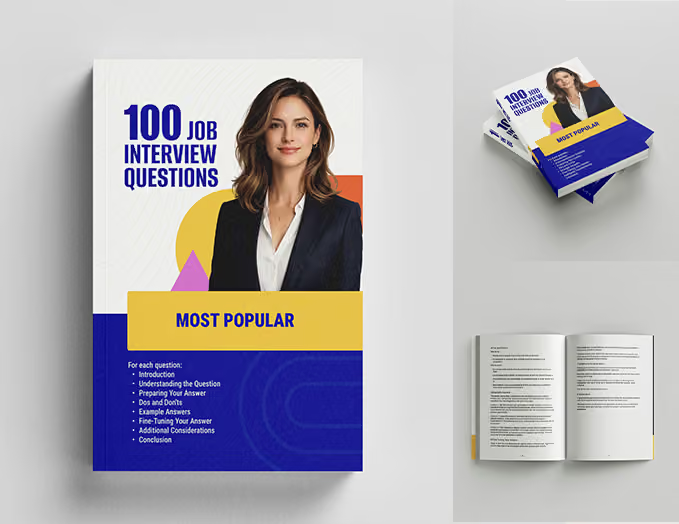
Adapted from the RockStarCV guide 100 Most Popular Job Interview Questions and its long-form narration. The structure and examples have been edited for a practical web reading experience.
Book reference: Question 52