Skip to interview
RockStarCV.com
Toggle Navigation

Physician Assistant Mock Interview: The Developing Candidate

Watch a credible Physician Assistant candidate whose answers need clearer decisions, ownership, and verification.

Developing candidate pathInteractive simulation16 chapters
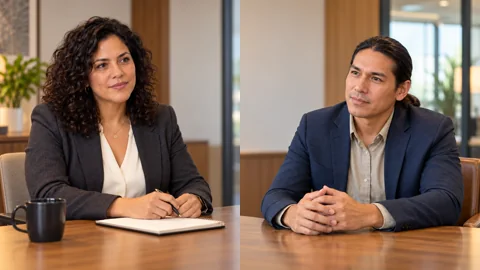
Victor Chen, fictional Physician Assistant candidate, seated on the left and facing toward the article center
Victor ChenPhysician Assistant candidate

Watch and practise

Run the complete interview

Complete transcript

RockStarCV NarratorIntroduction

What does a Physician Assistant interview sound like? Let us step inside the conversation and listen for the decisions that make each answer credible.

RockStarCV NarratorMeet Samuel Okoye and Victor Chen

Your interviewer is Samuel Okoye, Medical Director. Your candidate is Victor Chen, presenting the developing-candidate path. After the conversation, we will turn the evidence into a practical preparation framework.

Samuel OkoyeWelcome

Hi, Victor. Thank you for making the time. How is your day going?

Victor ChenWelcome

It is going well, thank you. I appreciate the chance to speak with you.

Samuel OkoyeWelcome

We will spend about half an hour on your background and several physician assistant scenarios, then leave time for your questions. Does that work for you?

Victor ChenWelcome

Yes, that sounds good.

Samuel OkoyeCareer story

Walk me through your experience as a Physician Assistant.

Victor ChenCareer story

I have several years of related experience and have handled assessment, diagnosis, treatment, procedures, patient education, collaboration, and escalation within state and organizational scope. I am comfortable with the normal daily responsibilities.

Samuel OkoyeCareer story

What scope did you personally own?

Victor ChenCareer story

I usually work with the team, follow the established process, and keep my manager informed when something changes.

Samuel OkoyeCareer story

Which result best represents your approach?

Victor ChenCareer story

My work has generally gone well. I would need to review the records to give a specific result and denominator.

Samuel OkoyeMotivation

Why are you interested in this Physician Assistant role?

Victor ChenMotivation

I enjoy this type of work and your organization appears to offer a good next step. I am looking for growth and a new challenge.

Samuel OkoyeMotivation

What about this operating environment matters to you?

Victor ChenMotivation

The responsibilities are familiar to me, and I think I could learn the differences quickly.

Samuel OkoyeMotivation

What would you learn first?

Victor ChenMotivation

I would learn the tools, meet the team, and start with the assigned work.

Samuel OkoyeClinical reasoning

Tell me about a time you had to evaluate a patient with a potentially time-sensitive symptom.

Victor ChenClinical reasoning

I have handled situations where I needed to evaluate a patient with a potentially time-sensitive symptom. I stayed organized, communicated with the team, and tried to keep the work moving.

Samuel OkoyeClinical reasoning

What decision did you personally make, and what evidence did you use?

Victor ChenClinical reasoning

I normally use history and examination and ask someone for help when the issue becomes complicated. The team usually works together and we find a solution.

Samuel OkoyeClinical reasoning

How did you respect your authority boundary and verify the outcome?

Victor ChenClinical reasoning

The situation was resolved. I would need to check the record for the exact result, and I could make my own decision and the authority boundary clearer.

Samuel OkoyeMedication safety

Tell me about a time you had to find an ambiguous medication list.

Victor ChenMedication safety

I have handled situations where I needed to find an ambiguous medication list. I stayed organized, communicated with the team, and tried to keep the work moving.

Samuel OkoyeMedication safety

What decision did you personally make, and what evidence did you use?

Victor ChenMedication safety

I normally use the EHR and ask someone for help when the issue becomes complicated. The team usually works together and we find a solution.

Samuel OkoyeMedication safety

How did you respect your authority boundary and verify the outcome?

Victor ChenMedication safety

The situation was resolved. I would need to check the record for the exact result, and I could make my own decision and the authority boundary clearer.

Samuel OkoyeScope

Tell me about a time you had to encounter a procedure or condition beyond current privileges.

Victor ChenScope

I have handled situations where I needed to encounter a procedure or condition beyond current privileges. I stayed organized, communicated with the team, and tried to keep the work moving.

Samuel OkoyeScope

What decision did you personally make, and what evidence did you use?

Victor ChenScope

I normally use diagnostic evidence and ask someone for help when the issue becomes complicated. The team usually works together and we find a solution.

Samuel OkoyeScope

How did you respect your authority boundary and verify the outcome?

Victor ChenScope

The situation was resolved. I would need to check the record for the exact result, and I could make my own decision and the authority boundary clearer.

Samuel OkoyeCommunication

Tell me about a time you had to disagree with another clinician about risk.

Victor ChenCommunication

I have handled situations where I needed to disagree with another clinician about risk. I stayed organized, communicated with the team, and tried to keep the work moving.

Samuel OkoyeCommunication

What decision did you personally make, and what evidence did you use?

Victor ChenCommunication

I normally use protocols and ask someone for help when the issue becomes complicated. The team usually works together and we find a solution.

Samuel OkoyeCommunication

How did you respect your authority boundary and verify the outcome?

Victor ChenCommunication

The situation was resolved. I would need to check the record for the exact result, and I could make my own decision and the authority boundary clearer.

Samuel OkoyeFollow-up

Tell me about a time you had to close an abnormal-result loop.

Victor ChenFollow-up

I have handled situations where I needed to close an abnormal-result loop. I stayed organized, communicated with the team, and tried to keep the work moving.

Samuel OkoyeFollow-up

What decision did you personally make, and what evidence did you use?

Victor ChenFollow-up

I normally use structured clinical handoffs and ask someone for help when the issue becomes complicated. The team usually works together and we find a solution.

Samuel OkoyeFollow-up

How did you respect your authority boundary and verify the outcome?

Victor ChenFollow-up

The situation was resolved. I would need to check the record for the exact result, and I could make my own decision and the authority boundary clearer.

Samuel OkoyeCandidate questions

What questions would you like to ask us?

Victor ChenCandidate questions

How would you describe the team culture?

Samuel OkoyeCandidate questions

The team is collaborative and direct. People are expected to ask for help early and follow through on commitments.

Victor ChenCandidate questions

What is the usual path for growth from this role?

Samuel OkoyeCandidate questions

Growth depends on consistent performance, broader judgment, and the needs of the organization. We discuss development during regular reviews.

Victor ChenCandidate questions

Thank you. That is helpful.

Samuel OkoyeClose

Those are all my questions. Thank you, Victor. We will follow up after the remaining interviews.

Victor ChenClose

Thank you for the conversation. I appreciate your time.

RockStarCV NarratorOutro 1 · Verdict

Victor Chen remained credible and employable, but several answers stopped at activity. The missing layer was the decision rule, personal ownership, and verified outcome.

RockStarCV NarratorOutro 2 · Evidence

These are coachable gaps. A more specific example and one honest boundary would strengthen the same experience.

RockStarCV NarratorOutro 2 · Evidence

The recurring evidence was evaluate a patient with a potentially time-sensitive symptom, find an ambiguous medication list, involve the supervising or accountable clinician early, and the escalation resolved the safety question.

RockStarCV NarratorOutro 2 · Evidence

Notice that the examples are fictional composites. The teaching principles come from the cited occupation and practice sources, not from invented outcomes.

RockStarCV NarratorOutro 3 · Framework

Prepare your own answer with five lines: context, evidence, decision, boundary, verification.

RockStarCV NarratorOutro 3 · Framework

Keep each line short enough to say naturally, then let the interviewer decide where to probe.

RockStarCV NarratorOutro 4 · Practice

Pause here and rehearse one real physician assistant example. Replace team language with the decision you personally owned, and do not claim an outcome you cannot verify.

RockStarCV NarratorOutro 4 · Practice

Prepare with evidence. Interview with confidence.

Use Play to hear the conversation, move one slide at a time, or jump directly to a chapter. Captions follow the active speaker.

What to expect

How the interview is likely to unfold

A senior physician assistant interview usually moves from your career story into evidence of judgment, then closes with your questions.

  1. Career story

    Walk me through your experience as a Physician Assistant.

  2. Motivation

    Why are you interested in this Physician Assistant role?

  3. Clinical reasoning

    Tell me about a time you had to evaluate a patient with a potentially time-sensitive symptom.

  4. Medication safety

    Tell me about a time you had to find an ambiguous medication list.

  5. Scope

    Tell me about a time you had to encounter a procedure or condition beyond current privileges.

  6. Communication

    Tell me about a time you had to disagree with another clinician about risk.

  7. Follow-up

    Tell me about a time you had to close an abnormal-result loop.

Who might interview you

Different people are testing different things

Listen to the role behind the question. The same example may need a different emphasis for each interviewer.

Medical Director

Their purpose
Evaluate role judgment, ownership, boundaries, and evidence.
They look for
evaluate a patient with a potentially time-sensitive symptom, find an ambiguous medication list, involve the supervising or accountable clinician early

Cross-functional partner

Their purpose
Understand collaboration and escalation.
They look for
A clear decision path and honest operating boundary.

Senior peer

Their purpose
Test realistic execution detail.
They look for
Specific examples and verification.

What they are assessing

Make your judgment easy to see

What interviewers need to learn

  • Do you make evaluate a patient with a potentially time-sensitive symptom visible?
  • Do you make find an ambiguous medication list visible?
  • Do you make involve the supervising or accountable clinician early visible?
  • Do you make the escalation resolved the safety question visible?
  • Do you make close an abnormal-result loop visible?

Accentuate

  • Context: Define the affected people, system, and consequence in Physician Assistant work.
  • Evidence: Use history and examination, the EHR, diagnostic evidence, protocols, and structured clinical handoffs to verify the condition before acting.
  • Decision: Name the decision you personally owned and the trade-off you accepted.
  • Boundary: State what required approval, licensed judgment, or accountable escalation.
  • Verification: Close with the reviewed result, denominator, or completed handoff.

Leave out

  • Unbounded team language with no personal decision.
  • Activity presented as an outcome.
  • A promise outside your authority.
  • A number you cannot verify.

Difficult questions

Prepare the evidence, not a script

Use these prompts to choose a truthful example and reconstruct the decision. Your delivery should still sound like you.

Tell me about a time you had to evaluate a patient with a potentially time-sensitive symptom.

Why they ask: They are testing clinical reasoning judgment.

Prepare: I used history and examination to verify the condition, documented the trade-off, and made the next owner explicit. I also stabilize and escalate rather than let a routine pattern create false reassurance, so the work moved without creating a promise or decision outside my authority.

Tell me about a time you had to find an ambiguous medication list.

Why they ask: They are testing medication safety judgment.

Prepare: I used the EHR to verify the condition, documented the trade-off, and made the next owner explicit. I also stop and reconcile before prescribing or refilling, so the work moved without creating a promise or decision outside my authority.

Tell me about a time you had to encounter a procedure or condition beyond current privileges.

Why they ask: They are testing scope judgment.

Prepare: I used diagnostic evidence to verify the condition, documented the trade-off, and made the next owner explicit. I also involve the supervising or accountable clinician early, so the work moved without creating a promise or decision outside my authority.

Tell me about a time you had to disagree with another clinician about risk.

Why they ask: They are testing communication judgment.

Prepare: I used protocols to verify the condition, documented the trade-off, and made the next owner explicit. I also use findings uncertainty and a specific recommendation, so the work moved without creating a promise or decision outside my authority.

Tell me about a time you had to close an abnormal-result loop.

Why they ask: They are testing follow-up judgment.

Prepare: I used structured clinical handoffs to verify the condition, documented the trade-off, and made the next owner explicit. I also name the reviewing clinician patient contact and contingency, so the work moved without creating a promise or decision outside my authority.

100 interview questions

Physician Assistant Interview Questions: 100 Answers

Keep preparing with the complete question book created for Physician Assistant interviews.

View the question book
Front-facing 3D book mockup of Physician Assistant 100 Job Interview Questions, an interview question book from RockStarCV.com.

How to use this simulation

Listen for decisions, not polished phrases

Pause after each question and form your own answer before Victor Chen responds. Then compare the evidence provided: the constraint, the decision, the personal contribution, the trade-off, and the result.

Samuel Okoye and Victor Chen are fictional composite characters. Their employers, physician assistant examples, figures, and outcomes were created for teaching purposes.

Take the interview with you

Your physician assistant interview playbook

Use the printable framework to prepare examples, test your evidence, and rehearse stronger answers away from the screen.

  • Question prompts
  • Evidence checklist
  • Practice notes
Download the PDF playbook

What to notice

A practical viewing checklist

  1. 01

    Notice where activity replaces evidence.

  2. 02

    Add the decision rule and personal action.

  3. 03

    State the boundary you respected.

  4. 04

    Verify what changed.

Interviewer scorecard

The signals behind a credible answer

Context
Define the affected people, system, and consequence in Physician Assistant work.
Evidence
Use history and examination, the EHR, diagnostic evidence, protocols, and structured clinical handoffs to verify the condition before acting.
Decision
Name the decision you personally owned and the trade-off you accepted.

Research foundation

Sources behind the teaching principles

The sources support the interview guidance, not the fictional candidate’s invented employers, budgets, dates, or outcomes.

Similar interviews

Explore related mock interviews

More from RockStarCV

Build your complete career toolkit