Skip to interview
RockStarCV.com
Toggle Navigation

Nurse Practitioner Mock Interview: The Developing Candidate

Watch a credible Nurse Practitioner candidate whose answers need clearer decisions, ownership, and verification.

Developing candidate pathInteractive simulation16 chapters
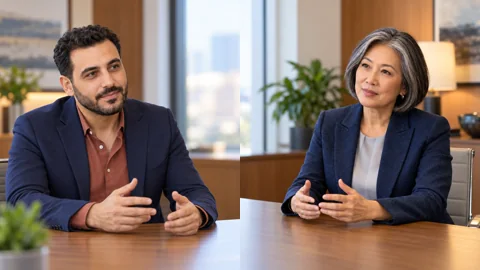
Victor Chen, fictional Nurse Practitioner candidate, seated on the left and facing toward the article center
Victor ChenNurse Practitioner candidate

Watch and practise

Run the complete interview

Complete transcript

RockStarCV NarratorIntroduction

What does a credible Nurse Practitioner interview sound like when the answers still have room to improve? Let us step inside the conversation and listen for what is present, and what is still missing.

RockStarCV NarratorMeet Elena Ruiz and Victor Chen

Your interviewer is Elena Ruiz, Clinical Services Director. Your candidate is Victor Chen, presenting the developing-candidate path. After the conversation, we will turn the evidence into a practical preparation framework.

Elena RuizWelcome

Hi, Victor. Thank you for making the time. How is your day going?

Victor ChenWelcome

It is going well, thank you. I appreciate the chance to speak with you.

Elena RuizWelcome

We will spend about half an hour on your background and several nurse practitioner scenarios, then leave time for your questions. Does that work for you?

Victor ChenWelcome

Yes, that sounds good.

Elena RuizCareer story

Walk me through your experience as a nurse practitioner.

Victor ChenCareer story

I have worked as a nurse practitioner for five years in a busy primary-care clinic. I see a wide range of patients and manage both acute visits and chronic conditions.

Elena RuizCareer story

Which decisions do you own independently?

Victor ChenCareer story

I independently assess, diagnose, order tests, prescribe, and provide education. I also ask the physician when a case is more complex.

Elena RuizCareer story

Tell me about the clinical boundary you are most careful with.

Victor ChenCareer story

I am careful with high-risk symptoms and patients with several conditions. I rely on the protocols and my clinical experience to know when to ask for help.

Elena RuizMotivation

Why are you interested in this clinic?

Victor ChenMotivation

I like primary care and have heard positive things about the clinic. I also want a role where I can see a diverse patient population and keep learning.

Elena RuizMotivation

What about our patient population changes your approach?

Victor ChenMotivation

The population seems medically complex, which is familiar to me. I am comfortable managing several conditions and coordinating referrals.

Elena RuizMotivation

What would you learn before taking a full panel?

Victor ChenMotivation

I would learn the EHR, clinic protocols, scheduling, and who to contact for questions. I usually become independent quickly after orientation.

Elena RuizClinical reasoning

A patient presents with new chest discomfort. Talk me through your approach.

Victor ChenClinical reasoning

I would take a history, perform an exam, check vital signs, and get an electrocardiogram. I would ask about cardiac history and whether the pain is reproducible.

Elena RuizClinical reasoning

What would make you escalate immediately?

Victor ChenClinical reasoning

If the electrocardiogram was abnormal, the pain was severe, or the patient looked unstable, I would send them to the emergency department. Otherwise I would consider reflux or musculoskeletal pain.

Elena RuizClinical reasoning

How do you communicate uncertainty to the patient?

Victor ChenClinical reasoning

I would tell the patient we need to rule out anything serious and review the warning signs. I would try not to alarm them before I had more information.

Elena RuizPatient safety

Tell me about a time you caught a risk before it became harm.

Victor ChenPatient safety

I once noticed two anticoagulants on a patient’s medication list after discharge. I knew that could be a safety issue, so I asked the physician and pharmacist to review it.

Elena RuizPatient safety

What did you personally notice and change?

Victor ChenPatient safety

We contacted the patient and clarified which medication to stop. The patient had been taking both, but there was no bleeding.

Elena RuizPatient safety

How did you close the loop?

Victor ChenPatient safety

I updated the chart and told the patient to call with symptoms. The team later discussed being more careful with medication reconciliation.

Elena RuizCommunication

Describe a disagreement with another clinician about the plan of care.

Victor ChenCommunication

I had a specialist who wanted to wait, but I felt the patient needed imaging. I explained my concern and said I would be more comfortable ordering it.

Elena RuizCommunication

How did you keep it patient-centered?

Victor ChenCommunication

I focused on the symptoms and risk factors and tried to keep the discussion professional. We eventually agreed to obtain the study.

Elena RuizCommunication

What did you do if consensus was not immediate?

Victor ChenCommunication

If we had not agreed, I would have involved the medical director. I always advocate for the patient when I feel something could be missed.

Elena RuizFollow-up

How do you know a care plan will work after the visit?

Victor ChenFollow-up

I review the diagnosis, medications, and follow-up instructions and give the patient a written summary. I ask whether they have questions.

Elena RuizFollow-up

How do you check understanding?

Victor ChenFollow-up

If the plan is complicated, I ask them to repeat the medication schedule. I also encourage them to use the portal.

Elena RuizSuccess

What makes follow-up dependable?

Victor ChenSuccess

I set a follow-up interval and ask the front desk to schedule it. Abnormal results route to the ordering clinician, and the team contacts the patient.

Elena RuizCandidate questions

What questions would you like to ask us?

Victor ChenCandidate questions

How would you describe the team culture?

Elena RuizCandidate questions

The team is collaborative and direct. People are expected to ask for help early and follow through on commitments.

Victor ChenCandidate questions

What is the usual path for growth from this role?

Elena RuizCandidate questions

Growth depends on consistent performance, broader judgment, and the needs of the organization. We discuss development during regular reviews.

Victor ChenCandidate questions

Thank you. That is helpful.

Elena RuizClose

Those are all my questions. Thank you, Victor. We will follow up after the remaining interviews.

Victor ChenClose

Thank you for the conversation. I appreciate your time.

RockStarCV NarratorOutro 1 · Verdict

Victor Chen remained credible and employable, but several answers stopped at activity. The missing layer was the decision rule, personal ownership, and verified outcome.

RockStarCV NarratorOutro 2 · Evidence

These are coachable gaps. A more specific example and one honest boundary would strengthen the same experience.

RockStarCV NarratorOutro 2 · Evidence

The recurring evidence was structured clinical reasoning, state your scope boundary, escalate red flags early, and use structured handoffs.

RockStarCV NarratorOutro 2 · Evidence

Notice that the examples are fictional composites. The teaching principles come from the cited occupation and practice sources, not from invented outcomes.

RockStarCV NarratorOutro 3 · Framework

Prepare your own answer with five lines: assessment, differential, plan, escalation, follow-up.

RockStarCV NarratorOutro 3 · Framework

Keep each line short enough to say naturally, then let the interviewer decide where to probe.

RockStarCV NarratorOutro 4 · Practice

Pause here and rehearse one real nurse practitioner example. Replace team language with the decision you personally owned, and do not claim an outcome you cannot verify.

RockStarCV NarratorOutro 4 · Practice

Prepare with evidence. Interview with confidence.

Use Play to hear the conversation, move one slide at a time, or jump directly to a chapter. Captions follow the active speaker.

What to expect

How the interview is likely to unfold

A senior nurse practitioner interview usually moves from your career story into evidence of judgment, then closes with your questions.

  1. Career story

    Walk me through your experience as a nurse practitioner.

  2. Motivation

    Why are you interested in this clinic?

  3. Clinical reasoning

    A patient presents with new chest discomfort. Talk me through your approach.

  4. Patient safety

    Tell me about a time you caught a risk before it became harm.

  5. Communication

    Describe a disagreement with another clinician about the plan of care.

  6. Follow-up

    How do you know a care plan will work after the visit?

Who might interview you

Different people are testing different things

Listen to the role behind the question. The same example may need a different emphasis for each interviewer.

Clinical Services Director

Their purpose
Evaluate role judgment, ownership, boundaries, and evidence.
They look for
structured clinical reasoning, state your scope boundary, escalate red flags early

Cross-functional partner

Their purpose
Understand collaboration and escalation.
They look for
A clear decision path and honest operating boundary.

Senior peer

Their purpose
Test realistic execution detail.
They look for
Specific examples and verification.

What they are assessing

Make your judgment easy to see

What interviewers need to learn

  • Do you make structured clinical reasoning visible?
  • Do you make state your scope boundary visible?
  • Do you make escalate red flags early visible?
  • Do you make use structured handoffs visible?
  • Do you make close every follow-up loop visible?

Accentuate

  • Assessment: Organize the history, exam, red flags, and uncertainty.
  • Differential: Name the dangerous alternatives as well as the likely diagnosis.
  • Plan: Choose tests and treatment that fit the evidence and setting.
  • Escalation: State exactly when you consult, transfer, or activate emergency care.
  • Follow-up: Confirm understanding, return precautions, ownership, and reassessment.

Leave out

  • Unbounded team language with no personal decision.
  • Activity presented as an outcome.
  • A promise outside your authority.
  • A number you cannot verify.

Difficult questions

Prepare the evidence, not a script

Use these prompts to choose a truthful example and reconstruct the decision. Your delivery should still sound like you.

A patient presents with new chest discomfort. Talk me through your approach.

Why they ask: They are testing clinical reasoning judgment.

Prepare: Hypotension, hypoxia, ongoing severe pain, concerning electrocardiogram findings, syncope, focal neurologic change, or a high-risk history would move me to emergency evaluation and transfer. I would not use a reassuring single feature to rule out a dangerous cause.

Tell me about a time you caught a risk before it became harm.

Why they ask: They are testing patient safety judgment.

Prepare: I reconciled the external record, called the patient to verify what was being taken, contacted the discharging team, and involved our clinical pharmacist. We confirmed duplicate therapy had continued at home for three days and gave a corrected plan.

Describe a disagreement with another clinician about the plan of care.

Why they ask: They are testing communication judgment.

Prepare: I used a structured handoff: current status, relevant background, my assessment, and the specific recommendation for same-day imaging. I also asked what evidence would change the specialist’s threshold, so we were solving the same safety question.

How do you know a care plan will work after the visit?

Why they ask: They are testing follow-up judgment.

Prepare: I use teach-back: I ask the patient to explain the plan, warning signs, and next step in their own words. That reveals confusion more reliably than asking whether they understand.

100 interview questions

Nurse Practitioner Interview Questions: 100 Answers

Keep preparing with the complete question book created for Nurse Practitioner interviews.

View the question book
Front-facing 3D book mockup of Nurse Practitioner 100 Job Interview Questions, an interview question book from RockStarCV.com.

How to use this simulation

Listen for decisions, not polished phrases

Pause after each question and form your own answer before Victor Chen responds. Then compare the evidence provided: the constraint, the decision, the personal contribution, the trade-off, and the result.

Elena Ruiz and Victor Chen are fictional composite characters. Their employers, nurse practitioner examples, figures, and outcomes were created for teaching purposes.

Take the interview with you

Your nurse practitioner interview playbook

Use the printable framework to prepare examples, test your evidence, and rehearse stronger answers away from the screen.

  • Question prompts
  • Evidence checklist
  • Practice notes
Download the PDF playbook

What to notice

A practical viewing checklist

  1. 01

    Notice where activity replaces evidence.

  2. 02

    Add the decision rule and personal action.

  3. 03

    State the boundary you respected.

  4. 04

    Verify what changed.

Interviewer scorecard

The signals behind a credible answer

Assessment
Organize the history, exam, red flags, and uncertainty.
Differential
Name the dangerous alternatives as well as the likely diagnosis.
Plan
Choose tests and treatment that fit the evidence and setting.

Research foundation

Sources behind the teaching principles

The sources support the interview guidance, not the fictional candidate’s invented employers, budgets, dates, or outcomes.

Similar interviews

Explore related mock interviews

More from RockStarCV

Build your complete career toolkit