Skip to interview
RockStarCV.com
Toggle Navigation

Credit Analyst Mock Interview: The Strong Candidate

Hear a complete Credit Analyst interview in which Aisha Rahman makes judgment, boundaries, and results inspectable.

Strong candidate pathInteractive simulation16 chapters
Aisha Rahman, fictional Credit Analyst candidate, seated on the right and facing toward the article center
Aisha RahmanCredit Analyst candidate

Watch and practise

Run the complete interview

Complete transcript

RockStarCV NarratorIntroduction

What does a Credit Analyst interview sound like? Let us step inside the conversation and listen for the decisions that make each answer credible.

RockStarCV NarratorMeet Samuel Okoye and Aisha Rahman

Your interviewer is Samuel Okoye, Credit Risk Manager. Your candidate is Aisha Rahman, presenting the strong-candidate path. After the conversation, we will turn the evidence into a practical preparation framework.

Samuel OkoyeWelcome

Hi, Aisha. Thank you for making the time. How is your day going?

Aisha RahmanWelcome

It is going well, thank you. I appreciate the chance to speak with you.

Samuel OkoyeWelcome

We will spend about half an hour on your background and several credit analyst scenarios, then leave time for your questions. Does that work for you?

Aisha RahmanWelcome

Yes, that sounds good.

Samuel OkoyeCareer story

Walk me through your experience as a Credit Analyst.

Aisha RahmanCareer story

I have built my experience around borrower analysis, cash flow, collateral, industry risk, covenant monitoring, credit recommendations, and policy documentation. My recent work has required both dependable execution and clear judgment when the normal path no longer fit.

Samuel OkoyeCareer story

What scope did you personally own?

Aisha RahmanCareer story

I personally owned the record, decision path, and follow-through inside my role. I used financial statements, cash-flow analysis, credit policy, bureau or collateral data, and approval memoranda so another person could inspect what I knew, what I decided, and where I escalated.

Samuel OkoyeCareer story

Which result best represents your approach?

Aisha RahmanCareer story

The result I value most is a more reliable operating loop: fewer ownerless handoffs, earlier risk visibility, and evidence that the intended outcome was actually reached.

Samuel OkoyeMotivation

Why are you interested in this Credit Analyst role?

Aisha RahmanMotivation

I am interested because I want to make fair, consistent credit recommendations whose assumptions and risks can be challenged. The role combines practical execution with judgment, and that is the responsibility I have been building toward.

Samuel OkoyeMotivation

What about this operating environment matters to you?

Aisha RahmanMotivation

I am especially drawn to an environment where use normalized evidence and downside cases rather than one recent period. That makes the quality of the decision as important as the amount of activity.

Samuel OkoyeMotivation

What would you learn first?

Aisha RahmanMotivation

I would first learn the approved decision rights, the systems of record, the most consequential failure modes, and how this team verifies success before I suggest changes.

Samuel OkoyeUnderwriting

Tell me about a time you had to analyze a borrower with volatile cash flow.

Aisha RahmanUnderwriting

In a fictional US employer example, I had to analyze a borrower with volatile cash flow while the team was under normal operating pressure. I first clarified the affected people, the consequence of delay, and the decision that actually belonged to my role.

Samuel OkoyeUnderwriting

What decision did you personally make, and what evidence did you use?

Aisha RahmanUnderwriting

I used financial statements to verify the condition, documented the trade-off, and made the next owner explicit. I also use normalized evidence and downside cases rather than one recent period, so the work moved without creating a promise or decision outside my authority.

Samuel OkoyeUnderwriting

How did you respect your authority boundary and verify the outcome?

Aisha RahmanUnderwriting

I closed the loop by confirming that the recommendation stated capacity and uncertainty. The useful evidence was the completed handoff and reviewed operating result, not simply that the team had been busy.

Samuel OkoyePolicy

Tell me about a time you had to receive pressure to ignore a credit exception.

Aisha RahmanPolicy

In a fictional US employer example, I had to receive pressure to ignore a credit exception while the team was under normal operating pressure. I first clarified the affected people, the consequence of delay, and the decision that actually belonged to my role.

Samuel OkoyePolicy

What decision did you personally make, and what evidence did you use?

Aisha RahmanPolicy

I used cash-flow analysis to verify the condition, documented the trade-off, and made the next owner explicit. I also route the exception through authorized approval, so the work moved without creating a promise or decision outside my authority.

Samuel OkoyePolicy

How did you respect your authority boundary and verify the outcome?

Aisha RahmanPolicy

I closed the loop by confirming that the decision retained rationale limits and monitoring. The useful evidence was the completed handoff and reviewed operating result, not simply that the team had been busy.

Samuel OkoyeFair lending

Tell me about a time you had to review inconsistent treatment across similar files.

Aisha RahmanFair lending

In a fictional US employer example, I had to review inconsistent treatment across similar files while the team was under normal operating pressure. I first clarified the affected people, the consequence of delay, and the decision that actually belonged to my role.

Samuel OkoyeFair lending

What decision did you personally make, and what evidence did you use?

Aisha RahmanFair lending

I used credit policy to verify the condition, documented the trade-off, and made the next owner explicit. I also use job-neutral consistent policy evidence and compliance escalation, so the work moved without creating a promise or decision outside my authority.

Samuel OkoyeFair lending

How did you respect your authority boundary and verify the outcome?

Aisha RahmanFair lending

I closed the loop by confirming that the corrected process reduced discretionary variation. The useful evidence was the completed handoff and reviewed operating result, not simply that the team had been busy.

Samuel OkoyeMonitoring

Tell me about a time you had to identify a developing covenant or performance risk.

Aisha RahmanMonitoring

In a fictional US employer example, I had to identify a developing covenant or performance risk while the team was under normal operating pressure. I first clarified the affected people, the consequence of delay, and the decision that actually belonged to my role.

Samuel OkoyeMonitoring

What decision did you personally make, and what evidence did you use?

Aisha RahmanMonitoring

I used bureau or collateral data to verify the condition, documented the trade-off, and made the next owner explicit. I also contact the responsible owner before default becomes a surprise, so the work moved without creating a promise or decision outside my authority.

Samuel OkoyeMonitoring

How did you respect your authority boundary and verify the outcome?

Aisha RahmanMonitoring

I closed the loop by confirming that the action plan had triggers and review dates. The useful evidence was the completed handoff and reviewed operating result, not simply that the team had been busy.

Samuel OkoyeRecommendation

Tell me about a time you had to decline or condition a request.

Aisha RahmanRecommendation

In a fictional US employer example, I had to decline or condition a request while the team was under normal operating pressure. I first clarified the affected people, the consequence of delay, and the decision that actually belonged to my role.

Samuel OkoyeRecommendation

What decision did you personally make, and what evidence did you use?

Aisha RahmanRecommendation

I used approval memoranda to verify the condition, documented the trade-off, and made the next owner explicit. I also separate facts policy judgment and adverse-action ownership, so the work moved without creating a promise or decision outside my authority.
Samuel OkoyeRecommendation

How did you respect your authority boundary and verify the outcome?

Aisha RahmanRecommendation

I closed the loop by confirming that the decision and communication remained accurate and traceable. The useful evidence was the completed handoff and reviewed operating result, not simply that the team had been busy.

Samuel OkoyeCandidate questions

What questions would you like to ask us?

Aisha RahmanCandidate questions

What would make someone in this role demonstrably successful after six months?

Samuel OkoyeCandidate questions

Success means reliable judgment, clear ownership, and evidence that the work improves the customer or patient outcome. We would agree the exact measures during onboarding.

Aisha RahmanCandidate questions

Which decisions would I own, and which should I escalate?

Samuel OkoyeCandidate questions

You would own routine decisions inside the role and use documented escalation paths when risk, scope, or authority changes. We value early escalation with a clear recommendation.

Aisha RahmanCandidate questions

Thank you. That is helpful.

Samuel OkoyeClose

Those are all my questions. Thank you, Aisha. We will follow up after the remaining interviews.

Aisha RahmanClose

Thank you for the conversation. I appreciate your time.

RockStarCV NarratorOutro 1 · Verdict

Aisha Rahman made judgment visible instead of asking the interviewer to infer it. The answers connected a constraint, a personal decision, and a verifiable result.

RockStarCV NarratorOutro 2 · Evidence

Strong does not mean perfect. It means the interviewer can inspect how the candidate thought and what changed.

RockStarCV NarratorOutro 2 · Evidence

The recurring evidence was analyze a borrower with volatile cash flow, receive pressure to ignore a credit exception, use job-neutral consistent policy evidence and compliance escalation, and the action plan had triggers and review dates.

RockStarCV NarratorOutro 2 · Evidence

Notice that the examples are fictional composites. The teaching principles come from the cited occupation and practice sources, not from invented outcomes.

RockStarCV NarratorOutro 3 · Framework

Prepare your own answer with five lines: context, evidence, decision, boundary, verification.

RockStarCV NarratorOutro 3 · Framework

Keep each line short enough to say naturally, then let the interviewer decide where to probe.

RockStarCV NarratorOutro 4 · Practice

Pause here and rehearse one real credit analyst example. Replace team language with the decision you personally owned, and do not claim an outcome you cannot verify.

RockStarCV NarratorOutro 4 · Practice

Prepare with evidence. Interview with confidence.

Use Play to hear the conversation, move one slide at a time, or jump directly to a chapter. Captions follow the active speaker.

What to expect

How the interview is likely to unfold

A senior credit analyst interview usually moves from your career story into evidence of judgment, then closes with your questions.

  1. Career story

    Walk me through your experience as a Credit Analyst.

  2. Motivation

    Why are you interested in this Credit Analyst role?

  3. Underwriting

    Tell me about a time you had to analyze a borrower with volatile cash flow.

  4. Policy

    Tell me about a time you had to receive pressure to ignore a credit exception.

  5. Fair lending

    Tell me about a time you had to review inconsistent treatment across similar files.

  6. Monitoring

    Tell me about a time you had to identify a developing covenant or performance risk.

  7. Recommendation

    Tell me about a time you had to decline or condition a request.

Who might interview you

Different people are testing different things

Listen to the role behind the question. The same example may need a different emphasis for each interviewer.

Credit Risk Manager

Their purpose
Evaluate role judgment, ownership, boundaries, and evidence.
They look for
analyze a borrower with volatile cash flow, receive pressure to ignore a credit exception, use job-neutral consistent policy evidence and compliance escalation

Cross-functional partner

Their purpose
Understand collaboration and escalation.
They look for
A clear decision path and honest operating boundary.

Senior peer

Their purpose
Test realistic execution detail.
They look for
Specific examples and verification.

What they are assessing

Make your judgment easy to see

What interviewers need to learn

  • Do you make analyze a borrower with volatile cash flow visible?
  • Do you make receive pressure to ignore a credit exception visible?
  • Do you make use job-neutral consistent policy evidence and compliance escalation visible?
  • Do you make the action plan had triggers and review dates visible?
  • Do you make decline or condition a request visible?

Accentuate

  • Context: Define the affected people, system, and consequence in Credit Analyst work.
  • Evidence: Use financial statements, cash-flow analysis, credit policy, bureau or collateral data, and approval memoranda to verify the condition before acting.
  • Decision: Name the decision you personally owned and the trade-off you accepted.
  • Boundary: State what required approval, licensed judgment, or accountable escalation.
  • Verification: Close with the reviewed result, denominator, or completed handoff.

Leave out

  • Unbounded team language with no personal decision.
  • Activity presented as an outcome.
  • A promise outside your authority.
  • A number you cannot verify.

Difficult questions

Prepare the evidence, not a script

Use these prompts to choose a truthful example and reconstruct the decision. Your delivery should still sound like you.

Tell me about a time you had to analyze a borrower with volatile cash flow.

Why they ask: They are testing underwriting judgment.

Prepare: I used financial statements to verify the condition, documented the trade-off, and made the next owner explicit. I also use normalized evidence and downside cases rather than one recent period, so the work moved without creating a promise or decision outside my authority.

Tell me about a time you had to receive pressure to ignore a credit exception.

Why they ask: They are testing policy judgment.

Prepare: I used cash-flow analysis to verify the condition, documented the trade-off, and made the next owner explicit. I also route the exception through authorized approval, so the work moved without creating a promise or decision outside my authority.

Tell me about a time you had to review inconsistent treatment across similar files.

Why they ask: They are testing fair lending judgment.

Prepare: I used credit policy to verify the condition, documented the trade-off, and made the next owner explicit. I also use job-neutral consistent policy evidence and compliance escalation, so the work moved without creating a promise or decision outside my authority.

Tell me about a time you had to identify a developing covenant or performance risk.

Why they ask: They are testing monitoring judgment.

Prepare: I used bureau or collateral data to verify the condition, documented the trade-off, and made the next owner explicit. I also contact the responsible owner before default becomes a surprise, so the work moved without creating a promise or decision outside my authority.

Tell me about a time you had to decline or condition a request.

Why they ask: They are testing recommendation judgment.

Prepare: I used approval memoranda to verify the condition, documented the trade-off, and made the next owner explicit. I also separate facts policy judgment and adverse-action ownership, so the work moved without creating a promise or decision outside my authority.

100 interview questions

Credit Analyst Interview Questions: 100 Answers

Keep preparing with the complete question book created for Credit Analyst interviews.

View the question book
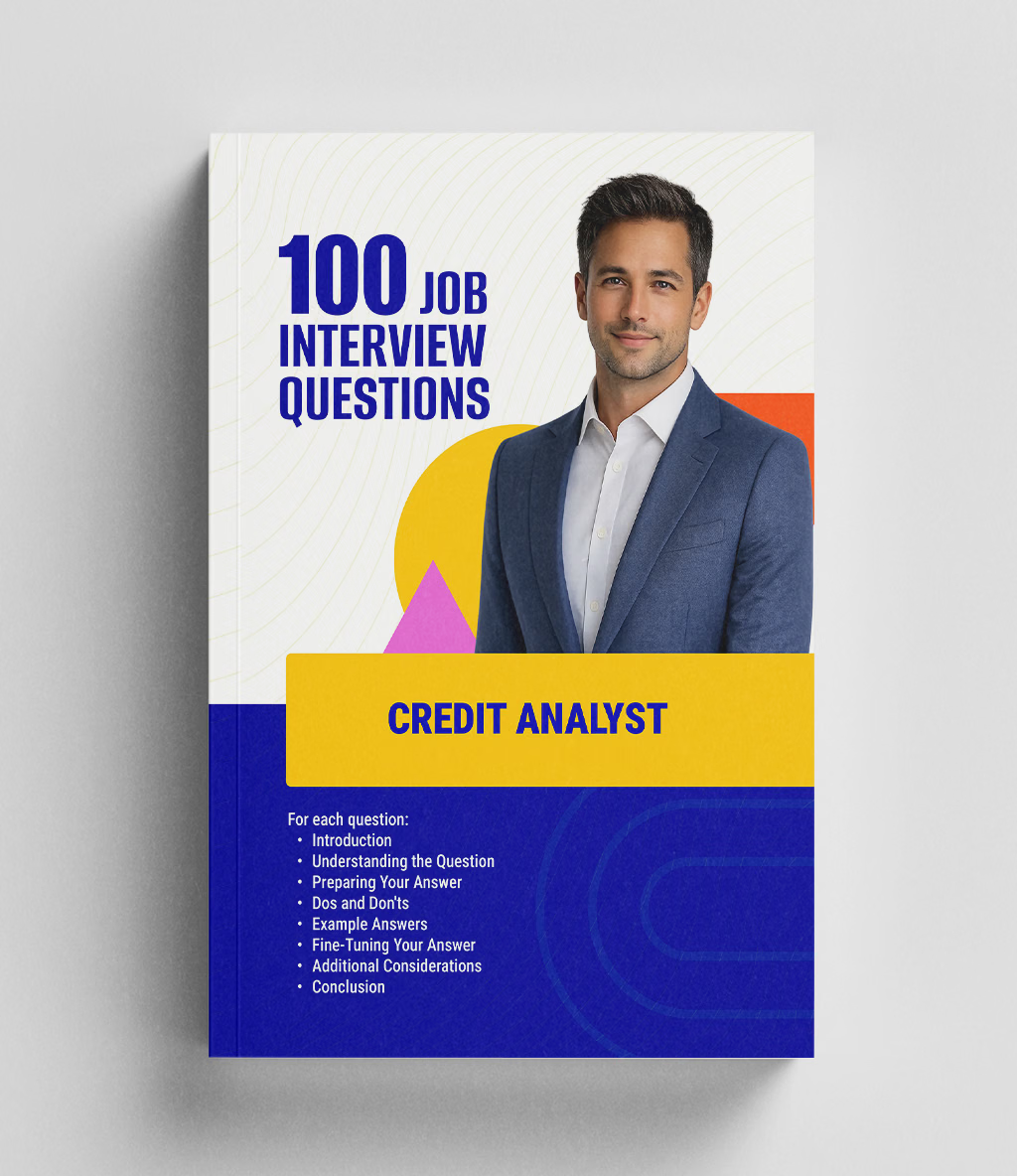
Front-facing 3D book mockup of Credit Analyst 100 Job Interview Questions, an interview question book from RockStarCV.com.

How to use this simulation

Listen for decisions, not polished phrases

Pause after each question and form your own answer before Aisha Rahman responds. Then compare the evidence provided: the constraint, the decision, the personal contribution, the trade-off, and the result.

Samuel Okoye and Aisha Rahman are fictional composite characters. Their employers, credit analyst examples, figures, and outcomes were created for teaching purposes.

Take the interview with you

Your credit analyst interview playbook

Use the printable framework to prepare examples, test your evidence, and rehearse stronger answers away from the screen.

  • Question prompts
  • Evidence checklist
  • Practice notes
Download the PDF playbook

What to notice

A practical viewing checklist

  1. 01

    Listen for analyze a borrower with volatile cash flow.

  2. 02

    Listen for receive pressure to ignore a credit exception.

  3. 03

    Listen for use job-neutral consistent policy evidence and compliance escalation.

  4. 04

    Listen for the action plan had triggers and review dates.

  5. 05

    Listen for decline or condition a request.

Interviewer scorecard

The signals behind a credible answer

Research foundation

Sources behind the teaching principles

The sources support the interview guidance, not the fictional candidate’s invented employers, budgets, dates, or outcomes.

Similar interviews

Explore related mock interviews

More from RockStarCV

Build your complete career toolkit