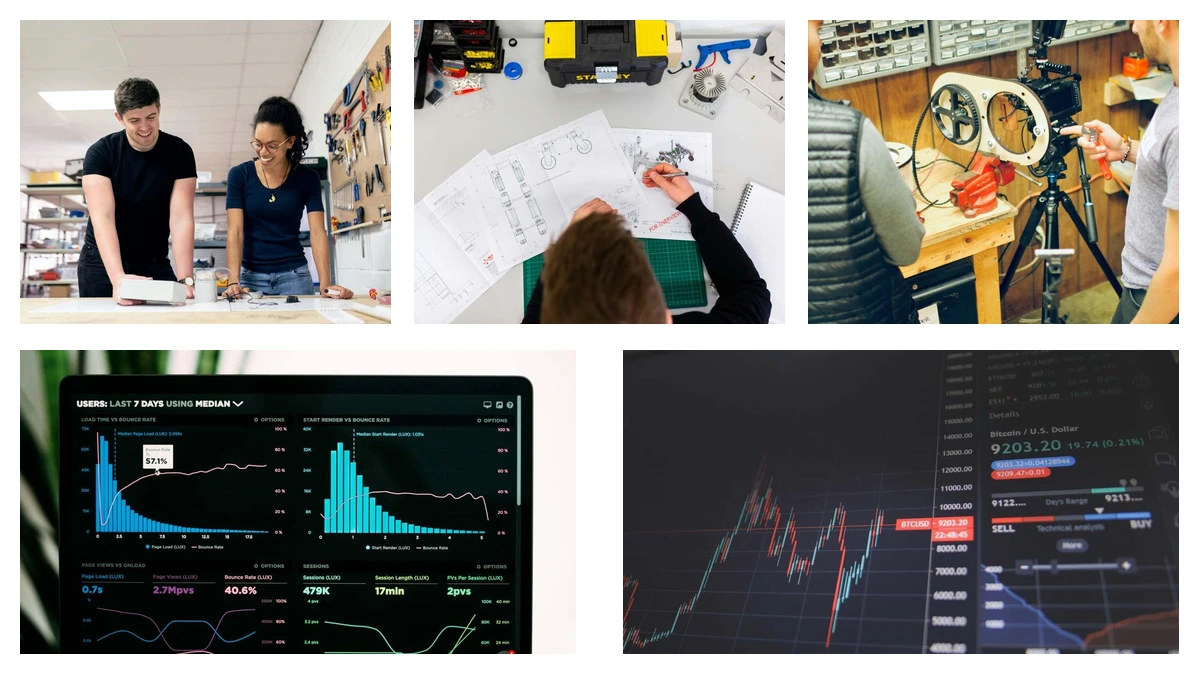
Conceptual skills
Conceptual Skills: The Cornerstone of Leadership and Problem Solving
In today’s rapidly evolving business landscape, technical skills and hard skills are often touted as essential for career success. However, conceptual skills, the ability to think critically, analyze complex situations, and formulate innovative solutions, are increasingly recognized as crucial, particularly for leaders and those aspiring to leadership roles. This article delves into the definition, importance, development, and practical application of conceptual skills, providing a comprehensive guide to mastering this vital competency.
What are Conceptual Skills?
Conceptual skills encompass the cognitive abilities needed to understand abstract ideas, see the big picture, and think strategically. They involve the capacity to analyze complex situations, identify patterns, and formulate creative solutions. Unlike technical skills, which are specific and task-oriented, conceptual skills are broader and more strategic in nature. They enable individuals to:
* **Think critically:** Analyze information objectively and make reasoned judgments.
* **Solve complex problems:** Identify the root causes of problems and develop effective solutions.
* **Make strategic decisions:** Consider the long-term implications of decisions and align them with organizational goals.
* **Innovate:** Generate new ideas and approaches to improve processes and products.
* **Understand abstract concepts:** Grasp complex theories and models and apply them to real-world situations.
* **See the big picture:** Understand how different parts of an organization or system work together.
Conceptual skills are not limited to any particular industry or profession. They are valuable in any role that requires critical thinking, problem-solving, and strategic decision-making.
Why are Conceptual Skills Important?
Conceptual skills are essential for several reasons:
* **Effective Leadership:** Leaders with strong conceptual skills can develop a clear vision for their organization, make strategic decisions, and inspire their teams to achieve common goals. They can anticipate future trends and adapt to changing circumstances.
* **Strategic Decision-Making:** Conceptual skills enable individuals to analyze complex information, identify potential risks and opportunities, and make informed decisions that align with organizational objectives. They help avoid short-sighted decisions that may have negative long-term consequences.
* **Problem-Solving:** Individuals with strong conceptual skills can identify the root causes of problems, develop creative solutions, and implement them effectively. They can think outside the box and challenge conventional wisdom.
* **Innovation:** Conceptual skills foster innovation by enabling individuals to generate new ideas, challenge assumptions, and explore unconventional approaches. They are crucial for driving organizational growth and staying ahead of the competition.
* **Adaptability:** In today’s rapidly changing business environment, adaptability is crucial. Conceptual skills enable individuals to quickly understand new situations, learn new concepts, and adjust their strategies accordingly.
* **Improved Communication:** Conceptual thinkers can articulate complex ideas clearly and concisely, making it easier for others to understand and support their initiatives. They can also tailor their communication style to different audiences.
Examples of Conceptual Skills in Action
To illustrate the importance of conceptual skills, consider the following examples:
* **A CEO developing a new market entry strategy:** This requires analyzing market trends, identifying potential risks and opportunities, and formulating a plan that aligns with the company’s overall goals.
* **A project manager troubleshooting a project delay:** This involves identifying the root causes of the delay, evaluating potential solutions, and implementing a plan to get the project back on track.
* **A marketing manager developing a new advertising campaign:** This requires understanding the target audience, identifying their needs and preferences, and creating a campaign that resonates with them.
* **A software engineer designing a new application:** This involves understanding the user’s needs, identifying potential technical challenges, and designing a solution that is both functional and user-friendly.
* **A consultant advising a client on improving their business processes:** This requires analyzing the client’s current processes, identifying areas for improvement, and recommending solutions that will increase efficiency and reduce costs.
How to Develop Conceptual Skills
Conceptual skills are not innate; they can be developed and honed through practice and experience. Here are some effective strategies for improving your conceptual skills:
* **Seek Opportunities for Critical Thinking:** Actively seek opportunities to analyze complex situations, evaluate different perspectives, and make reasoned judgments. Participate in debates, discussions, and brainstorming sessions.
* **Practice Problem-Solving:** Take on challenging problems and work through them systematically. Break down complex problems into smaller, more manageable parts. Use problem-solving frameworks like the “5 Whys” or the “Fishbone Diagram.”
* **Read Widely:** Read books, articles, and blogs on a variety of subjects, including business, economics, philosophy, and psychology. This will broaden your understanding of the world and expose you to different ways of thinking.
* **Take Courses and Workshops:** Enroll in courses and workshops that focus on critical thinking, problem-solving, and strategic decision-making. Many universities and professional organizations offer such programs.
* **Seek Mentorship:** Find a mentor who possesses strong conceptual skills and learn from their experiences. Ask them how they approach complex problems and make strategic decisions.
* **Engage in Strategic Planning:** Participate in strategic planning exercises at work or in your personal life. This will give you practice in setting goals, developing strategies, and evaluating progress.
* **Learn from Your Mistakes:** Don’t be afraid to make mistakes. Mistakes are learning opportunities. Analyze your mistakes to understand what went wrong and how you can avoid making them in the future.
* **Question Assumptions:** Challenge your own assumptions and the assumptions of others. Don’t accept things at face value. Always ask “why?”
* **Develop Your Creativity:** Engage in activities that stimulate your creativity, such as painting, writing, or playing music. This will help you think outside the box and generate new ideas.
* **Play Strategy Games:** Playing strategy games like chess, Go, or Starcraft can help you develop your strategic thinking skills.
Tools and Techniques for Enhancing Conceptual Skills
Several tools and techniques can help you enhance your conceptual skills:
* **SWOT Analysis:** A framework for analyzing an organization’s strengths, weaknesses, opportunities, and threats.
* **PESTLE Analysis:** A framework for analyzing the political, economic, social, technological, legal, and environmental factors that can affect an organization.
* **Porter’s Five Forces:** A framework for analyzing the competitive forces in an industry.
* **Decision Trees:** A visual tool for evaluating different decision options and their potential outcomes.
* **Brainstorming:** A technique for generating a large number of ideas in a short period of time.
* **Mind Mapping:** A visual tool for organizing and connecting ideas.
* **Scenario Planning:** A technique for developing different scenarios of the future and planning for them.
Conceptual Skills vs. Technical Skills
While both conceptual and technical skills are important, they serve different purposes. Technical skills are specific and task-oriented, while conceptual skills are broader and more strategic.
| Skill Type | Description | Examples | Importance |
|---|---|---|---|
| Technical Skills | Specific knowledge and abilities required to perform a particular task. | Coding, accounting, marketing automation, data analysis. | Essential for performing specific job duties effectively. |
| Conceptual Skills | The ability to think critically, analyze complex situations, and formulate innovative solutions. | Strategic planning, problem-solving, decision-making, innovation. | Crucial for leadership, strategic thinking, and long-term success. |
In general, technical skills are more important for entry-level positions, while conceptual skills become increasingly important as you move up the career ladder. Leaders need strong conceptual skills to develop a vision, make strategic decisions, and guide their organizations.
Conceptual Skills in Different Industries
Conceptual skills are valuable in virtually any industry. Here are a few examples:
* **Technology:** Understanding market trends, anticipating future technological advancements, and developing innovative products.
* **Finance:** Analyzing financial data, making investment decisions, and managing risk.
* **Healthcare:** Developing new treatment protocols, improving patient care, and managing healthcare costs.
* **Education:** Designing effective curricula, improving teaching methods, and addressing the needs of diverse learners.
* **Manufacturing:** Optimizing production processes, improving product quality, and reducing costs.
Assessing Conceptual Skills
Assessing conceptual skills can be challenging because they are not easily measured through traditional tests. However, several methods can be used to evaluate an individual’s conceptual abilities:
* **Case Studies:** Presenting candidates with real-world business scenarios and asking them to analyze the situation and propose solutions.
* **Problem-Solving Exercises:** Giving candidates complex problems to solve and evaluating their approach and the quality of their solutions.
* **Strategic Planning Simulations:** Simulating a strategic planning process and observing how candidates develop goals, strategies, and action plans.
* **Behavioral Interviews:** Asking candidates about past experiences where they had to use their conceptual skills to solve problems or make decisions.
* **360-Degree Feedback:** Gathering feedback from colleagues, supervisors, and subordinates to assess an individual’s conceptual skills from different perspectives.
**Pro Tip:** When preparing for an interview, be ready to provide specific examples of how you have used your conceptual skills to solve problems, make decisions, or drive innovation in the past. Use the STAR method (Situation, Task, Action, Result) to structure your answers.
The Future of Conceptual Skills
As the world becomes increasingly complex and interconnected, the importance of conceptual skills will only continue to grow. Automation and artificial intelligence are rapidly changing the nature of work, and many routine tasks are being automated. This means that individuals who possess strong conceptual skills, such as critical thinking, problem-solving, and creativity, will be in high demand.
Organizations will need leaders who can think strategically, adapt to change, and innovate to stay ahead of the competition. Individuals who can master conceptual skills will be well-positioned for success in the future.
Conclusion: Embrace the Power of Conceptual Thinking
Conceptual skills are not just a nice-to-have; they are a must-have for anyone who wants to succeed in today’s dynamic and challenging world. By developing your ability to think critically, solve complex problems, and make strategic decisions, you can unlock your full potential and achieve your career goals. Embrace the power of conceptual thinking, and you will be well on your way to becoming a more effective leader, a more valuable employee, and a more successful individual. Start today by actively seeking opportunities to develop and refine your conceptual skills, and watch as new doors open and your career soars to new heights.