Financial Analyst Resume Examples & Guide
Landing a Financial Analyst role is tough. You’re up against fierce competition and Applicant Tracking Systems (ATS) that scan for specific keywords. This guide provides Financial Analyst resume examples for every experience level, from students to industry veterans, to help you stand out.
- Quantify Achievements: Use numbers and metrics to showcase the impact of your work.
- Highlight Relevant Skills: Emphasize key skills like financial modeling, data analysis, and specific software proficiency.
- Tailor to Job Description: Customize your resume to match the specific requirements of each job you apply for.
- Optimize for ATS: Use keywords from the job description and format your resume for easy scanning.
- Use Action Verbs: Start your bullet points with strong action verbs to describe your accomplishments.
- Showcase Industry Knowledge: Demonstrate your understanding of financial principles and industry trends.
Ready to see some winning resumes?
Explore editable Financial Analyst resume examples by career stage. Each sample opens in the RockStarCV builder so you can study the structure and make your own version. Every example includes role-relevant education, skills, credentials, and work history—not just a matching headline. As you compare them, look for truthful evidence of financial analysis, Excel, and business partnering at the seniority level shown.
Entry-Level Financial Analyst Resume (0-2 Years Experience)
Use these entry-level examples to compare the scope, evidence, and language expected for Financial Analyst roles at this stage.

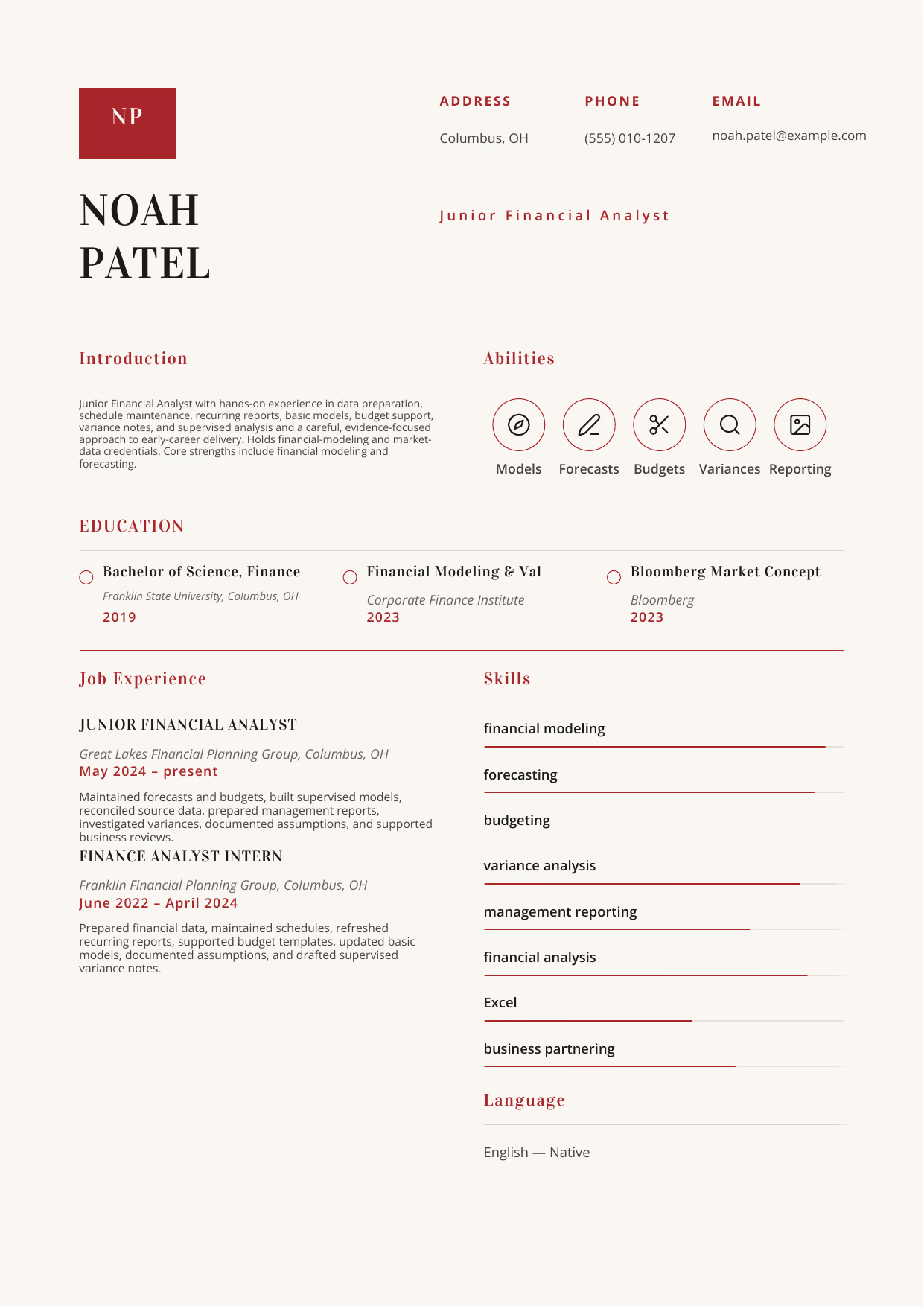
Junior Financial Analyst
A builder-ready entry-level Financial Analyst example in the Aquila template, showing stage-appropriate evidence in a focused, editable resume format.
- Editable role positioning in the Aquila layout
- Role-specific evidence and delivery context
- Review the Aquila structure with a clean visual hierarchy
View this resume
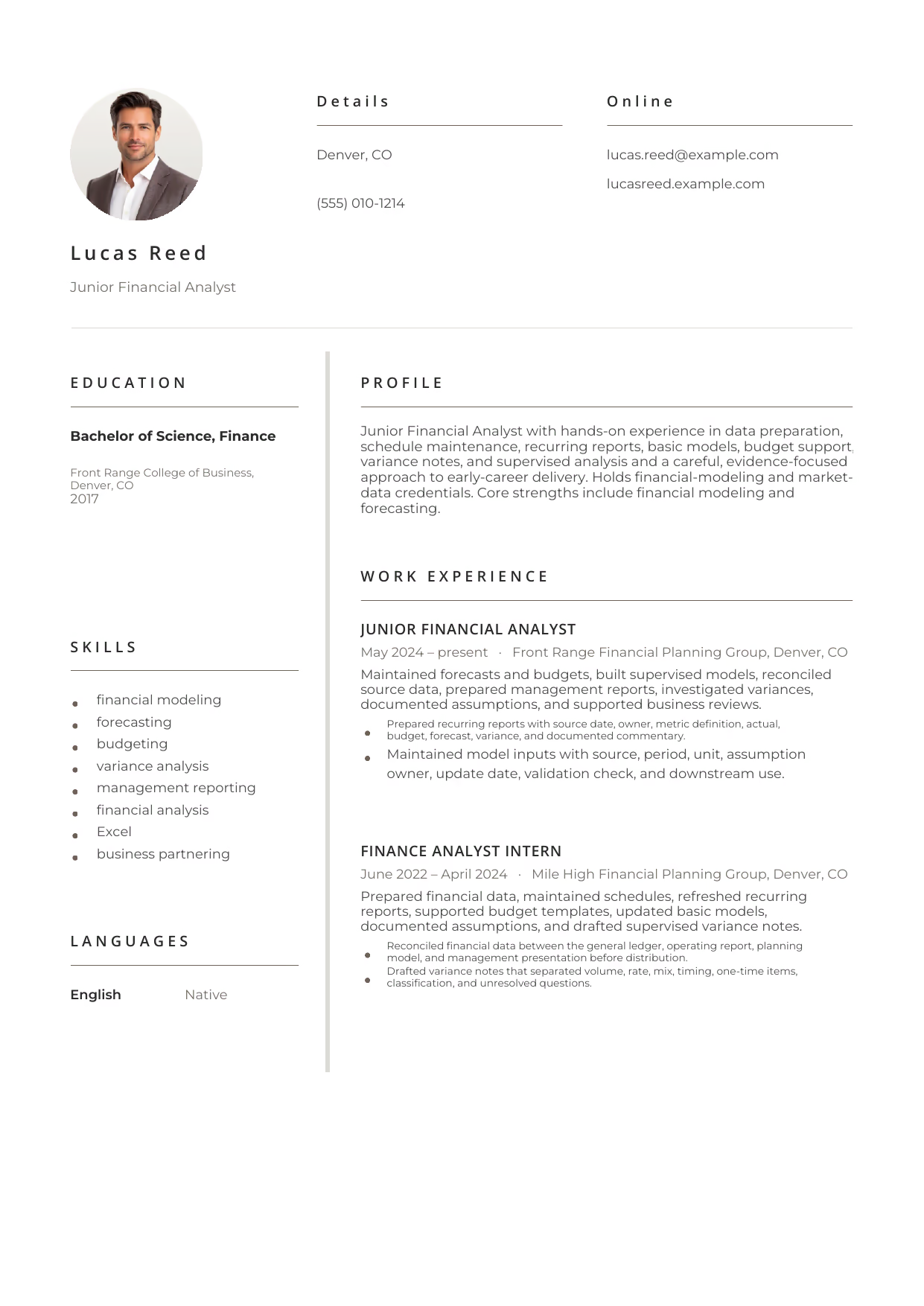
Junior Financial Analyst
A builder-ready entry-level Financial Analyst example in the Delphinus template, showing stage-appropriate evidence in a focused, editable resume format.
- Editable role positioning in the Delphinus layout
- Role-specific evidence and delivery context
- Review the Delphinus structure with a clean visual hierarchy
View this resume
Junior Financial Analyst
A builder-ready entry-level Financial Analyst example in the Pictor template, showing stage-appropriate evidence in a focused, editable resume format.
- Editable role positioning in the Pictor layout
- Role-specific evidence and delivery context
- Review the Pictor structure with a clean visual hierarchy
View this resume
Mid-Level Financial Analyst Resume (3-7 Years Experience)
Use these mid-level examples to compare the scope, evidence, and language expected for Financial Analyst roles at this stage.

Financial Analyst
A builder-ready mid-level Financial Analyst example in the Hydra template, showing stage-appropriate evidence in a focused, editable resume format.
- Editable role positioning in the Hydra layout
- Role-specific evidence and delivery context
- Review the Hydra structure with a clean visual hierarchy
View this resume
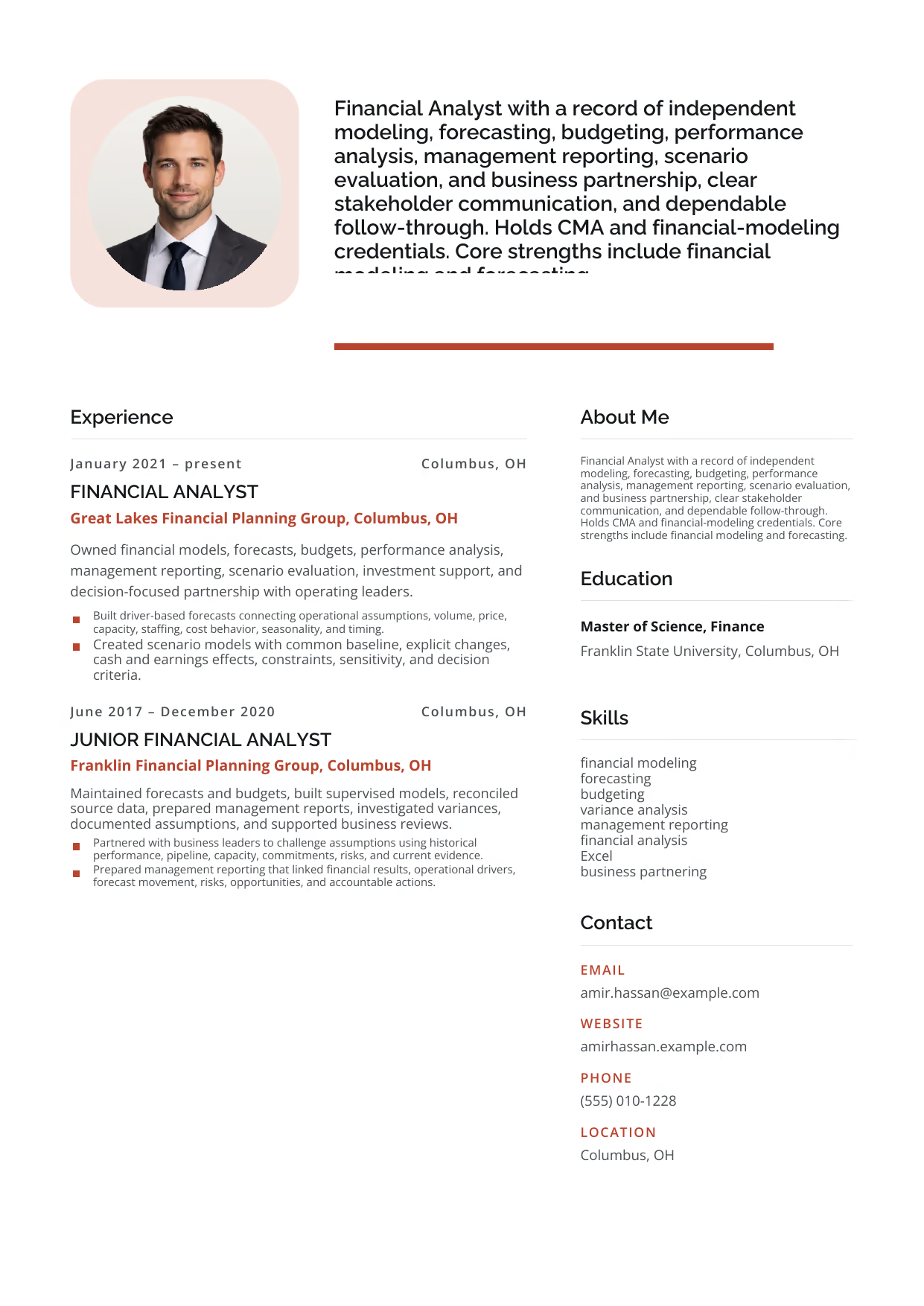
Financial Analyst
A builder-ready mid-level Financial Analyst example in the Andromeda template, showing stage-appropriate evidence in a focused, editable resume format.
- Editable role positioning in the Andromeda layout
- Role-specific evidence and delivery context
- Review the Andromeda structure with a clean visual hierarchy
View this resume

Financial Analyst
A builder-ready mid-level Financial Analyst example in the Grus template, showing stage-appropriate evidence in a focused, editable resume format.
- Editable role positioning in the Grus layout
- Role-specific evidence and delivery context
- Review the Grus structure with a clean visual hierarchy
View this resume
Senior Financial Analyst Resume (8+ Years / Management)
Use these advanced examples to compare the scope, evidence, and language expected for Financial Analyst roles at this stage.
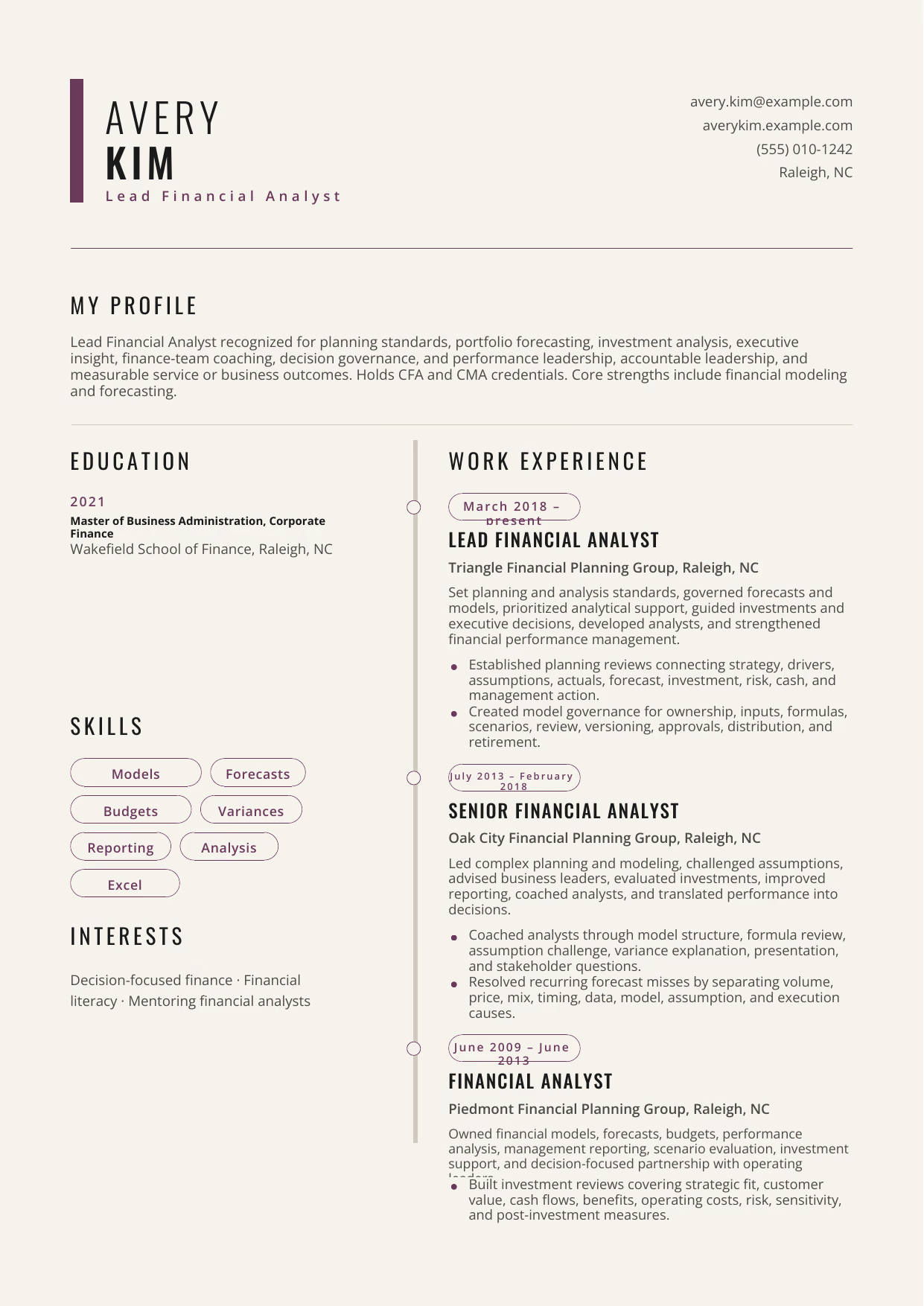
Lead Financial Analyst
A builder-ready advanced Financial Analyst example in the Caelum template, showing stage-appropriate evidence in a focused, editable resume format.
- Editable role positioning in the Caelum layout
- Role-specific evidence and delivery context
- Review the Caelum structure with a clean visual hierarchy
View this resume
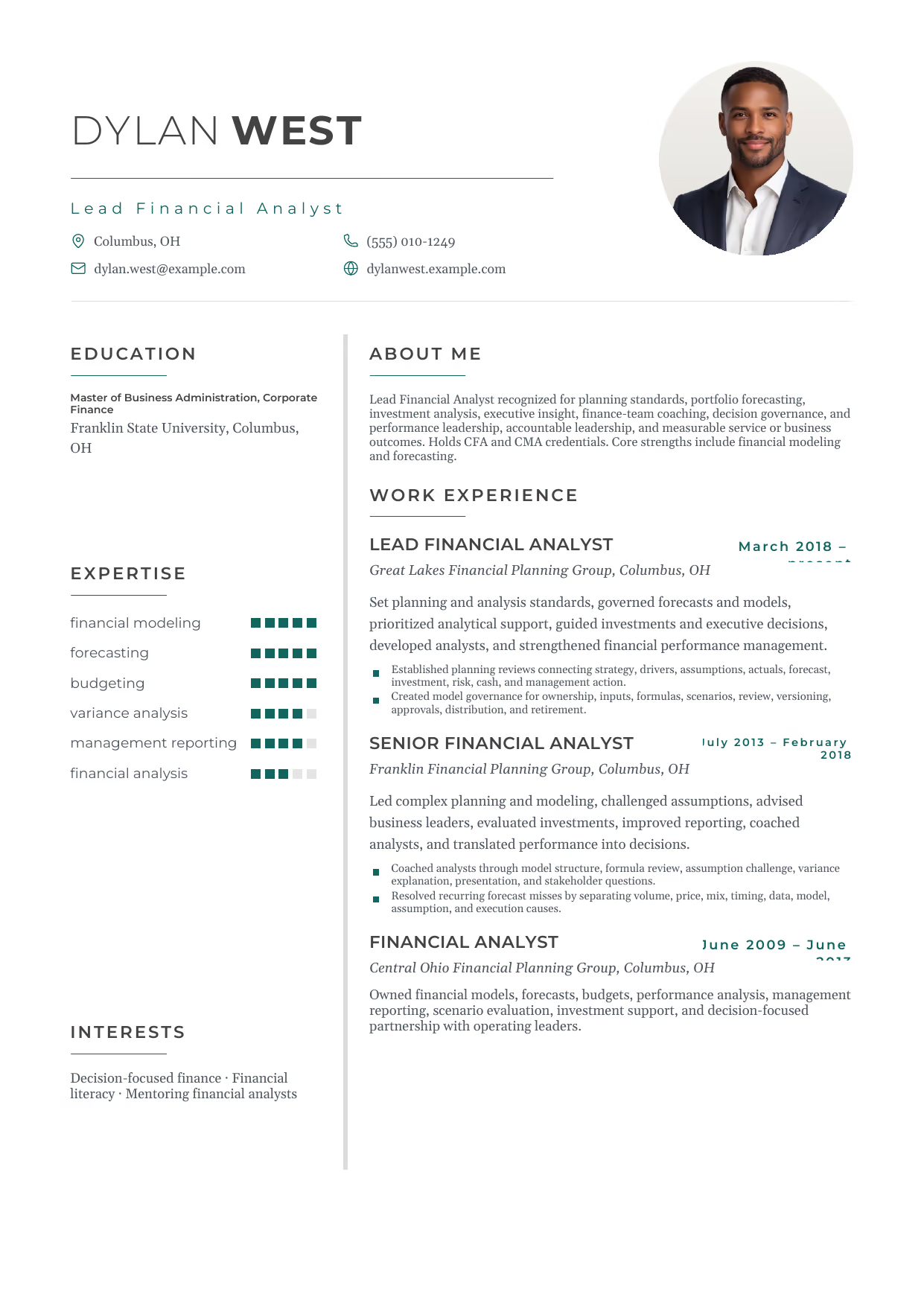
Lead Financial Analyst
A builder-ready advanced Financial Analyst example in the Achernar template, showing stage-appropriate evidence in a focused, editable resume format.
- Editable role positioning in the Achernar layout
- Role-specific evidence and delivery context
- Review the Achernar structure with a clean visual hierarchy
View this resume
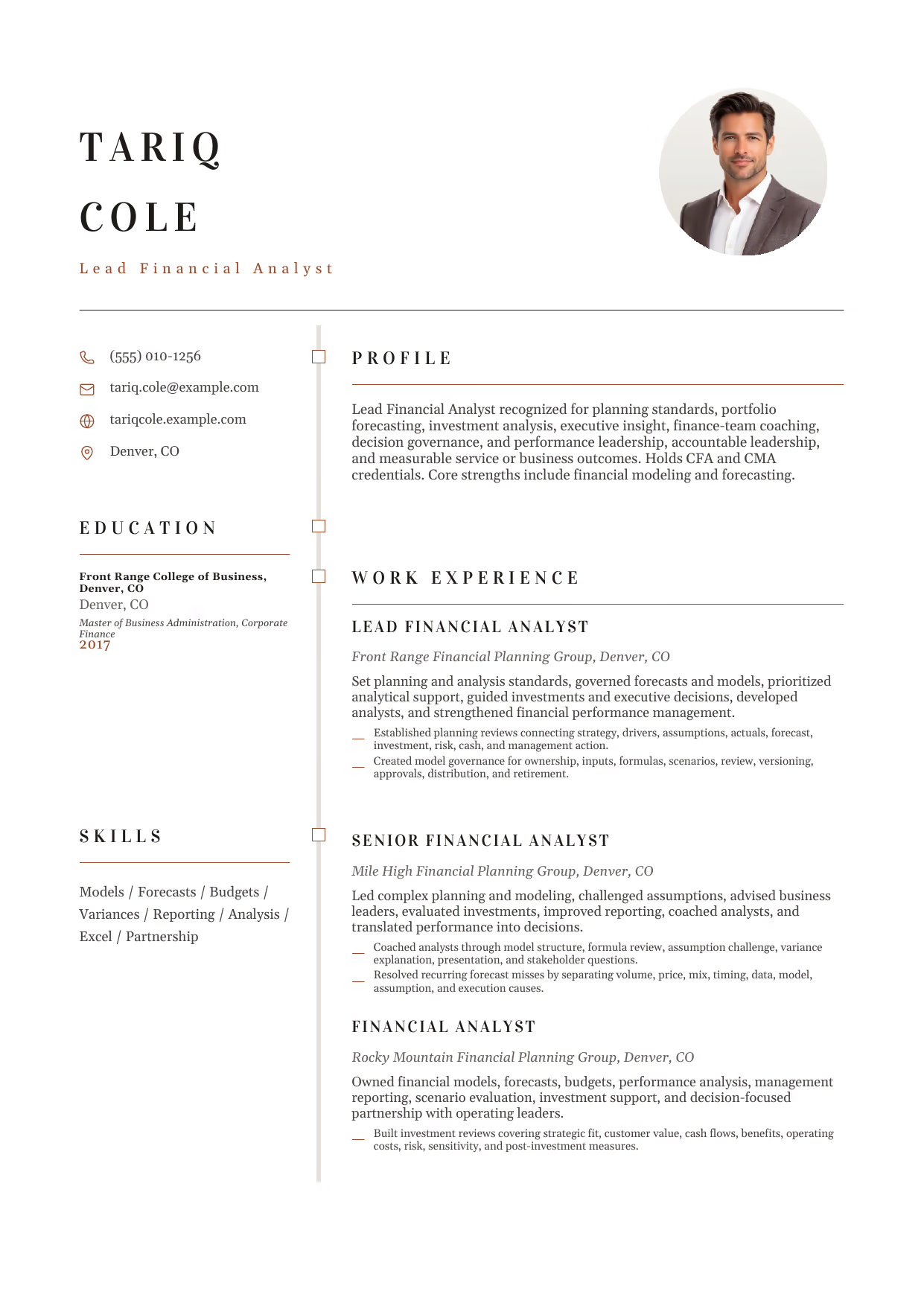
Lead Financial Analyst
A builder-ready advanced Financial Analyst example in the Draco template, showing stage-appropriate evidence in a focused, editable resume format.
- Editable role positioning in the Draco layout
- Role-specific evidence and delivery context
- Review the Draco structure with a clean visual hierarchy
View this resume
Financial Analyst Resume Examples by Specialty
Choose the Financial Analyst path closest to the job you want. Each guide highlights the work, preparation, and evidence hiring teams expect for that specialty.
Junior Financial Analyst Resume Examples
- Resume focus:
- financial data, recurring reports, budget support, basic models, and variance investigation;
- Credentials:
- finance, modeling, Excel, or market-data training;
- Evidence to include:
- source reconciliation, model inputs, report ownership, assumptions, and decision support;
Senior Financial Analyst Resume Examples
- Resume focus:
- complex modeling, planning, scenario analysis, business partnership, and analyst coaching;
- Credentials:
- CFA, CMA, modeling, or relevant finance credentials;
- Evidence to include:
- model scope, assumptions, forecast quality, scenarios, decisions, and leadership;
Corporate Financial Analyst Resume Examples
- Resume focus:
- enterprise planning, management reporting, investment support, and cross-functional performance;
- Credentials:
- finance, accounting, modeling, or analytics credentials;
- Evidence to include:
- business scope, planning drivers, reports, investment cases, and executive decisions;
Financial Risk Analyst Resume Examples
- Resume focus:
- market, credit, liquidity, scenario, limit, control, and risk reporting analysis;
- Credentials:
- risk, finance, statistics, or modeling credentials;
- Evidence to include:
- exposure scope, methodology, scenarios, limits, exceptions, controls, and risk decisions;
Financial Analyst Licenses and Certifications
List only current education, licenses, or certifications that apply to the target role. Give the credential name and issuing organization, and leave private identifier numbers off a public resume.
Finance credentials
- CFA, CMA, FMVA, or another current role-relevant credential;
- Issuer, level, and active status;
Modeling and systems
- Financial modeling, Excel, BI, ERP, or planning-platform training;
- Only credentials relevant to the target finance environment;
Financial Analyst Skills and ATS Keywords by Category
Use language that truthfully matches your Financial Analyst experience and the job posting. Pair important terms with a work example instead of presenting an unsupported keyword list.
Skills by category
Planning and modeling
- Financial modeling, forecasting, budgeting, and scenario analysis;
- Excel, Power Query, FP&A systems, and source reconciliation;
Performance and partnership
- Variance analysis, management reporting, and investment evaluation;
- Business partnering, assumption challenge, and executive communication;
ATS keywords by category
Finance keywords
- Financial modeling, forecasting, budgeting, variance analysis;
- Management reporting, financial analysis, Excel, scenario planning;
Decision keywords
- Business partnering, investment analysis, NPV, IRR;
- Driver-based planning, sensitivity analysis, forecast accuracy, executive reporting;
How to Write a Financial Analyst Resume
The Resume Summary
The resume summary is your opportunity to make a strong first impression. It should highlight your key skills, experience, and career goals. Use the following formula:
[Your Title] with [Number] years of experience in [Industry] specializing in [Area of Expertise]. Proven ability to [Key Achievement]. Seeking a [Type of Role] position at [Target Company].
Entry-Level Example: Recent Finance graduate with a strong foundation in financial modeling and data analysis. Eager to apply analytical skills to contribute to a company’s financial success. Seeking an Entry-Level Financial Analyst position.
Mid-Level Example: Results-oriented Financial Analyst with 5+ years of experience in budgeting, forecasting, and financial modeling. Proven ability to improve financial accuracy and efficiency. Seeking a challenging role where I can leverage my skills to contribute to a company’s financial success.
Senior Example: Strategic and results-driven Senior Financial Analyst with 10+ years of experience leading financial planning, analysis, and reporting functions. Proven ability to develop and implement financial strategies that drive business growth and profitability. Expertise in managing large budgets and leading high-performing teams.
Work Experience & Action Verbs
The work experience section is where you showcase your accomplishments and demonstrate your value to potential employers. Focus on achievements rather than just listing duties. Use strong action verbs to describe your accomplishments.
- Before: Responsible for preparing financial reports. After: Prepared monthly financial reports, providing insights into key performance indicators (KPIs) and trends.
- Before: Assisted with the budgeting process. After: Developed and implemented a new budgeting process that improved accuracy by 10%.
- Before: Conducted financial analysis. After: Conducted financial analysis to identify cost-saving opportunities, resulting in a 5% reduction in operating expenses.
- Before: Managed accounts payable. After: Streamlined the accounts payable process, reducing payment processing time by 15%.
- Before: Worked with cross-functional teams. After: Collaborated with cross-functional teams to develop and implement financial strategies that aligned with business goals.
Top Skills for Financial Analysts
Highlighting the right skills can significantly increase your chances of landing an interview. Here are some top skills to include on your Financial Analyst resume:
- Hard Skills:
- Financial Modeling
- Budgeting
- Forecasting
- Variance Analysis
- Financial Reporting
- Data Analysis
- Investment Analysis
- Soft Skills:
- Analytical Thinking
- Problem-Solving
- Communication
- Attention to Detail
- Critical Thinking
- Time Management
- Tools/Software:
- Microsoft Excel (Advanced)
- Hyperion
- SAP
- Tableau
- Bloomberg Terminal
- SQL
Education & Certifications
Education and certifications can demonstrate your knowledge and expertise in the field. For entry-level candidates, highlight relevant coursework and academic achievements. For experienced candidates, focus on advanced degrees and certifications.
Recommended Certifications:
- Chartered Financial Analyst (CFA)
- Certified Public Accountant (CPA)
- Financial Risk Manager (FRM)
10 Common Financial Analyst Resume Mistakes
- Generic Resume: Sending the same resume to every job. Tailor your resume to each specific job description, highlighting the skills and experience most relevant to the role. Failing to do so makes your application look impersonal and reduces your chances of passing the ATS.
- Lack of Quantifiable Achievements: Listing duties instead of accomplishments with numbers. Recruiters want to see the impact of your work. Use metrics like percentages and dollar amounts to showcase your achievements in areas like cost reduction, revenue growth, or improved efficiency. a Financial Analyst who cannot quantify their impact is hard to justify as a hire.
- Poor Formatting: Using a cluttered or unprofessional format. Use a clean and easy-to-read format with clear headings and bullet points. Ensure your resume is ATS-friendly by avoiding tables, images, and fancy fonts. A poorly formatted resume can be difficult to read and may be rejected by the ATS.
- Grammatical Errors and Typos: Overlooking grammar errors and typos. Proofread your resume carefully before submitting it. Errors can make you look unprofessional and careless. Even a minor error in key financial terminology can kill your chances.
- Irrelevant Information: Including irrelevant information. Focus on the skills and experience most relevant to the job you are applying for. Remove anything that doesn’t add value to your application. Recruiters only spend a few seconds reviewing each resume, so make every word count.
- Missing Keywords: Failing to include relevant keywords from the job description. ATS systems scan resumes for specific keywords. Review the job description carefully and incorporate relevant keywords into your resume. This will increase your chances of passing the ATS and getting your resume in front of a human recruiter.
- Weak Summary or Objective Statement: Writing a generic or uninspiring summary or objective statement. Use your summary or objective statement to highlight your key skills, experience, and career goals. Tailor it to each job you apply for to show your interest and fit. This is your chance to make a strong first impression.
- Not Highlighting Technical Skills: Omitting key technical skills. Financial Analyst roles require proficiency in various software and tools. Highlight your expertise in areas like Microsoft Excel, financial modeling software, and data analysis tools. This will demonstrate your ability to perform the required tasks.
- Ignoring Soft Skills: Neglecting to mention soft skills. Soft skills like communication, problem-solving, and analytical thinking are essential for Financial Analysts. Highlight these skills in your resume to show that you are a well-rounded candidate. Failing to mention soft skills makes you appear technically competent but lacking the interpersonal skills necessary to succeed.
- Overusing Jargon: Filling your resume with excessive jargon. While it’s important to use industry-specific terms, avoid using too much jargon that may not be understood by everyone. Use clear and concise language that is easy to understand. Overusing jargon can make your resume difficult to read and may alienate recruiters.
Frequently Asked Questions (Financial Analyst)
- What should a Financial Analyst resume emphasize first? Lead with the scope of data preparation, schedule maintenance, recurring reports, basic models, budget support, variance notes, and supervised analysis, then connect your contribution to a clear outcome, tool, or decision.
- Which skills deserve priority on a Financial Analyst resume? Prioritize financial modeling, forecasting, and budgeting when they match the role and can be supported by evidence.
- How can a Financial Analyst show project scope and impact? Name the environment, scale, constraints, and result; independent modeling, forecasting, budgeting, performance analysis, management reporting, scenario evaluation, and business partnership becomes more credible when the context is concrete.
- How should a Financial Analyst describe tools and technical decisions? Describe why you selected a method, how you implemented it, and what changed afterward in the Financial Analyst role.
- Which achievements matter most for a Financial Analyst application? Use outcome-led bullets that show planning standards, portfolio forecasting, investment analysis, executive insight, finance-team coaching, decision governance, and performance leadership through delivery quality, measurable scope, or stakeholder value.
- How long should a Financial Analyst resume be? Use the shortest length that proves fit; a focused page can work early-career, while broader Financial Analyst scope may need more room.
- How can a Financial Analyst explain progression between career stages? Group examples by increasing ownership, moving from data preparation, schedule maintenance, recurring reports, basic models, budget support, variance notes, and supervised analysis toward planning standards, portfolio forecasting, investment analysis, executive insight, finance-team coaching, decision governance, and performance leadership as responsibility grows.
- Which keywords should a Financial Analyst include for screening systems? Mirror truthful language from the posting, especially variance analysis, without stuffing unrelated terms.
- How should a Financial Analyst present reliability, quality, or safety work? Show how you protected outcomes through management reporting and explain the evidence a hiring team can verify.
- What format makes a Financial Analyst resume easy for hiring teams to scan? Use clear headings, readable bullets, and consistent dates so a hiring manager can evaluate Financial Analyst fit quickly.
Ready to take the next step? Search more Financial Analyst resources on our site to find templates and additional advice!
RockStarCV Editorial Team